What I-10 Construction in Arizona Does To Your Truck Claims
ADOT is rebuilding I-10 from Phoenix to Casa Grande into 2029, and Tucson stays torn up until 2028. Here is what that does to your risk on the state's busiest freight lane.
Arizona is rebuilding I-10 from Phoenix to Casa Grande
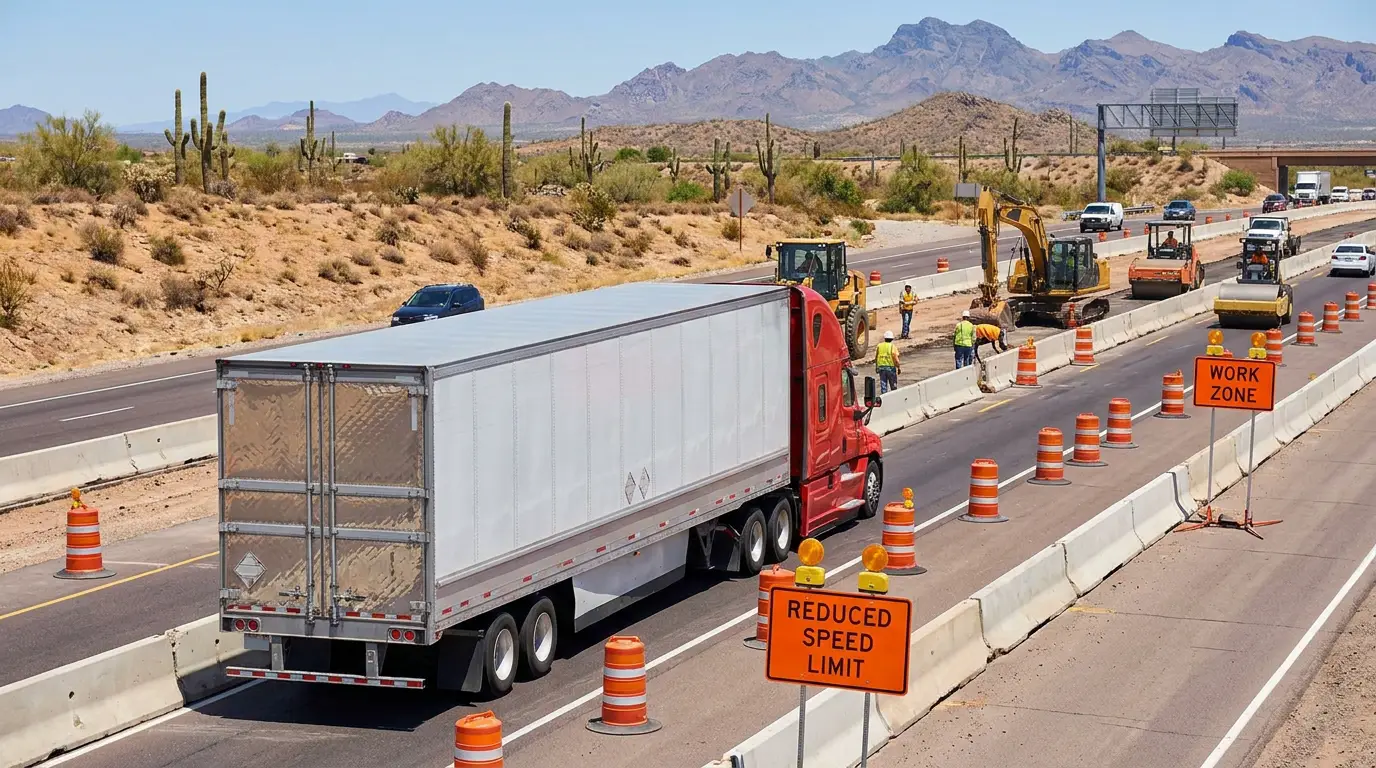
If you run Arizona, the most important thing on your route planning this year is not a rate or a rule. It is a construction schedule. ADOT is in the middle of the I-10 Wild Horse Pass Corridor Project, a 26 mile rebuild between Loop 202 in south Phoenix and State Route 387 near Casa Grande, mileposts 161 through 187. The corridor is going to three general purpose lanes in each direction at a cost of just under $1 billion.
It is not one project. It is four, staggered across years. The Gila River bridges finish late in 2026, the Gas Line Road to SR 387 segment runs to mid 2028, and the Gila River Indian Community segment does not even start until late 2026 and continues into late 2029. The practical answer is that this stretch of I-10 carries active work zones for the next three years. That is worth factoring into how your commercial truck insurance in Arizona is structured, because your exposure on that lane just changed.
Tucson is the other half of the problem
Southern Arizona is no easier. ADOT is running a $600 million widening of I-10 between Kino Parkway and Country Club Road southeast of downtown Tucson, going from two lanes to three each way and rebuilding interchanges along the route. That work started in mid 2025 and does not wrap until 2028. A separate $80 million I-19 Irvington Road interchange rebuild starts mid 2026 and runs to mid 2028.
So the picture for a small fleet is a corridor under near continuous construction from the Phoenix metro down toward the Nogales side of the state. Shifted lanes, temporary barriers, changing speed limits, and traffic that stacks up fast when something goes wrong.
Work zones are where the rear end crash lives
ADOT's own numbers say what that costs. Arizona recorded 13 work zone fatalities in 2021, 11 in 2022, 17 in 2023, 23 in 2024, and 16 in 2025 on preliminary data, at least 80 people killed since 2021, with serious injuries climbing from 26 to 36 over the same period. ADOT points to speeding as a major cause and names rear end collisions the most common work zone crash. Nationally, four out of five work zone crash victims are drivers and their passengers, not the highway crew.
Rear end is the crash a loaded truck is worst positioned to avoid. Traffic ahead compresses without warning, you have eighty thousand pounds behind the cab, and a barrier wall takes away the shoulder you would normally use. It is also the crash plaintiff attorneys like most, because following distance is simple for a jury to understand. Good reason to check whether your commercial auto liability limit reflects how these cases settle now rather than what your authority required when you filed.
Arizona pays partial fault claims other states throw out
Here is the part that changes the math. Arizona has followed pure comparative negligence since 1984 under ARS 12-2505. Contributory negligence is not a complete defense here. Fault is apportioned among everyone who contributed, and a claimant's recovery is reduced by their share rather than erased.
In a work zone pileup, fault is never clean. Somebody braked late, somebody ran over the posted work zone limit, somebody merged into a closing lane. In a contributory state a messy fault picture can kill a claim outright. In Arizona it becomes a percentage, so more claims survive and more of them get paid. It also means your own recovery after a wreck gets trimmed by whatever blame lands on you. That is the case for carrying real physical damage coverage on your equipment instead of planning to collect from the other side.
Enforcement is thick on the same corridor
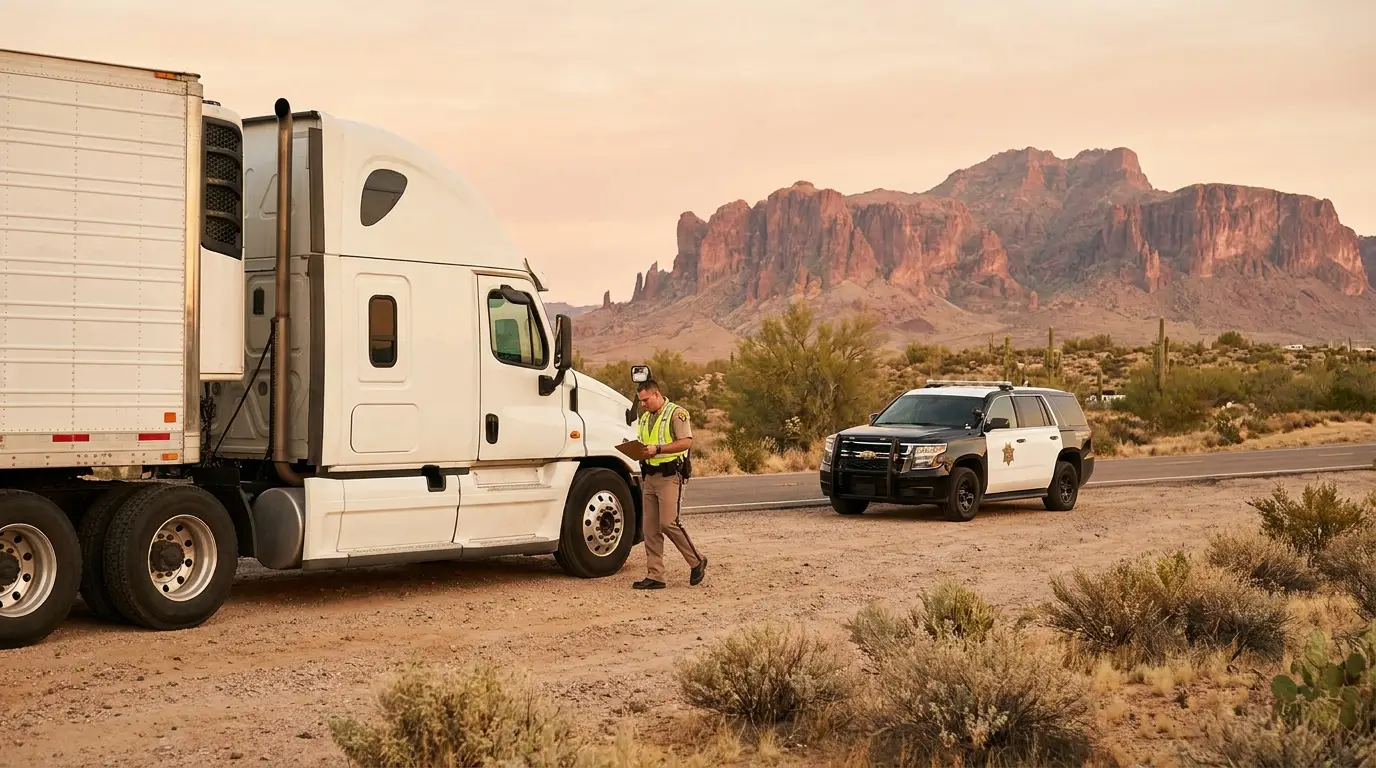
Arizona is not just building on I-10, it is working it. TheTrucker.com reported on a joint detail run July 1, 2026 in Buckeye, on I-10 west of Phoenix, from 6 to 10 in the morning. In four hours, the Arizona DPS Highway Patrol Commercial Vehicle Enforcement Unit, ADOT Enforcement and Compliance, and Buckeye Police ran 20 inspections and wrote 66 total violations, placing five drivers and two vehicles out of service. ADOT weighed 348 commercial vehicles in the same window and found five overweight.
Twenty inspections producing 66 violations is a high hit rate, and every one of those roadside findings feeds the federal safety data an underwriter pulls at renewal. A rough Arizona lane can cost you twice, once at the scale and again on the quote.
What to do about it
Route with the construction in mind instead of around it after the fact. Build extra following distance into work zone stretches and tell your drivers why. Run a forward facing camera, because in a comparative fault state the footage is what sets your percentage. Then confirm your liability limit is not sitting at the old federal floor and that physical damage is in force on every unit.
We do this every day for owner operators and small fleets. Look at our Arizona truck insurance page for what we write in the state, then call or text 423-264-4255 or get a truck insurance quote and we will compare what you carry now against what running I-10 for the next three years actually asks of you.
Common questions
Where is I-10 under construction in Arizona right now?
Two major stretches. The I-10 Wild Horse Pass Corridor Project covers 26 miles between Loop 202 in south Phoenix and SR 387 near Casa Grande, mileposts 161 to 187, with segments running into late 2029. In Tucson, a $600 million widening between Kino Parkway and Country Club Road runs through 2028, and an $80 million I-19 Irvington Road interchange rebuild runs from mid 2026 to mid 2028.
Does a work zone crash affect my truck insurance rate?
Yes, in two ways. The claim itself sits on your loss history, and any roadside citation or out of service order tied to it feeds the federal safety data underwriters review at renewal. Work zone crashes also tend to draw harder scrutiny because speed and following distance are easy for a jury to evaluate.
What does pure comparative negligence mean for a truck crash in Arizona?
Under ARS 12-2505, Arizona apportions fault among everyone who contributed rather than barring a partly at fault claimant from recovering. A claim is reduced by the claimant's share instead of being thrown out. Practically, more claims survive in Arizona than in a contributory negligence state, and your own recovery after a wreck gets cut by whatever percentage of blame is assigned to you.
How much coverage should I carry for Arizona lanes?
It depends on your equipment, your radius, and the freight you haul, but the federal minimum is a floor and not a target, especially on a corridor with this much congestion and construction. Physical damage on your own truck matters more in a comparative fault state because you may not collect the full repair from the other driver. Call or text 423-264-4255 and we will get a truck insurance quote together and walk through where your limits actually land.
Ready for a better rate?
We shop A-rated carriers against each other to find your lowest rate, fast. Under a minute to start, and no obligation.
Prefer to talk it through? Call or text (423) 264-4255 and a licensed agent will walk you through your options.