The Auto Hauler Limits That Decide Your Next Claim
Congress wrote car haulers their own length rule and never wrote them a height rule at all. That gap is where the claims come from.
Car haulers are the one combination Congress sized by hand
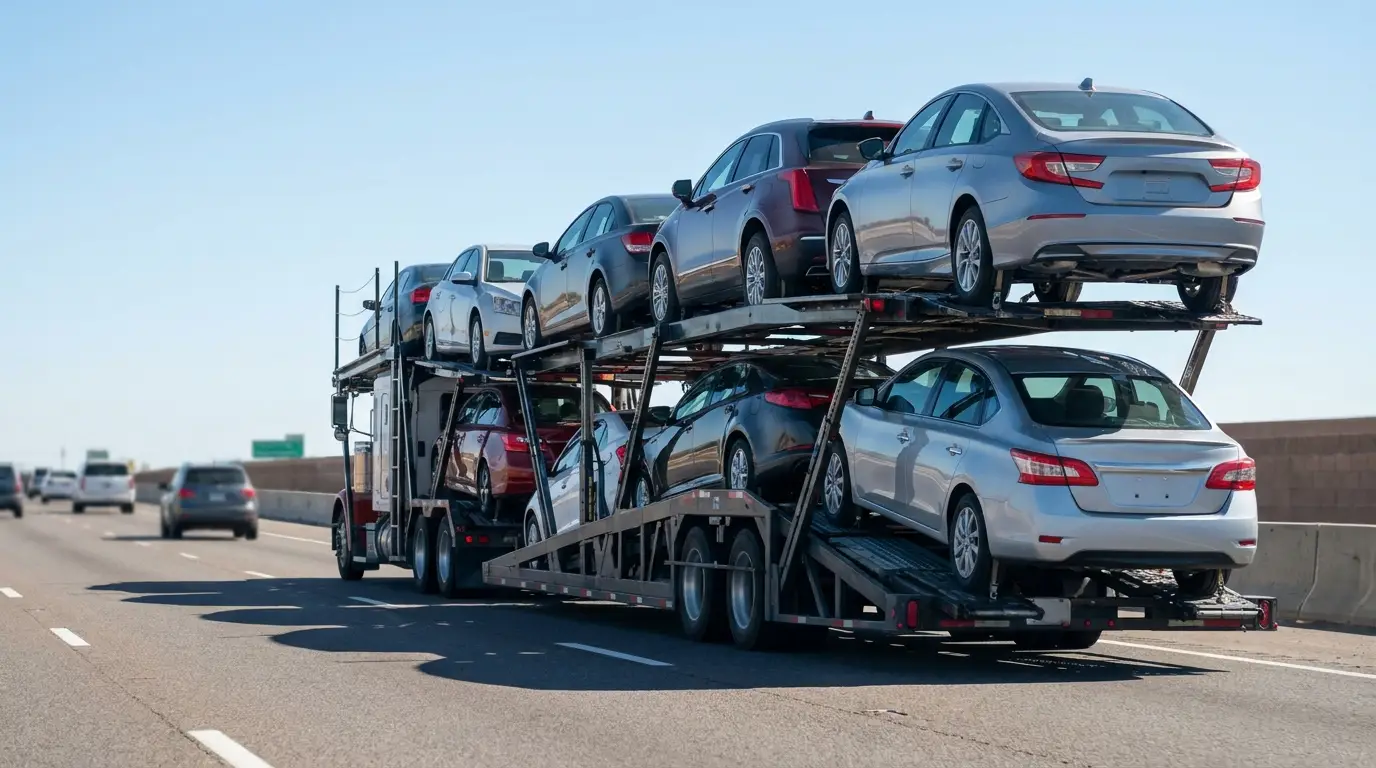
Most trailers live under a single national length number. Auto transporters do not. Federal law carves them out by name and gives them their own floor. Under 49 U.S.C. 31111(b)(1)(G) a state may not enforce a vehicle length limitation of less than 80 feet on a stinger steered automobile transporter, the configuration where the fifth wheel sits behind and below the rear axle of the tractor instead of on top of it.
The Federal Highway Administration stacks the overhang on top of that. A stinger steered transporter gets a front overhang allowance of up to 4 feet and a rear overhang allowance of up to 6 feet, and FHWA states plainly that both are in addition to the overall 80 foot length. Traditional transporters, the ones with the fifth wheel over the rear axle, run to 65 feet with 3 feet in front and 4 feet in back under 23 CFR 658.13(e)(1). FHWA credits the current stinger numbers to Section 5520 of the FAST Act.
The law lets you run freight on the way home
One line in the statute is worth real money to a small operator. An automobile transporter is not prohibited from the transport of cargo or general freight on a backhaul, so long as the combination complies with the weight limitations for a truck tractor and semitrailer. An empty deck home is where car hauling margins die, and federal size law does not stand in your way. Your policy might. A cargo form written for finished vehicles carries a commodity schedule, and a deck of pallets is not finished vehicles. Read the schedule on your motor truck cargo coverage before you book the first backhaul.
Height is the dimension nobody federalized
Here is the gap that catches car haulers. FHWA is direct about it. There is no federal vehicle height requirement for commercial motor vehicles, so states set their own. Most limits fall between 13 feet 6 inches and 14 feet, with exceptions granted for lower clearance on particular roads. Length got a national floor. Height never did.
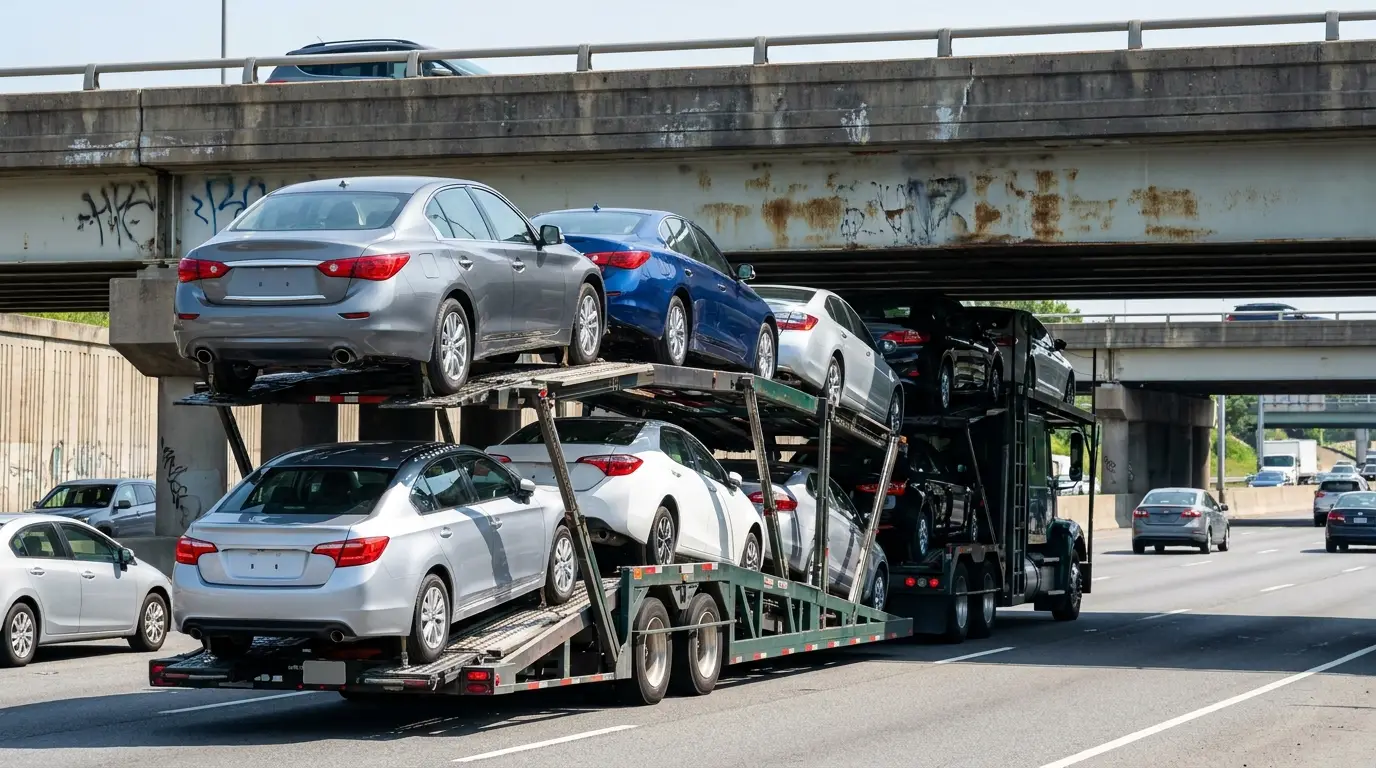
Now put it against what is above you. FHWA design standards call for a clear height of not less than 16 feet over the full roadway width on rural Interstate sections and on a single routing through urban areas. On other urban Interstate routes the standard drops to 14 feet. Off the Interstate the clearance is whatever the structure happens to be. The headroom on a rural run is not the headroom on an urban connector, a downtown ramp, or a dealership canopy.
An overhead strike is three claims at once
Dimensions belong in an insurance conversation, not only a permit conversation. A bridge or canopy strike does not produce one loss. It produces three, and they land on three different parts of your program.
The vehicles on the deck are cargo. A late model SUV with its roof peeled back is a total on that unit, and it runs against your cargo limit and your per vehicle sublimit, which is the piece our auto hauler insurance page walks through in detail. The deck, the head ramp, the hydraulics, and the trailer are your own equipment, so they sit under physical damage. The structure you hit belongs to somebody else, usually a state or a city, and repairing it is a third party claim under commercial auto liability. One second of misjudged clearance opens files in all three, and every one of them lands on the loss runs an underwriter reads at renewal.
Know which securement rule you are being inspected under
Federal securement splits car hauling at a weight line most drivers never think about. 49 CFR 393.128 covers automobiles, light trucks, and vans that individually weigh 10,000 pounds or less. Those must be restrained at both the front and the rear to prevent lateral, forward, rearward, and vertical movement using a minimum of two tiedowns. Tiedowns built to attach to the structure of the vehicle have to use the mounting points designed for that purpose, and tiedowns that fit over the wheels have to restrain laterally, longitudinally, and vertically.
Anything heavier goes somewhere else. A vehicle that individually weighs more than 10,000 pounds must be secured under 49 CFR 393.130 instead, the heavy vehicle and equipment rule. Heavy duty duallies and one ton service trucks cross that line without looking any different on the deck. Same trailer, same straps, different rule.
What this looks like at renewal
Your legal length and overhang are fixed the day you buy the equipment. Your height changes with every load, because it depends on what sits on the top rack. A low sedan and a tall crossover are two different vehicles from a clearance standpoint, and only one of them is written on the placard in the cab. Underwriters cannot watch you load, so they read it in the losses, and clean loss runs earn a better program on auto hauler insurance than a generic policy written off a vehicle schedule.
If you haul cars for a living and want coverage built around a loaded deck instead of the tractor pulling it, we will read your current declarations against the way you actually load. Get a truck insurance quote in under a minute on our quote form, or call or text 423-264-4255.
Common questions
How long can a car hauler legally be?
Federal law sets a floor the states cannot go below. Under 49 U.S.C. 31111 a state may not enforce a length limitation of less than 80 feet on a stinger steered automobile transporter, and FHWA allows a front overhang of up to 4 feet and a rear overhang of up to 6 feet in addition to that 80 feet. Traditional transporters with the fifth wheel over the rear axle run to 65 feet with 3 feet front and 4 feet rear under 23 CFR 658.13(e)(1).
Is there a federal height limit for a car hauler?
No. FHWA states there is no federal vehicle height requirement for commercial motor vehicles, so each state sets its own. Most limits land between 13 feet 6 inches and 14 feet, with exceptions granted for lower clearance on particular roads. That is why the loaded height of your top rack is on you to measure on every load.
Can an auto transporter haul regular freight on a backhaul?
Federal size law says yes. An automobile transporter is not prohibited from carrying cargo or general freight on a backhaul as long as it meets the weight limitations for a truck tractor and semitrailer. Your cargo policy is the part to check, because a form written for finished vehicles carries a commodity schedule that may not include what you want to bring home. Get a truck insurance quote and we will read the schedule with you, or call or text 423-264-4255.
How many tiedowns does a car on a hauler need?
Under 49 CFR 393.128 an automobile, light truck, or van weighing 10,000 pounds or less must be restrained at both the front and rear against lateral, forward, rearward, and vertical movement with a minimum of two tiedowns. Anything that individually weighs more than 10,000 pounds moves to 49 CFR 393.130, the heavy vehicle and equipment rule. If you are not sure which rule your usual mix falls under, call or text 423-264-4255.
Ready for a better rate?
We shop A-rated carriers against each other to find your lowest rate, fast. Under a minute to start, and no obligation.
Prefer to talk it through? Call or text (423) 264-4255 and a licensed agent will walk you through your options.