Self Driving Trucks Are Testing On California Highways Now
California started issuing permits for heavy duty autonomous truck testing, and Aurora, Kodiak, Gatik and Plus.ai are already on the list. The part that matters for a small fleet is not the technology. It is who is holding the data after a crash.
California just cleared heavy autonomous trucks for highway testing
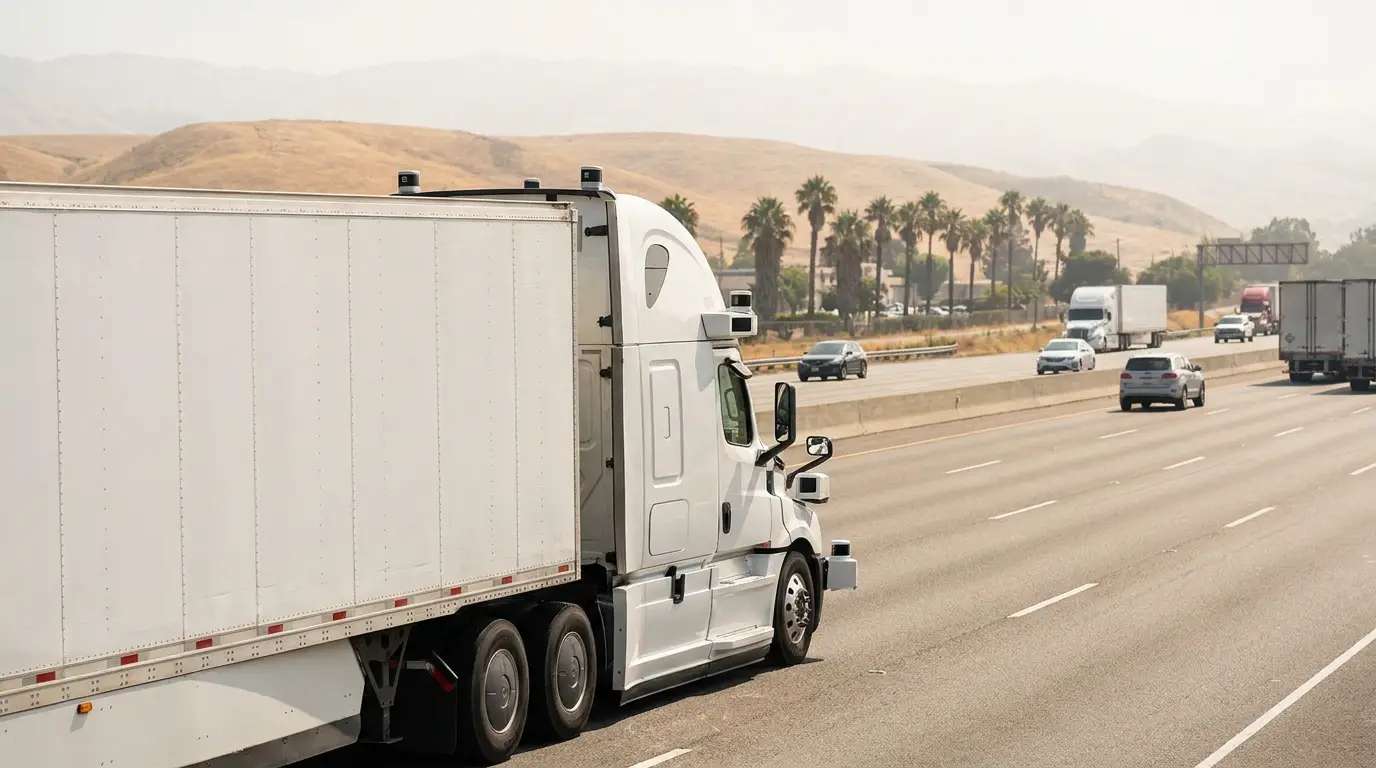
On August 18, 2026, Heavy Duty Trucking reported that California has started permitting heavy duty autonomous truck testing on public roads, with Aurora Innovation, Kodiak AI, Gatik and Plus.ai already on the state DMV permit list. Kodiak announced its own permit on August 13. The regulations behind the program were approved on April 28, 2026, and they reach vehicles over 10,000 pounds, which covers nearly everything a small fleet runs.
Every permit issued so far is for drivered testing, which means a safety driver is still in the seat. California built the program in phases that move from drivered testing to driverless testing to commercial deployment, and a company has to log 500,000 miles in a phase before it can ask for the next one. Testing is off limits on roads posted at 25 mph or lower unless it is a direct route between destinations, and a heavy autonomous truck still has to stop at California Highway Patrol weigh stations and meet the same state and federal commercial vehicle rules you meet.
The rules are already in court
Teamsters California has sued the DMV over the same regulations, arguing the agency pushed them through a process meant for minor updates and never did the economic and safety analysis the law requires, including any honest accounting of jobs. That case does not stop the permits that are already issued, but it does mean the timeline is unsettled. Aurora has said it wants 200 driverless trucks running by the end of 2026 and Volvo Autonomous Solutions is aiming at driverless operation in the first quarter of 2027. Whether those dates hold or slide a year, the trucks with safety drivers are on the road right now.
What this changes is your claim file, not your driving
Nothing here makes your day harder. What it changes is who sits on the other side of your next crash file. An autonomous test truck is instrumented end to end. It records video, radar and lidar returns, steering inputs and brake applications, and it is backed by a company that filed a written safety case with the state and keeps lawyers on retainer. If you tangle with one, that side shows up with a continuous data record and you show up with whatever you can prove.
That is a commercial auto liability question before it is a technology question. Your liability limit is the number that has to answer a bodily injury demand, and your own physical damage coverage is what gets your tractor repaired and earning while the fault fight runs for a year.
Three things worth fixing before you share a lane with one
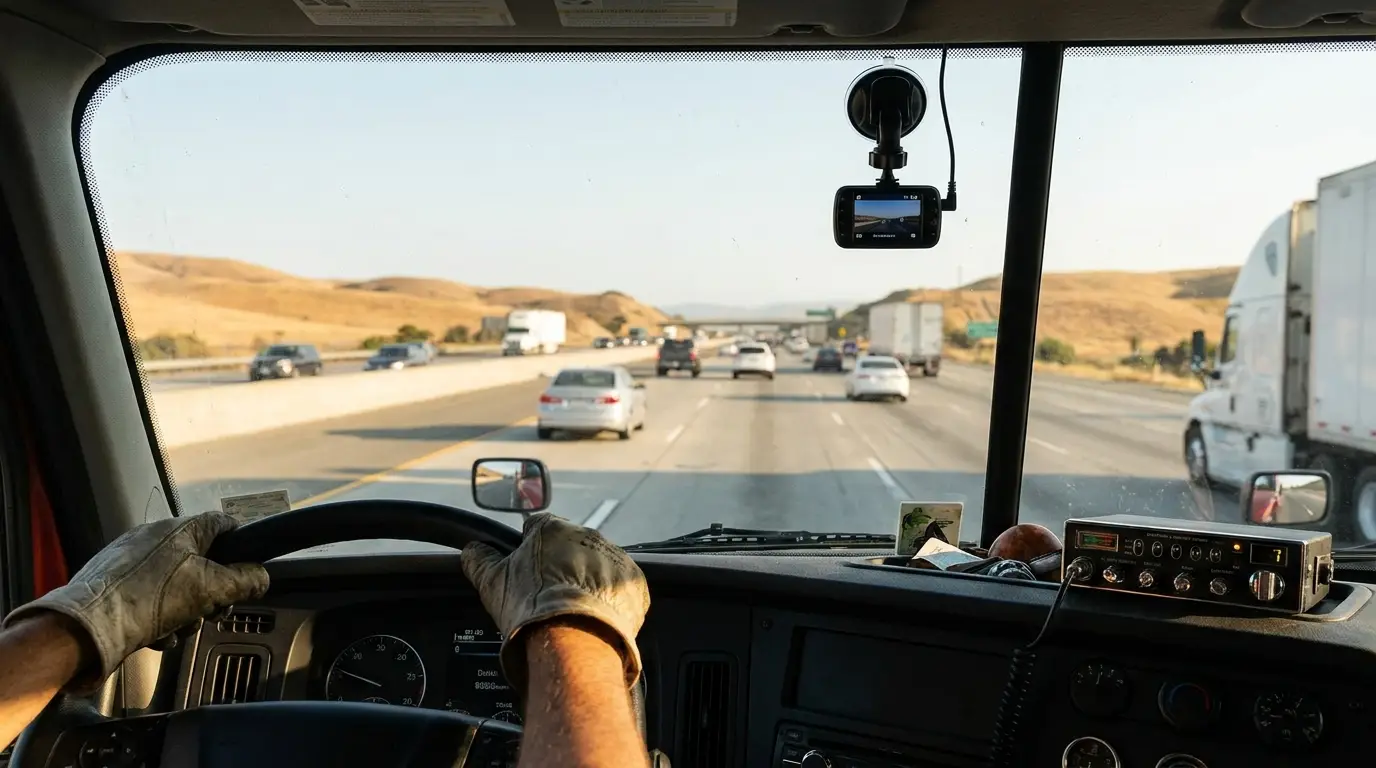
First, put a camera in the truck. For a few hundred dollars nothing else evens out an evidence mismatch that badly one sided. Second, look hard at your liability limit. Most owner operators still run the federal minimum, and once you price it out, what commercial truck insurance actually costs moves less than people expect when you step the limit up. Third, confirm that every tractor, trailer and driver in your operation is listed on the policy, because coverage arguments start with the schedule, not with the crash.
California first, everybody else later
The testing is happening in California, so this lands first on carriers working I-5, I-10, I-40 and the Central Valley lanes. If that is your territory, our page on commercial truck insurance in California covers the state side of it. If you only run in on occasional freight, the evidence logic follows you in anyway, and so does the cargo exposure riding behind you.
Get a truck insurance quote in under a minute and we will tell you plainly where your limits sit against the kind of counterparty now sharing your lane. No paperwork to dig up and no long forms. Start your quote here or call or text 423-264-4255 and we will read your current policy with you.
Common questions
Do autonomous trucks change my insurance requirements
No. Your federal minimum limits, your filings and your state requirements are exactly what they were last week. What changes is the quality of the evidence on the other side of a crash, which is an argument about limits and proof rather than about compliance.
Who pays if a self driving truck hits me
Liability still follows fault, and fault gets decided from the record. Your own coverage usually moves first, physical damage on your tractor and liability on any injury claim against you, and recovery from the other side comes later once the data is sorted out. That is exactly why your limits and your own evidence matter. Get a truck insurance quote or call or text 423-264-4255 and we will check both.
Are these trucks running with nobody in the seat
Not yet in California. Every permit issued under the new heavy duty rules so far is for drivered testing with a safety driver aboard, and a company has to run 500,000 miles in that phase before it can apply to test driverless.
Is a dashcam actually worth it for a one truck operation
Yes, and it is the cheapest thing on this list. When the other vehicle has a full sensor record, a plain forward facing camera is often the only thing that keeps the story from being told entirely by the other side. Some insurers will also look at it favorably at renewal.
Ready for a better rate?
We shop A-rated carriers against each other to find your lowest rate, fast. Under a minute to start, and no obligation.
Prefer to talk it through? Call or text (423) 264-4255 and a licensed agent will walk you through your options.