Baltimore's Hazmat Detour Just Became A 2030 Problem
The Fort McHenry and Harbor tunnels still refuse placarded loads, and the bridge that carried them over the harbor is not back until late 2030
If you move placarded freight through Baltimore, the detour you have been running since March 2024 now has a finish date, and it is later than the one everybody planned around. The Maryland Transportation Authority put the Francis Scott Key Bridge rebuild at $4.3 billion to $5.2 billion with an opening in late 2030, up from the $1.7 billion and fall 2028 first projected. On July 21, 2026 the MDTA released the Request for Qualifications for the main span and marine approaches, the largest of the four rebuild contracts. That is real progress. It is also four more years. For anyone buying commercial truck insurance in Maryland, the workaround is not a workaround anymore. It is the route.
The tunnel ban is a state rule, and it holds
Drivers sometimes assume the federal hazmat rules settle this. They do not. Under 49 CFR 177.810, nothing in the federal hazardous materials regulations overrides a state or local rule about what may move through an urban vehicular tunnel, with a narrow carve out for Class 7 radioactive material. Maryland has exactly that kind of rule and the MDTA enforces it.
The MDTA prohibits vehicles carrying bottled propane gas over 10 pounds per container with a maximum of 10 containers, bulk gasoline, flammable liquids, explosives, radioactive material and other hazardous materials from both the Fort McHenry Tunnel on I-95 and the Baltimore Harbor Tunnel on I-895. The detail lives in COMAR Title 11, Subtitle 7, Chapter 1. Those same tunnels also refuse anything wider than 8 feet 6 inches, taller than 13 feet 6 inches, longer than 55 feet, or over 80,000 pounds.
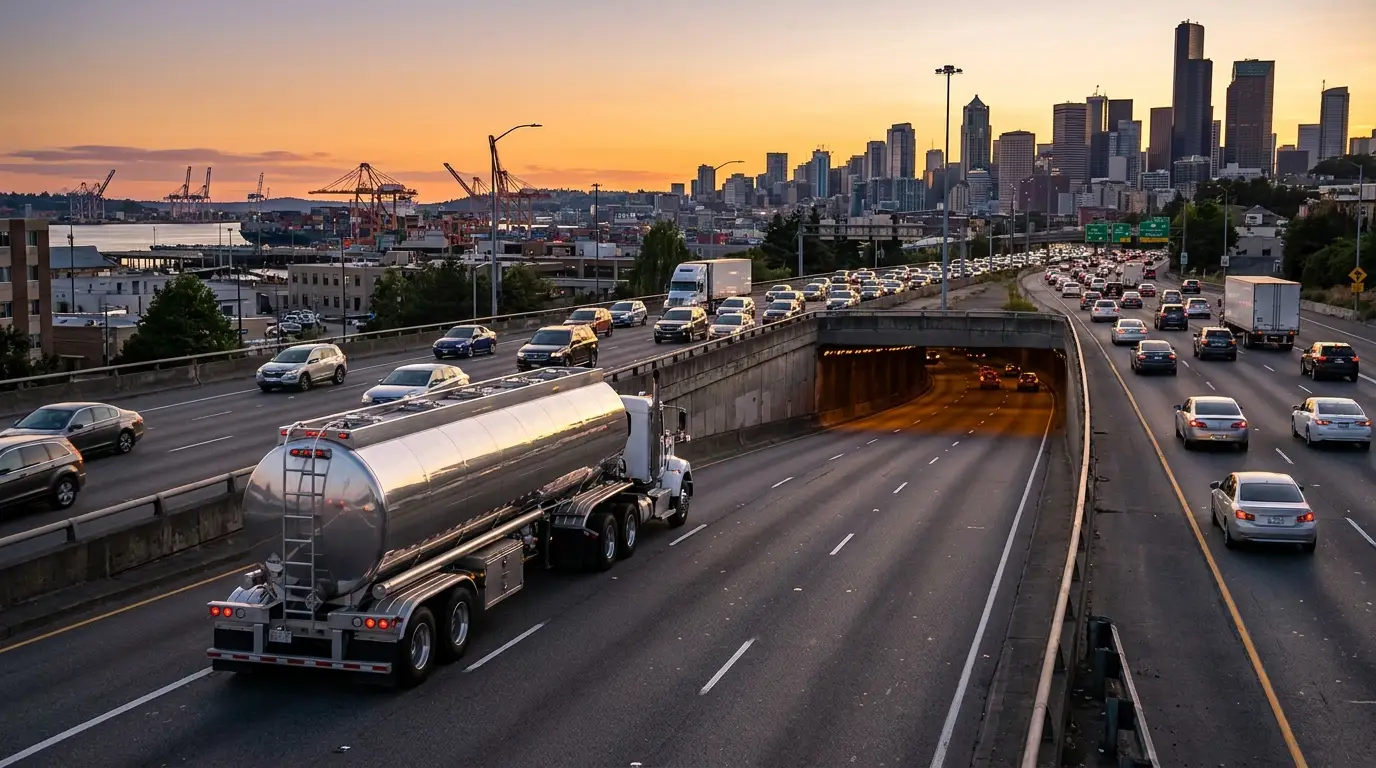
Before March 2024 the Key Bridge carried that traffic over the harbor on I-695. With the bridge down, the only legal path is the western loop of the Beltway, and CBS Baltimore reported the reroute runs more than 30 miles.
The question your application already asked
Here is where a routing problem turns into an insurance problem. Every commercial auto application asks what you haul. A carrier that answers general freight gets rated as general freight. Hazmat is a different animal to an underwriter, and most trucking programs treat pollution and hazardous cargo through separate exclusions, endorsements and limits rather than folding them into the base form. A load taken occasionally, because it paid well and the extra miles looked survivable, does not stop being hazmat because it was occasional.
The test is simple. If a placard would go on that trailer, the answer on the application has to reflect it, before the load and not after the claim. Commercial auto liability and motor truck cargo both read differently once the commodity changes, and nobody can fix that retroactively.
Enforcement writes it down
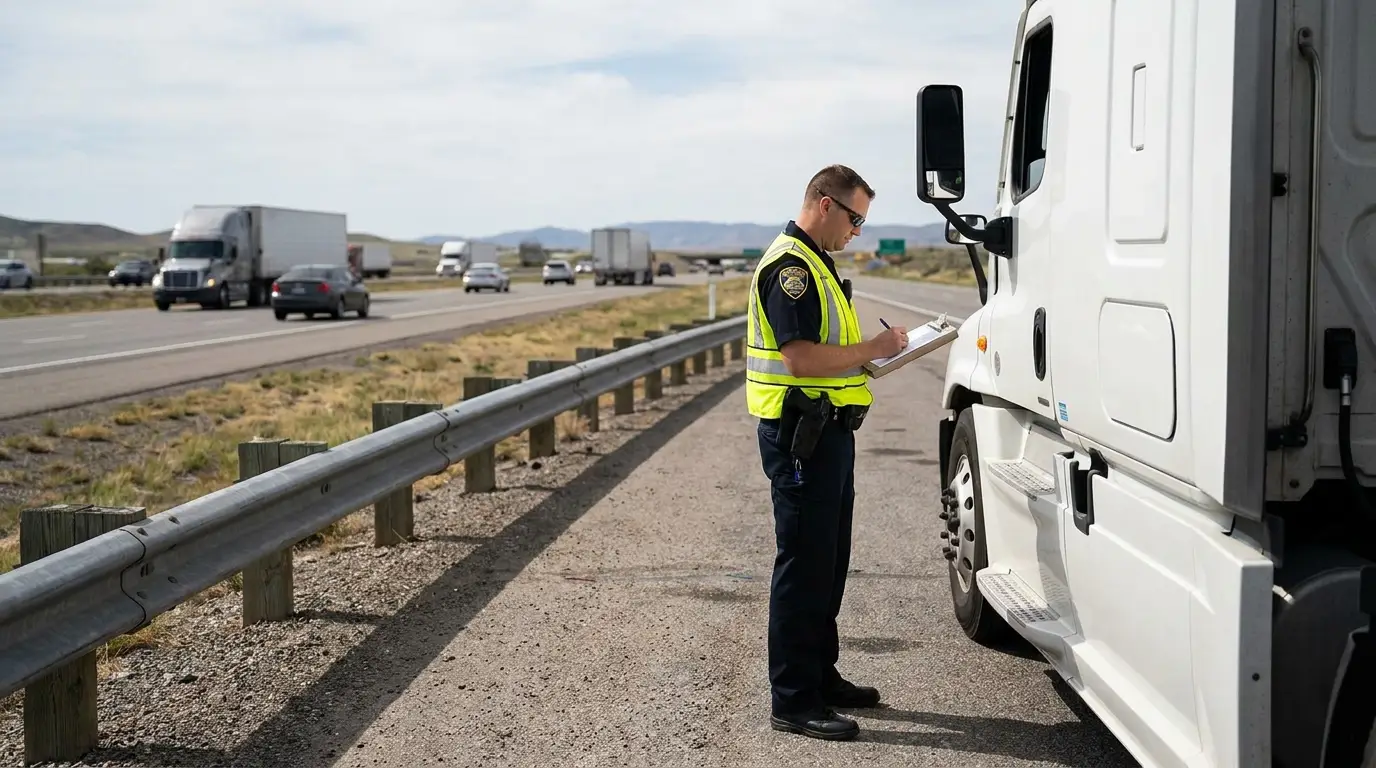
The tunnels are watched now. The Baltimore Banner reported in July 2024 that observers counted 40 tanker trucks moving through the Baltimore Harbor Tunnel in three hours across two days, 13 of them carrying placards normally banned there. The same reporting found zero hazmat inspections on the I-895 corridor in the month before the collapse and 11 in the month after. MDTA Police told CBS Baltimore that contacts with commercial vehicles had increased sharply on I-95 and especially I-895, and the agency has since hired consultants and worked with navigation providers to warn drivers before they reach the portals.
That matters well beyond the citation. An enforcement stop is a dated official record that your truck was carrying a specific commodity on a specific road. It attaches to the DOT number rather than the driver, and it is exactly the kind of document that surfaces at renewal when the file still says general freight. The Banner also reported that some drivers appear to be pulling placards to get through. Baltimore Fire Chief James Wallace was blunt about it, saying the absence of placards "presents a life safety problem". Taking the placard off does not take the cargo off, and it removes the one piece of information a responding crew needs first.
What the reroute costs that no policy pays
Cargo coverage pays for physical loss or damage to the freight. It does not pay for lateness. The extra 30 miles, the fuel, the hours burned on the western loop of I-695 and the appointment you missed at the other end are operating costs, and the only place to recover them is the rate you quote. Late 2030 is not temporary. Price it in.
The second cost is pressure, and it is the one that actually generates claims. A driver behind schedule on a longer legal route is a driver tempted by a shorter illegal one, and that call gets made at an interchange, at night, with a load that cannot be in a tunnel. Write the Baltimore routing down as a dispatch rule instead of leaving it to the person with the clock running.
Get a truck insurance quote for the Baltimore lanes
If any part of your operation touches placarded freight, that belongs in front of an underwriter now rather than at the next claim. Get a truck insurance quote in under a minute and we will price what you actually haul and where you actually run it. Call or text 423-264-4255, start on our Maryland truck insurance page, or go straight to the quote form.
Common questions
Can a truck carrying hazmat use the Fort McHenry or Baltimore Harbor tunnels?
No. The Maryland Transportation Authority prohibits bottled propane over 10 pounds per container with a maximum of 10 containers, bulk gasoline, flammable liquids, explosives, radioactive material and other hazardous materials from both the I-95 Fort McHenry Tunnel and the I-895 Baltimore Harbor Tunnel. The legal route is around the western loop of I-695.
How long will the Baltimore hazmat detour last?
The MDTA now projects the Francis Scott Key Bridge will open in late 2030 at a cost of $4.3 billion to $5.2 billion, up from an original estimate of $1.7 billion and a fall 2028 target. The main span contract went out for qualifications on July 21, 2026, so the detour is a multi year operating condition and not a short term inconvenience.
Does my truck policy cover hazardous cargo automatically?
Usually not. Most trucking programs handle pollution and hazardous cargo through separate exclusions, endorsements and limits, and the rate is built on the commodity you disclosed on the application. If you take placarded loads at all, tell your agent before the load moves. Get a truck insurance quote and we will confirm what your current form actually does, call or text 423-264-4255.
What happens if I get cited in a Maryland tunnel restriction stop?
Beyond the citation itself, the stop creates a dated official record tied to your DOT number showing what the truck was carrying and where. That record can surface at renewal and it is hard to explain away if your application described the operation differently. Keeping your routing and your disclosures consistent is cheaper than either outcome.
Ready for a better rate?
We shop A-rated carriers against each other to find your lowest rate, fast. Under a minute to start, and no obligation.
Prefer to talk it through? Call or text (423) 264-4255 and a licensed agent will walk you through your options.