Box Truck DOT Rules Start at 10,001 Pounds, Not 26,001
The weight line that decides your paperwork sits well below the one that decides your license
Two weight lines, and only one is about your license
Most people running box trucks learn one number early, 26,001 pounds. Under 49 CFR 383.5 a heavy straight vehicle needs a CDL once its gross vehicle weight rating or gross vehicle weight hits 26,001 pounds or more, whichever is greater. Stay under that and your driver keeps a regular license. That is true, and it is a big part of why small carriers buy box trucks in the first place.
The number that decides your paperwork is much lower. 49 CFR 390.5 defines a commercial motor vehicle as one with a gross vehicle weight rating or gross combination weight rating, or gross vehicle weight or gross combination weight, of 10,001 pounds or more, whichever is greater. A 26 foot box truck clears that on the spec sheet before anything is loaded into it. So the driver needs no CDL and the truck sits inside the full federal rulebook at the same time. Both are true at once, and the gap between those two numbers is where new box truck insurance buyers get hurt.
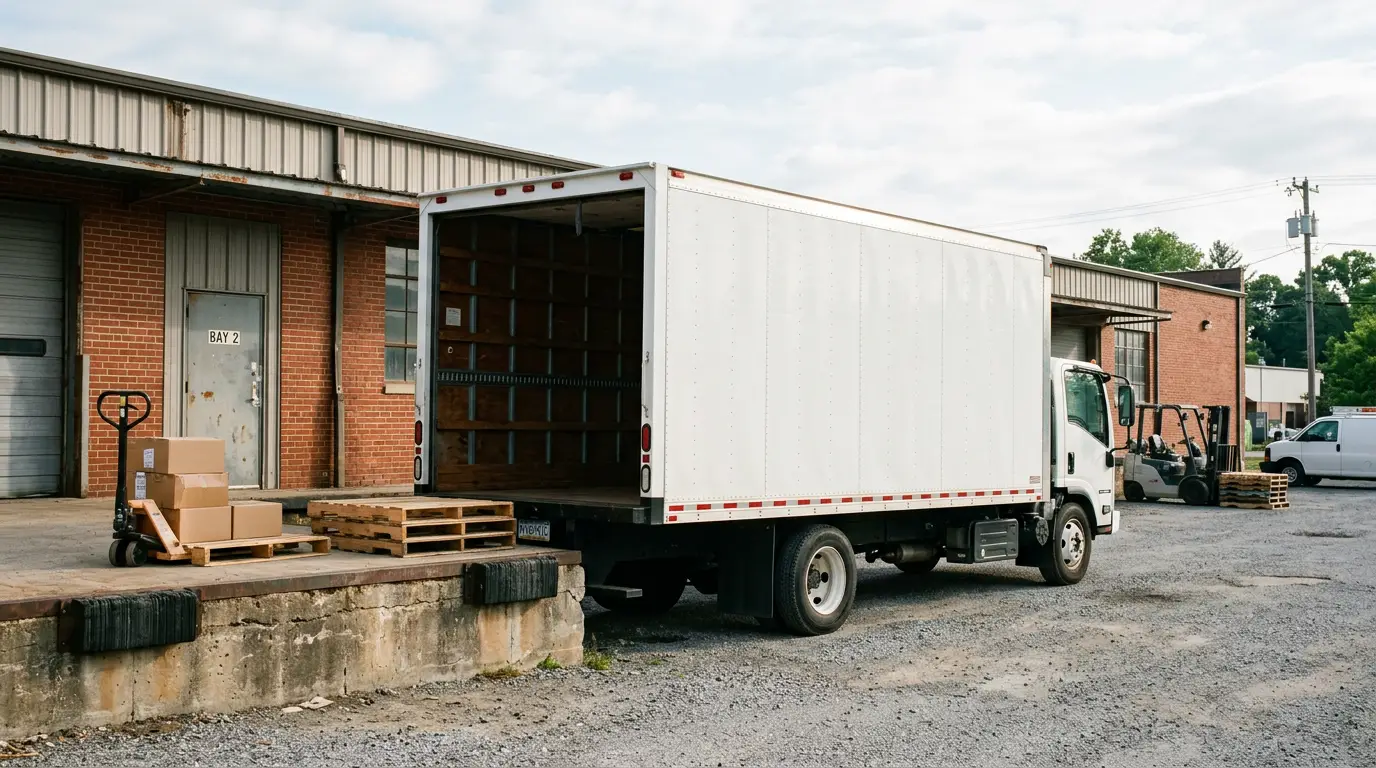
Whichever is greater does real work in that sentence
Read the definition once more. It lists the rating and it lists the actual weight, then it says whichever is greater. A truck rated at 9,900 pounds is not a commercial motor vehicle sitting empty in the yard. Load it to 10,400 pounds and it is one for that run, with everything that follows.
Operators who deliberately bought just under the line to stay outside the system often cross it on their heaviest days without ever thinking about it. Rating is the number you can look up. Actual weight is the number an inspector puts on a scale. Only one of those two is still under your control on a busy afternoon.
What crossing 10,001 pounds actually turns on
Once the truck is a commercial motor vehicle in interstate commerce, the list is not short, and none of it waits for a CDL.
Financial responsibility comes first. 49 CFR 387.3(a) applies the rules to for hire carriers transporting property in interstate or foreign commerce, and 387.3(c) exempts vehicles rated under 10,001 pounds except for certain hazardous materials. Clear 10,001 and the 387.9 schedule sets $750,000 as the minimum for non hazardous property, a figure that has not moved since it took effect on January 1, 1985.
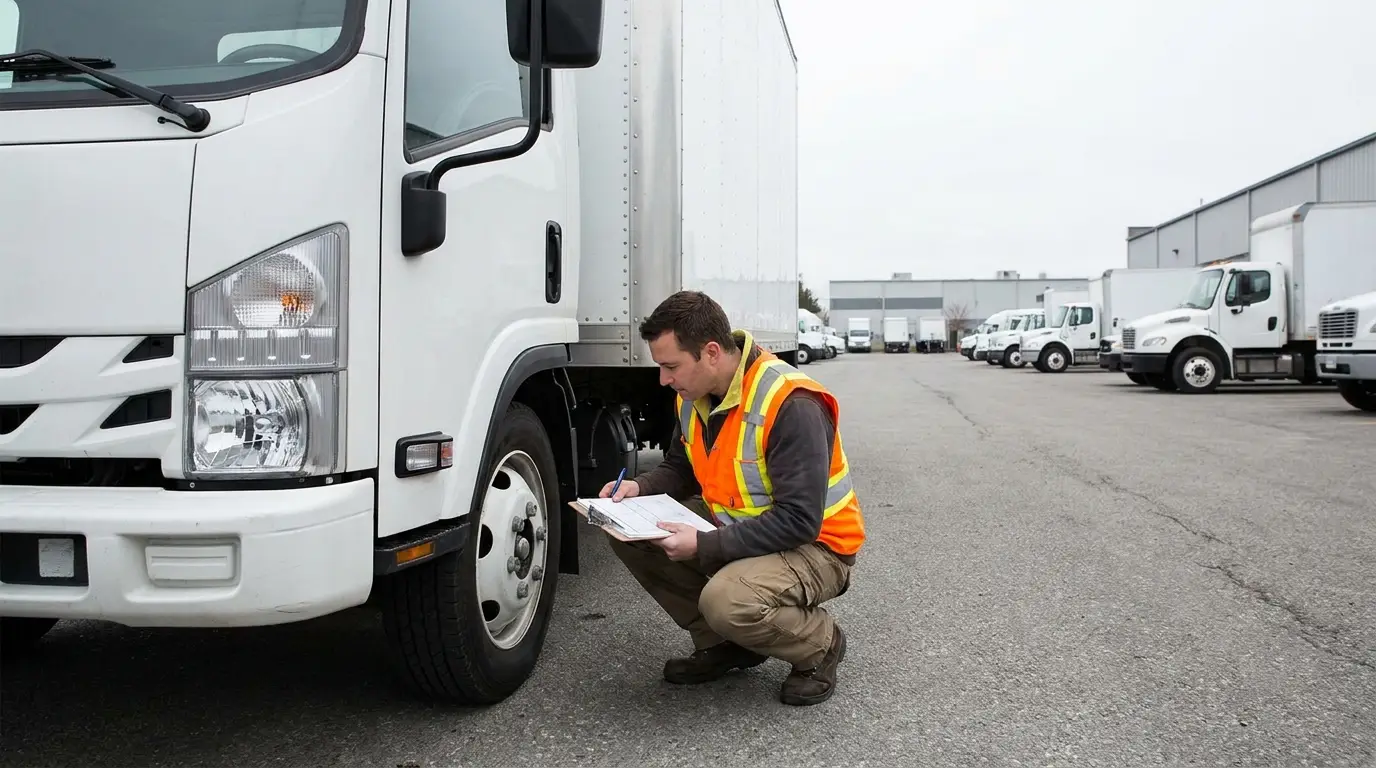
Then the operating basics. 49 CFR 390.21 requires the legal name and the USDOT number on both sides of the vehicle, readily legible in daylight from 50 feet. 49 CFR 391.11(b) qualifies the driver, at least 21 years old for interstate work, able to read and speak English, physically qualified, holding one license from one state, not disqualified under 391.15, and road tested. 49 CFR 391.45 puts a 24 month ceiling on the medical certificate. 49 CFR 395.8(a)(1)(i) requires an ELD unless a narrow exception applies, including drivers who complete duty status records on no more than 8 days in any 30 day period and vehicles manufactured before model year 2000. 49 CFR 396.11(a)(1) requires a driver vehicle inspection report at the completion of each day's work, kept three months under (a)(4). 49 CFR 396.17 requires a periodic inspection passed within the preceding 12 months with the documentation carried on the vehicle.
The one federal program your non CDL driver sits outside
Here is the place where staying under 26,001 pounds genuinely changes the rules rather than just the license. 49 CFR 382.103 ties the federal drug and alcohol testing program to people subject to the CDL requirements of part 383. Run box trucks under 26,001 pounds with non CDL drivers and part 382 does not reach you. No federal pre employment test, no random pool, no Clearinghouse query.
Underwriters know this. It is a large part of why a non CDL box truck fleet can rate higher than a heavier fleet with a similar loss history. The heavier fleet's drivers arrive pre screened by a federal program. Yours do not, unless you build that screening yourself. Voluntary testing, a written motor vehicle record standard, and a real hiring file are worth more on a box truck submission than on almost any other class, because they replace something the federal system is not doing for you.
Where this lands on your insurance
$750,000 is a filing minimum, not a number anyone should confuse with adequate. A box truck runs the same urban intersections, the same alleys, and the same loading zones as heavier equipment, and a serious injury claim does not care what the truck is rated at. Most box truck operations carry more than the floor, and it is worth understanding what your commercial auto liability limit really does before you learn it in a deposition.
Cargo is a separate decision with no federal floor behind it for general freight, so what you haul and what it is worth drives that limit on its own. Our box truck insurance page walks through how the class gets priced, and the motor truck cargo page covers the limit question in detail.
If your truck crossed 10,001 pounds and you are not certain the paperwork behind it kept up, that is a good reason to have the policy looked at fresh. Get a truck insurance quote in under a minute, or call or text 423-264-4255 and we will work through the filing and the limits with you.
Common questions
Does a box truck need a USDOT number?
If it is a commercial motor vehicle operating in interstate commerce, yes. 49 CFR 390.21 requires the legal name and the USDOT number on both sides of the vehicle, readily legible in daylight from 50 feet. The 10,001 pound definition in 49 CFR 390.5 is what pulls most box trucks into that requirement, not the CDL threshold.
How much liability does a box truck need federally?
For a for hire carrier hauling non hazardous property in interstate commerce with a vehicle rated 10,001 pounds or more, 49 CFR 387.9 sets $750,000. That figure took effect January 1, 1985 and has not changed since. It is a floor for the filing, not a recommendation. Call or text 423-264-4255 and we will price higher limits alongside it.
Do non CDL box truck drivers need DOT drug testing?
Not under federal rules. 49 CFR 382.103 applies the testing program to drivers subject to the CDL requirements of part 383, so a driver in a truck under 26,001 pounds falls outside it. Many carriers test anyway, and it helps at renewal because it gives an underwriter something verifiable in place of the federal program.
Does a box truck need an annual DOT inspection?
Yes, once it is a commercial motor vehicle. 49 CFR 396.17 requires a periodic inspection passed at least once during the preceding 12 months, with the documentation on the vehicle. Drivers also owe a daily inspection report under 49 CFR 396.11, kept three months. Clean inspection records make it easier to get a truck insurance quote at a competitive number.
Ready for a better rate?
We shop A-rated carriers against each other to find your lowest rate, fast. Under a minute to start, and no obligation.
Prefer to talk it through? Call or text (423) 264-4255 and a licensed agent will walk you through your options.