Brake Safety Week Hits August 23 And Drums Are Under The Light Again
CVSA has set the week for August 23 through 29 and put brake drums and air disc rotors under the light for a second year. An out of service order is not just a bad afternoon, it is a line in the file your underwriter reads at renewal.
CVSA set the week for August 23 through 29
Trucking Info reported on July 31, 2026 that the Commercial Vehicle Safety Alliance has scheduled this year's Brake Safety Week for August 23 through 29. Certified inspectors in the United States, Canada, and Mexico will run their normal roadside inspections all week with brake systems and components getting the extra attention, and they will report what they find back to CVSA.
The named focus area is brake drums and air disc brake rotors, the same target as last year. Anything found out of service, brake related or not, parks the truck where it sits until the repair is made. That is the part owner-operators feel first, because a truck on a shoulder in another state is not earning anything.
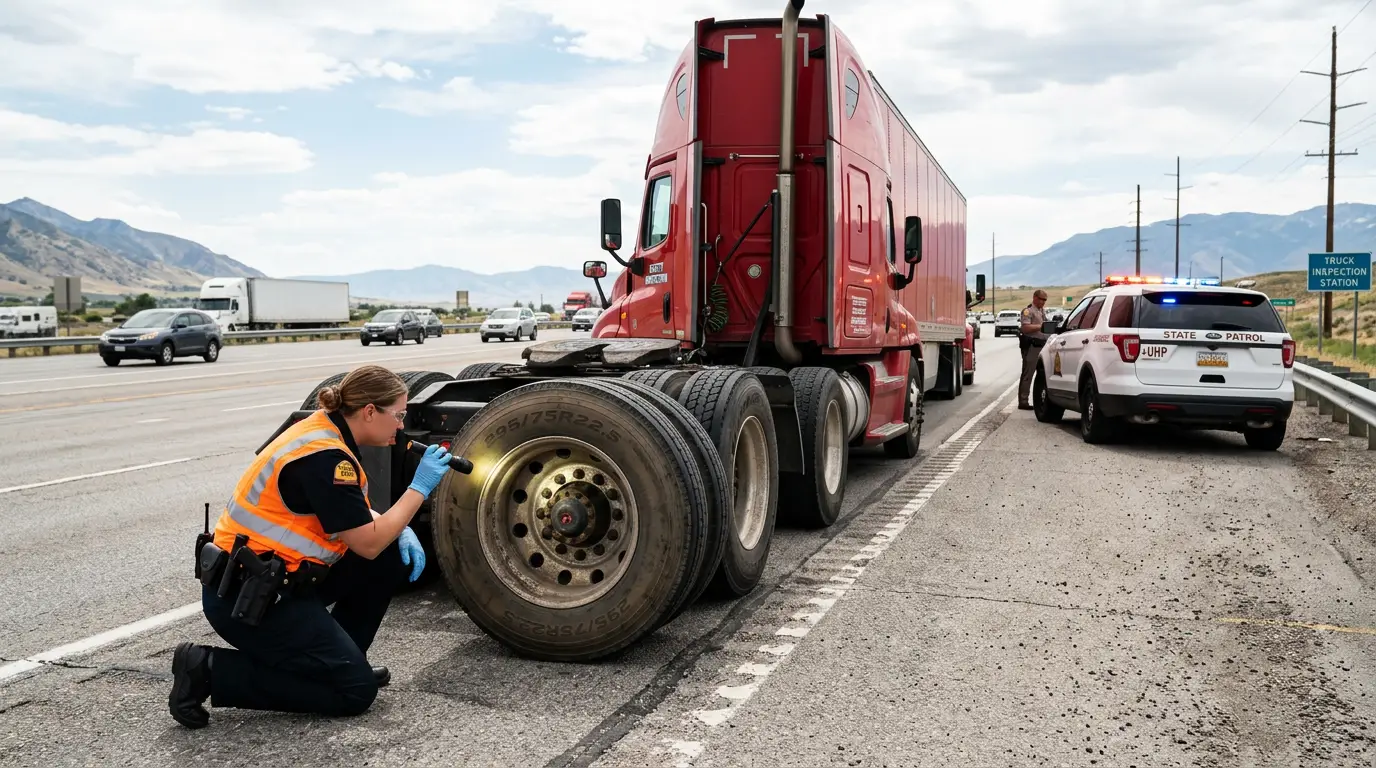
Brakes park more trucks than anything else
The 2025 results tell you why CVSA keeps coming back to this. Inspectors in 52 jurisdictions ran 15,175 inspections during last year's Brake Safety Week and placed 2,296 vehicles out of service for brake related violations. That is a 15.1 percent out of service rate. Roughly one truck in seven that got looked at did not drive away. The drum and rotor emphasis produced 113 violations on its own, and 39 of those trucks were parked for it.
The number that should worry you more came from a surprise. CVSA also runs an unannounced one day brake blitz, and this year's version covered 4,021 inspections across 47 jurisdictions and parked 574 vehicles for brake violations. That is a 14.3 percent out of service rate, up sharply from 8.7 percent in the prior year's unannounced campaign. Drum and rotor findings came to 43 violations with 21 of them out of service.
An announced week measures how the industry looks when it knows the inspectors are coming. An unannounced day measures how it actually looks on an ordinary Tuesday. The two numbers landing this close together is not a comfortable sign.
What the inspector is looking for on a drum or rotor
The out of service conditions for this focus area are narrow and specific, which is good news if your equipment is maintained and bad news if it is not. A rotor goes out of service when it carries a crack running more than 75 percent across the friction surface that passes completely through the rotor. Any drum or rotor with a portion missing, or a portion in danger of falling off, is an out of service item on its own. So is evidence of oil, grease, or brake fluid contamination on the friction surface and on the brake friction material.
Read those in plain terms. The first two are about a chunk of hot metal leaving a wheel at highway speed and finding the vehicle behind you. The third is about a brake that looks present and is quietly not doing its share of the stop. A leaking wheel seal is the usual culprit, and it is the kind of thing that gets noted and postponed on a busy week.
An out of service order is an insurance event
Here is the connection most drivers miss. Roadside violations do not stop at the ticket. They feed the FMCSA Safety Measurement System, and brake findings land in the Vehicle Maintenance category. Recent violations carry more weight than old ones, so a brake out of service order in late August is still sitting near the top of your profile when a renewal comes up in the fall or winter. Underwriters pull that profile. They read the pattern in it, not just the total.
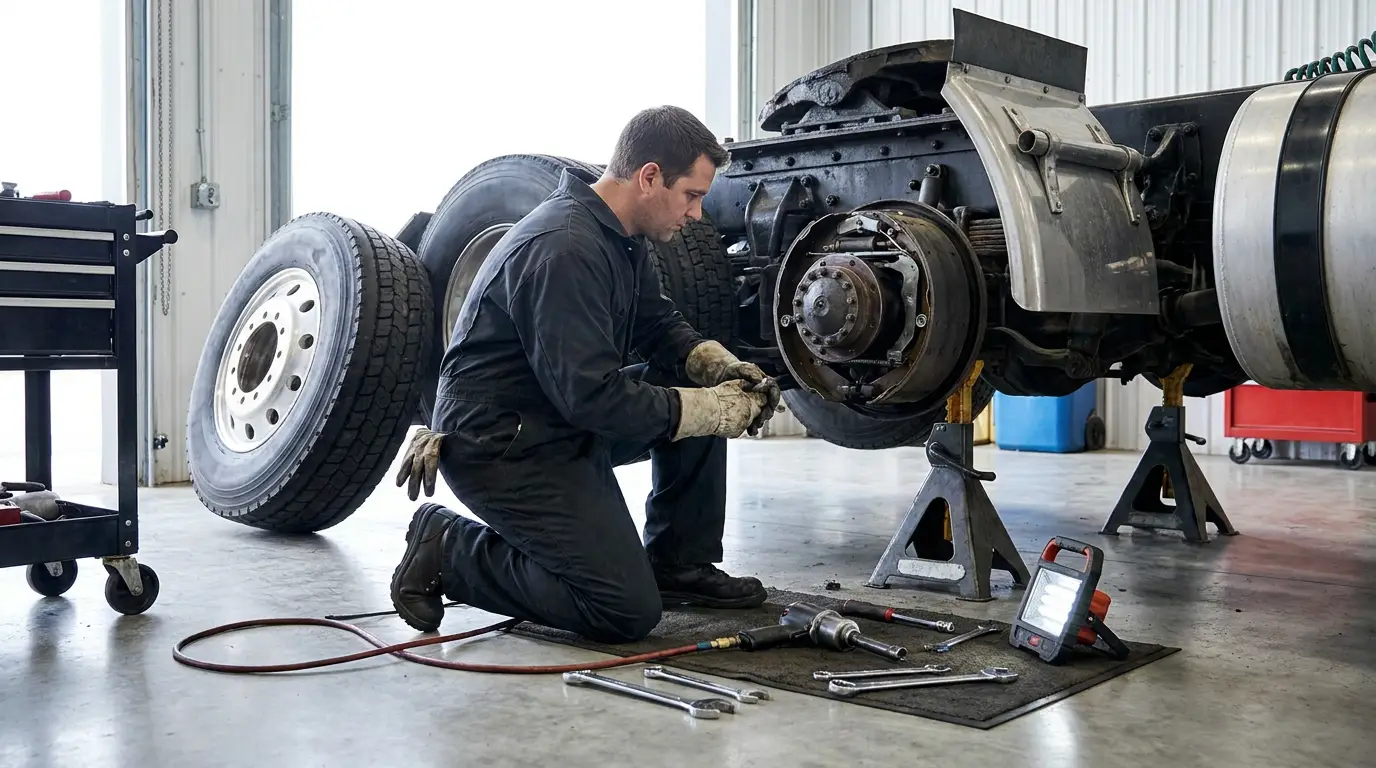
The bigger exposure is what a documented brake defect does to a crash file. If a loaded truck rear ends someone and the inspection history shows a brake violation from two months prior, the argument on the other side writes itself, and the case stops being about the moment of the crash. That is the mechanism behind the awards that have pushed commercial auto liability limits up across the industry. Clean maintenance records are not paperwork. They are the defense.
What getting parked costs before any claim shows up
Assume nothing hits anything and you simply get an out of service order. You still pay for a mobile repair at roadside pricing, or a tow if the fix cannot happen in place. You lose the delivery window and whatever the shipper does about it. And your trailer sits somewhere unplanned, which is exactly the situation cargo claims come out of, so it is worth knowing what your motor truck cargo coverage actually says about an unattended load.
One thing to be clear about is that a worn drum is a maintenance cost and not a claim. Physical damage coverage answers for collision, fire, theft, and weather on your own truck. It does not answer for a part that wore out. Budgeting brake work as a fixed operating expense rather than hoping a policy absorbs it is the honest way to plan the month.
Three weeks is enough time to fix this
Pull the wheels on whatever is closest to due. Measure lining thickness, look for cracks and heat checking on the drums, and check the friction surfaces for the oil and grease contamination that puts a truck out of service on its own. Verify pushrod stroke on every axle, chase down air leaks, and confirm the slack adjusters are doing their job. Then keep the invoices. A stack of dated repair records is what turns a rough year into a story an underwriter can accept.
Get the coverage side settled before the week starts
If you are not sure your limits match how loads are actually valued now, or your renewal is coming while an inspection is still fresh on your record, look at it before August 23 rather than after. Our breakdown of what commercial truck insurance costs shows where the premium goes and what moves it. Get a truck insurance quote in under a minute, or call or text 423-264-4255 and we will read your current policy with you. You can also request a quote and compare the options side by side.
Common questions
When is Brake Safety Week 2026 and what are inspectors focused on?
CVSA has scheduled Brake Safety Week for August 23 through 29, 2026, across the United States, Canada, and Mexico. Inspectors run their normal roadside inspections that week with added attention on brake systems, and the named focus area is the condition of brake drums and air disc brake rotors.
Does a brake out of service violation raise my truck insurance rate?
It can. Roadside violations feed the FMCSA Safety Measurement System, and brake findings land in the Vehicle Maintenance category. Recent violations weigh more heavily than older ones, so a violation in late August is still prominent at a fall or winter renewal. Underwriters look at the pattern more than the raw count. Get a truck insurance quote before your renewal date and call or text 423-264-4255 if you want the record reviewed first.
What puts a brake drum or rotor out of service?
Three conditions in the CVSA criteria. A rotor cracked more than 75 percent across the friction surface with the crack passing completely through. Any portion of a drum or rotor missing or in danger of falling off. And evidence of oil, grease, or brake fluid contamination on the friction surface and the brake friction material.
Will my insurance pay for the repair if I get parked during Brake Safety Week?
No. A worn or cracked drum is a maintenance expense, not an insured loss. Physical damage coverage responds to collision, fire, theft, and weather damage to your truck, not to normal wear. Plan brake work as an operating cost, and keep the invoices because documented maintenance helps at renewal.
Ready for a better rate?
We shop A-rated carriers against each other to find your lowest rate, fast. Under a minute to start, and no obligation.
Prefer to talk it through? Call or text (423) 264-4255 and a licensed agent will walk you through your options.