Why a Missing CARB Label Can Strand Your Reefer at a California Dock
The zero emission reefer mandate is off for trucks. The registration, the fee and the gate check are not, and the gate check is where a load gets stuck.
The headline everyone heard was only half the story
In January 2025 the EPA granted California a partial authorization for the 2022 amendments to its transport refrigeration unit rule, the regulation CARB calls the TRU ATCM. The part it left out was the requirement to turn over at least 15 percent of a diesel truck TRU fleet to zero emission units every year, and CARB withdrew that piece. Trucking Info covered it in June 2025, and plenty of operators read it as California backing off reefers.
It did not. CARB's own June 2025 FAQ says truck TRU owners do not have to go zero emission, and in the same answer it says the units still have to meet the refrigerant limit, the reporting rules and the labeling rules. Everything else in the 2022 amendments is in force, and it applies to every TRU that runs in California no matter where the truck is based. If you haul produce, protein or frozen freight into the state, this post is the compliance layer our reefer truck insurance page does not cover.
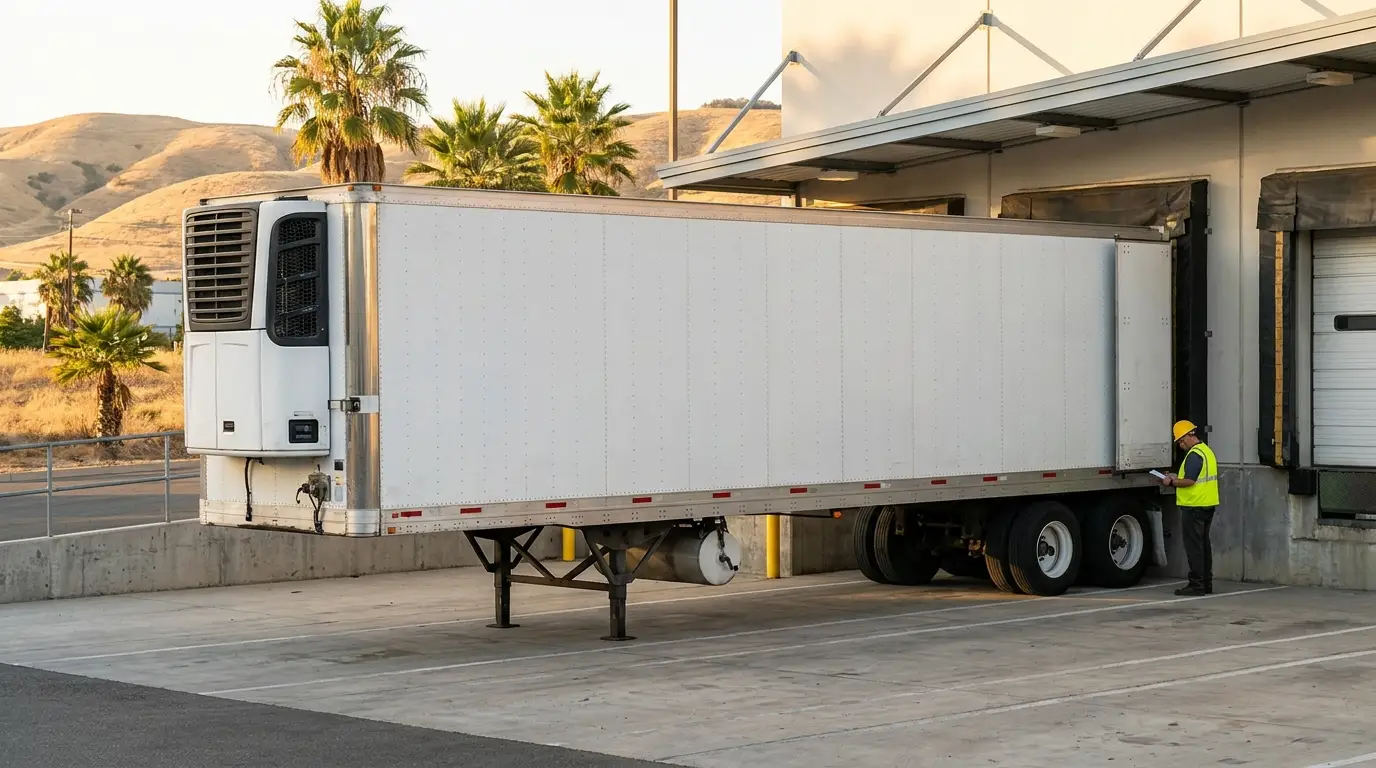
What an out of state reefer owner has to do
Every TRU that operates in California has to be reported to CARB through its ARBER equipment registration system, whether the unit is based in Fresno or in Georgia. Once a unit is reported, ARBER assigns it a CARB identification number.
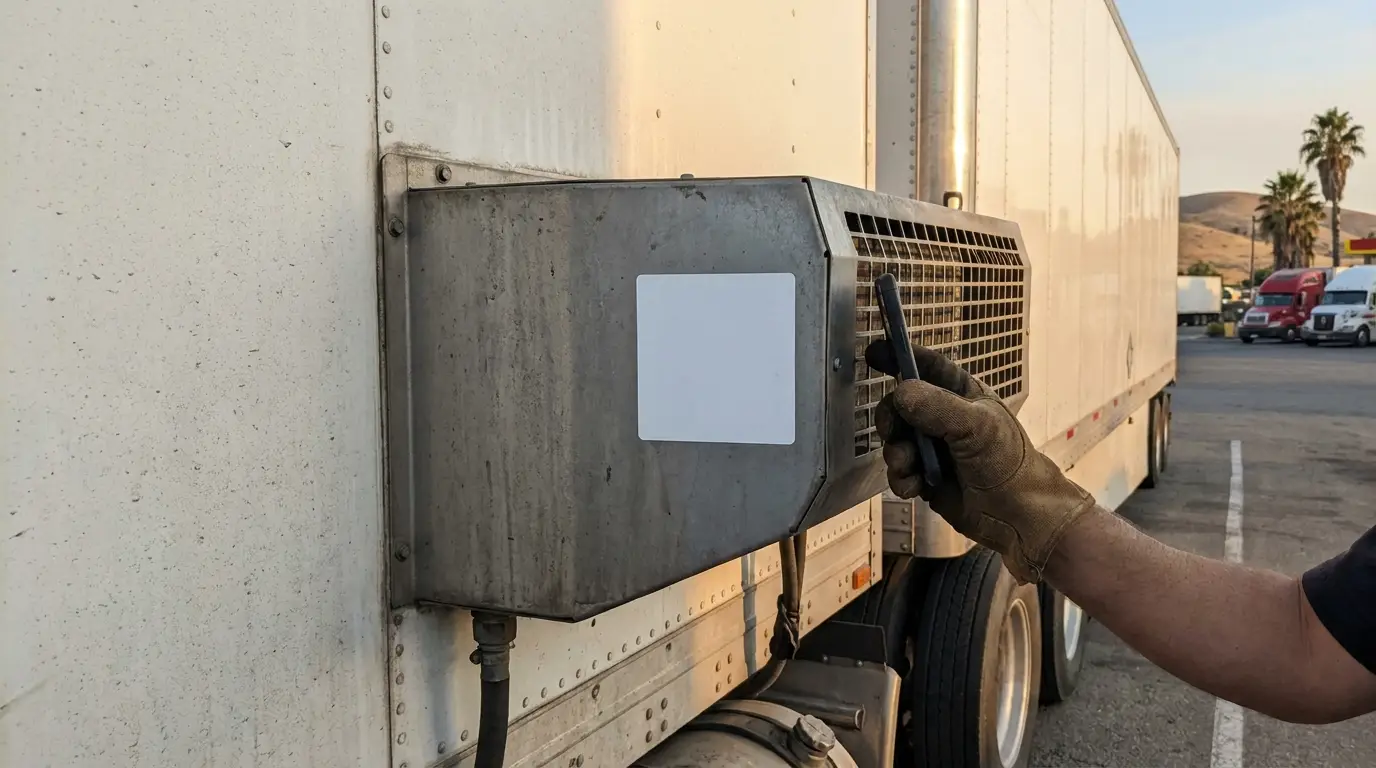
Then comes the money. After Governor Newsom signed Senate Bill 153 on September 17, 2025, CARB set the operating fee for diesel TRUs at $45 per unit, paid once every three years. CARB checks compliance and payment before it mails anything, and what it mails is two compliance labels per unit, each 4.5 inches square. One goes on each side of the TRU chassis housing, you punch the expiration month yourself, and you have 30 days from receipt to put them on. The labels are good for three years, and CARB sends a renewal invoice up to 60 days before they run out.
Newer truck TRUs carry one more condition. Units manufactured on or after December 31, 2022 must use a refrigerant with a global warming potential of 2,200 or less, or no refrigerant at all.
The receiver is now the checkpoint
This is the part that turns a paperwork item into a lost day. CARB's rule makes certain facilities responsible for the TRUs that run on their property. Those applicable facilities are refrigerated warehouses and distribution centers of 20,000 square feet or more, grocery stores of 15,000 square feet or more, seaport facilities and intermodal railyards.
Each one had to register with CARB and pick one of two options. Option 1 is reporting all TRU activity to CARB every quarter. Option 2 is a declaration, made under penalty of perjury, that noncompliant TRUs will not be allowed to operate inside the fence line. A facility that picks neither is put on Option 2 by default. CARB tells those facilities to verify each arriving unit by its valid label, by the public ARBER compliance search, by the carrier appearing on CARB's list of fully compliant carriers, or by CARB's compliant TRU file.
Put plainly, the dock supervisor at a big California DC may have signed a sworn statement that your unlabeled reefer does not come through the gate. That is a strong incentive to send you back to the street.
Why a gate refusal is a coverage problem, not only a fine
Picture the load. You are holding a setpoint on a trailer of berries, the receiver will not take you, and the clock keeps running while you wait on a broker to find another plan. Nothing broke. The unit ran fine. That matters, because refrigeration breakdown coverage is generally built around a mechanical or electrical failure of the unit, and a refusal at the gate is not one.
Many motor truck cargo forms are also written around direct physical loss to the freight and exclude loss caused by delay or loss of market. A load that ages out while it sits because of a registration gap can land squarely in that exclusion, and a shipper or broker may look to you for the difference. Read your own form with your agent, because the wording varies by insurer.
A five minute check before your next California load
Log into ARBER and make sure every unit you run is on the list, with current contact details and no units you have sold. Look at both sides of each reefer housing for two matching labels with the right month punched. If an invoice is sitting unpaid, pay it, since labels only ship after the fee clears. Then look up your own units on the public compliance search the same way a receiver would.
Get coverage that fits how you actually run
If you run reefer freight into California, we can look at your cargo form, your breakdown coverage and your limits against the lanes you really run. Get a truck insurance quote in under a minute on our quote form, or call or text 423-264-4255 and talk to a person. You can also read more on our reefer truck insurance page before you call.
Common questions
Do out of state reefers have to register with CARB?
Yes. CARB requires every transport refrigeration unit that operates in California to be reported through its ARBER system, whether the unit is based in California or in another state. Each compliant unit then gets a CARB identification number and a set of compliance labels.
Do I have to buy a zero emission reefer to run in California?
Not for truck TRUs. In January 2025 the EPA authorized the 2022 amendments except the zero emission turnover requirement for truck TRUs, and CARB confirmed in June 2025 that owners are not required to switch. The units still have to meet the refrigerant, reporting and labeling rules.
How much is the CARB reefer fee?
CARB set the operating fee for diesel TRUs at $45 per unit, paid once every three years, after Senate Bill 153 gave it fee authority on September 17, 2025. CARB issues the two compliance labels only after the fee is paid and processed.
Will my cargo policy pay if a receiver turns my reefer away?
Often it will not, because nothing physically damaged the freight and many cargo forms exclude delay and loss of market. It depends on your exact form. Call or text 423-264-4255 and we will walk through yours, or get a truck insurance quote online in under a minute.
Ready for a better rate?
We shop A-rated carriers against each other to find your lowest rate, fast. Under a minute to start, and no obligation.
Prefer to talk it through? Call or text (423) 264-4255 and a licensed agent will walk you through your options.