Cargo Exclusions That Surprise Truckers at Claim Time
There is no federal cargo minimum for general freight anymore, so the policy form decides everything. Here is what it will not pay for and why.
The cargo limit on your certificate is not a federal number
Most owner-operators assume the cargo limit on their certificate came from a rule somewhere. It did not. FMCSA stopped requiring general freight for-hire carriers and freight forwarders to carry and file cargo insurance on March 21 2011, when it dropped the old BMC-32 filing. Transport Topics reported at the time that the change lifted the requirement from tens of thousands of carriers and forwarders.
One exception survived. Household goods carriers still file, at the amounts in 49 CFR 387.303(c), which are $5,000 for loss or damage on any one motor vehicle and $10,000 at any one time and place. Nobody running dry van or flatbed is held to those numbers, so the limit you carry came out of a broker contract or out of whatever your agent quoted. When no regulator sets the floor, the policy form does all the work, and a cargo form is mostly a list of what it will not pay for. Our motor truck cargo insurance page covers how that limit gets set.
Theft coverage is a condition wearing a peril's clothes
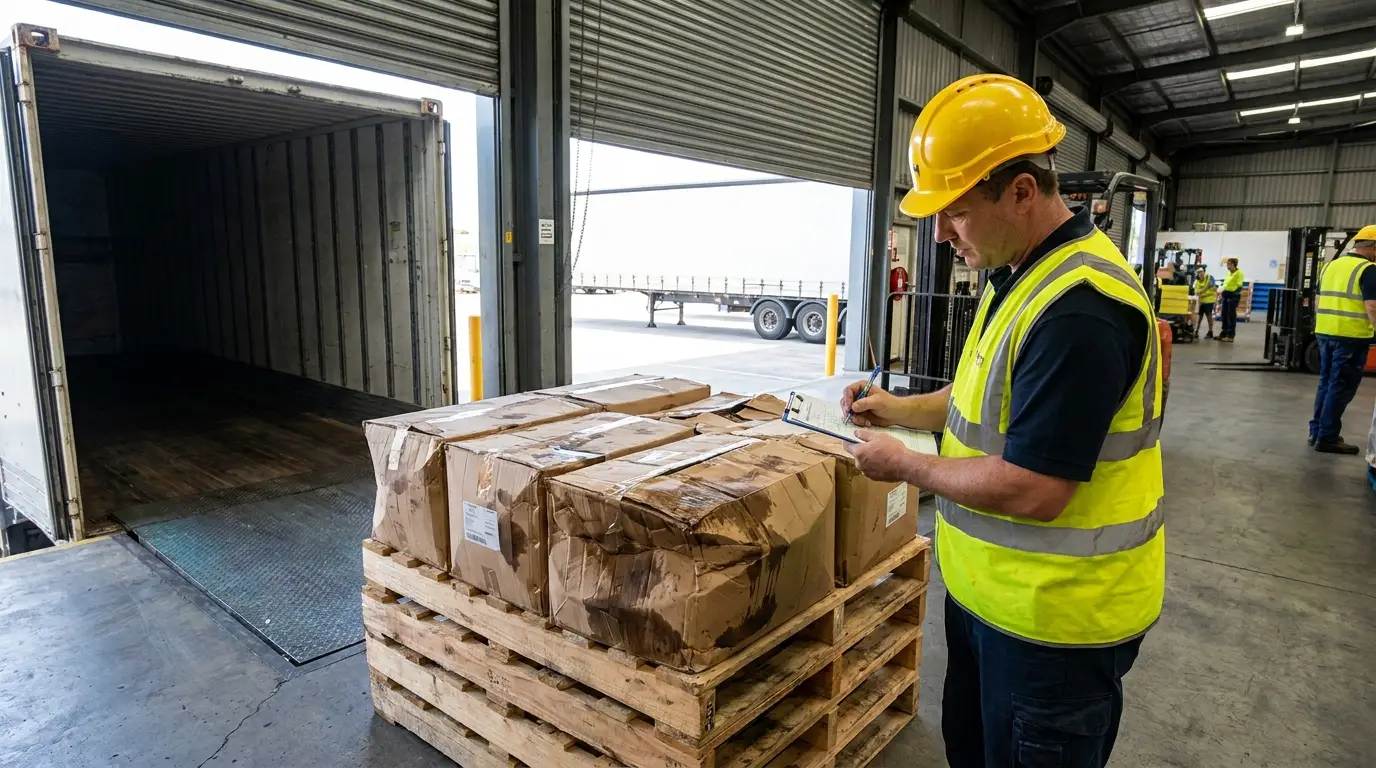
Cargo forms rarely say they exclude theft. They say they exclude theft from an unattended vehicle, then define unattended somewhere else, often as any time the driver is not within sight of the trailer or the truck is not locked in a lot the policy describes. A fuel stop or a night in a rest area can land on the wrong side of that line depending on which form you bought. Fraudulent pickup is the other trap, because a load handed to someone posing as the assigned carrier was not taken by force. Some forms answer for it under separate wording and some do not answer at all.
Reefer breakdown is a separate promise
Standard cargo wording usually excludes loss caused by a failure of the refrigeration unit. Coverage comes back only through a breakdown agreement with its own conditions, which typically require a documented pre-trip on the unit and a continuous temperature record for the trip. They still exclude a unit that was simply set wrong.
Securement is where a claim quietly becomes your fault
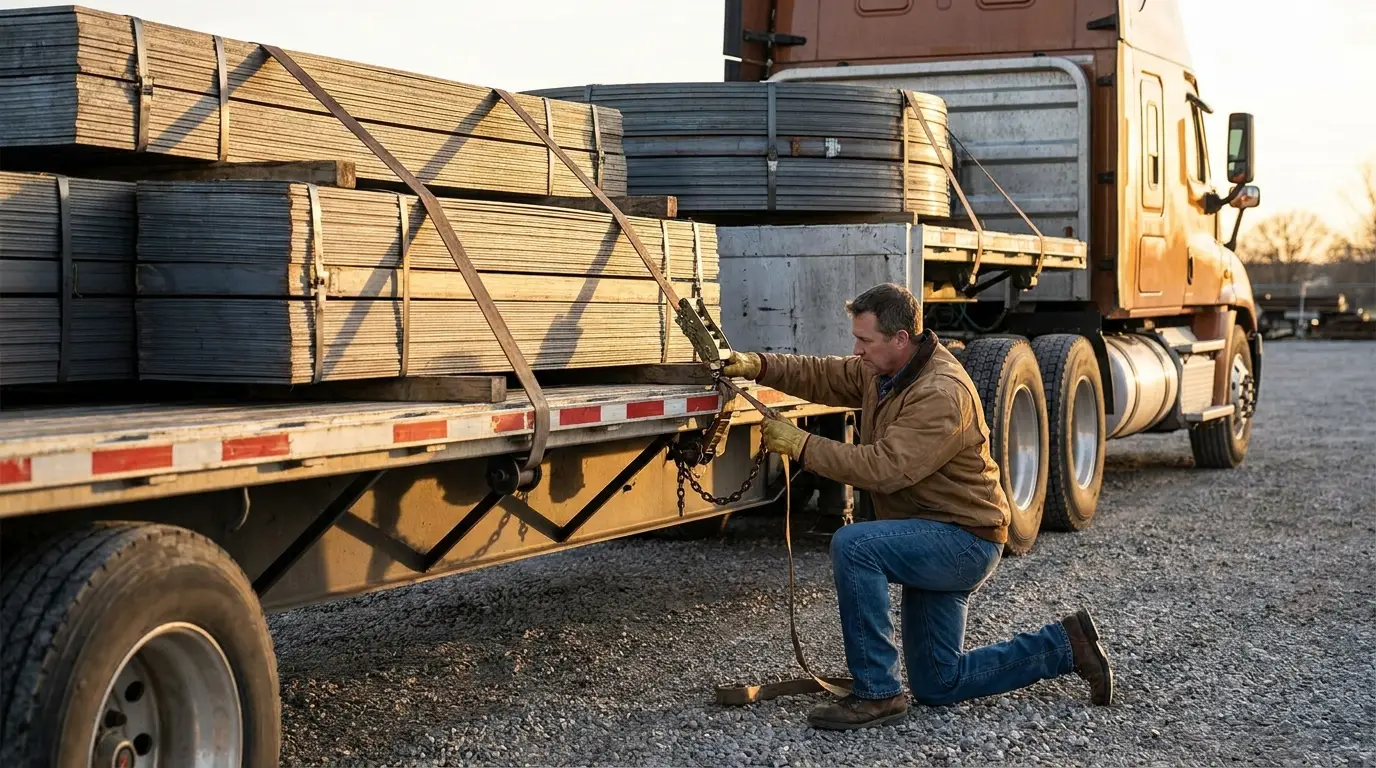
Nearly every cargo form excludes loss caused by improper loading or securement when the insured did the loading. This one bites harder than the rest because the adjuster does not have to argue about it. Federal rules already supply the yardstick. Under 49 CFR 393.100 the load has to be secured so it cannot leak, spill, blow, or fall, and so it cannot shift enough to affect stability. Under 49 CFR 393.106(d) the aggregate working load limit of your tiedowns has to be at least one-half the weight of what you are hauling. Under 49 CFR 393.110(b) an unblocked article longer than ten feet needs two tiedowns plus one more for every additional ten feet or fraction of it.
Those are the same numbers an officer uses at the scale. A securement violation written on the trip that ended in a shifted load is not just a CSA problem. It is a document in your own claim file answering the exact question the exclusion asks.
Commodities, sublimits, and freight nobody was told about
Cargo forms carry a schedule of commodities and sublimits under it. Electronics, alcohol and tobacco, pharmaceuticals, and seafood are the usual names, and the sublimit is often a fraction of your full limit. Live animals, money, and fine art are commonly excluded outright. The bigger exposure is simpler. If your application says dry van general freight and you take a load outside it because the rate was good, you may have no cargo coverage on that trip at all. Pulling somebody else's trailer adds a second gap, because damage to the trailer is not cargo. That belongs on trailer interchange coverage.
The deadlines that end a claim before any exclusion matters
Two clocks run at once. The first is the shipper claiming against you. Under the Carmack Amendment at 49 U.S.C. 14706 a carrier cannot give a claimant less than 9 months to file, or less than 2 years to bring a civil action once the carrier has denied part of the claim in writing. The second is the process itself. Under 49 CFR 370.3 a claim only counts if it identifies the shipment, asserts liability, and states a specific or determinable amount, and a bad order report standing alone is not enough. Under 49 CFR 370.5 the carrier acknowledges in writing within 30 days, and under 49 CFR 370.9 it has to pay, decline, or make a firm settlement offer within 120 days. Your own duty to report the loss to your insurer is separate and usually far shorter. Our guide to how cargo coverage works breaks down the rest of the form.
Pull your cargo form and read four things. The definition of unattended, the breakdown conditions if you run reefer, the commodity schedule and its sublimits, and your own notice deadline. If any of them do not match how you really run, that is a renewal conversation, not a post-loss one. Get a truck insurance quote in under a minute and we will read your cargo policy against the freight you actually haul, or call or text 423-264-4255. Start at our quote form.
Common questions
Why did my cargo claim get denied when I have cargo insurance?
Most denials are not about the limit, they are about an exclusion or a condition. The four that catch owner-operators most often are theft from an unattended vehicle, refrigeration breakdown without a temperature record, improper securement or loading by the insured, and hauling a commodity outside the schedule on your application. Each of those is written into the form rather than into any federal rule. Call or text 423-264-4255 and we will read your form with you.
Is there a legal minimum for cargo insurance on a truck?
Not for general freight. FMCSA dropped the cargo insurance filing requirement for for-hire property carriers and freight forwarders effective March 21 2011. Household goods carriers are the exception and still file under 49 CFR 387.303(c), at $5,000 for any one motor vehicle and $10,000 at any one time and place. For everyone else the limit is set by broker and shipper contracts, which is why most carriers land on $100,000 without knowing why.
How long does a shipper have to file a cargo claim against me?
Under 49 U.S.C. 14706 you cannot give a claimant less than 9 months to file, or less than 2 years to sue after you deny part of the claim in writing. On the processing side, 49 CFR 370.5 requires written acknowledgment within 30 days and 49 CFR 370.9 requires you to pay, decline, or make a firm settlement offer within 120 days. Your own deadline to report the loss to your insurer is separate and usually far shorter.
Does cargo insurance cover damage to a trailer I am pulling?
No. Cargo coverage answers for the freight, not for the equipment carrying it. Damage to a trailer you do not own belongs on trailer interchange coverage, and most written interchange agreements require you to carry it. If you are running under an interchange agreement without it, that is an uncovered gap on every load. Get a truck insurance quote and we will check the agreement against your policy.
Ready for a better rate?
We shop A-rated carriers against each other to find your lowest rate, fast. Under a minute to start, and no obligation.
Prefer to talk it through? Call or text (423) 264-4255 and a licensed agent will walk you through your options.