The Cargo Tank Retest Dates That Decide If You Can Load
Six separate tests on five different clocks, and an overdue date means the tank cannot legally be filled.
The date stenciled on the front head is an on off switch
Tanker operators already know the physics of this class. Liquid surge, a high center of gravity, and the rollover math are covered on our tanker truck insurance page. Less attention goes to a stencil about an inch and a quarter tall near the specification plate, and that small group of numbers and letters decides whether the tank can legally be loaded at all.
Under 49 CFR 180.407(a)(1), once a required test or inspection comes due, a DOT specification cargo tank may not be filled and offered for transportation or transported until that test has been successfully completed. The only carve out is a tank already filled before the due date. So yesterday's load is fine. Tomorrow's is not.
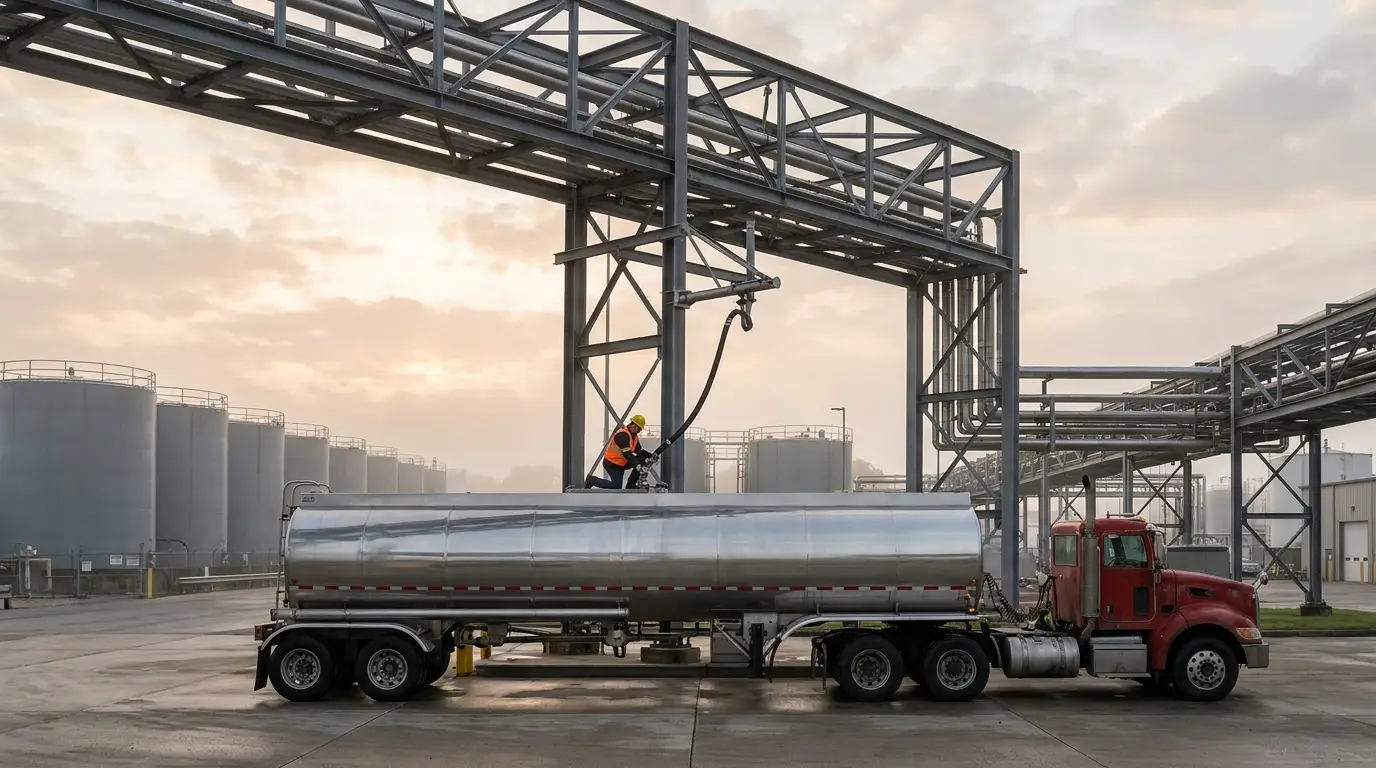
It is not one annual visit
It is six separate tests on five different clocks, and which clock applies depends on how the tank is built and what it hauls. The table in 49 CFR 180.407(c) lays them out.
External visual runs every year, and every six months on tanks designed to be loaded by vacuum with full opening rear heads. The leakage test runs every year, except MC 330 and MC 331 tanks in chlorine service at two years. Internal visual and pressure test both run every five years on most tanks, but drop to one year on insulated tanks and on any tank hauling lading corrosive to the tank. Lining inspection runs annually on lined tanks in corrosive service. Thickness test runs every two years on unlined tanks hauling material corrosive to the tank.
One more trigger catches small fleets. Under 180.407(b)(3) a tank out of hazardous materials service for a year or more has to be pressure tested before further use. Park a spare trailer through a slow season and you do not simply resume where you left off.
Read the letters, not the shop invoice
Section 180.415 lets you audit your own yard in about ten seconds. Every tank must carry a durable legible marking in English showing the month and year plus the type of test, in letters and numbers at least 32 millimeters tall, near the specification plate or on the front head. V is external visual, I is internal visual, P is pressure test, L is lining inspection, T is thickness test, and K is leakage test. The rule gives its own example. A marking reading 10-99 P, V, L means the tank passed the pressure test, the external visual, and the lining inspection in October 1999.
Walk the yard. A missing letter, or a date past its interval, is a problem you found before an inspector did.
The report belongs to you too
Carriers often assume the test shop keeps the file. Under 49 CFR 180.417 the report has to carry the registration number of the facility performing the test and the DOT registration number of the registered inspector, plus a continued qualification statement and a dated signature from both the inspector and the tank owner. The owner and the motor carrier, when they are not the same party, must each keep a copy until the next test of the same type clears. Leases under 30 days are excluded.
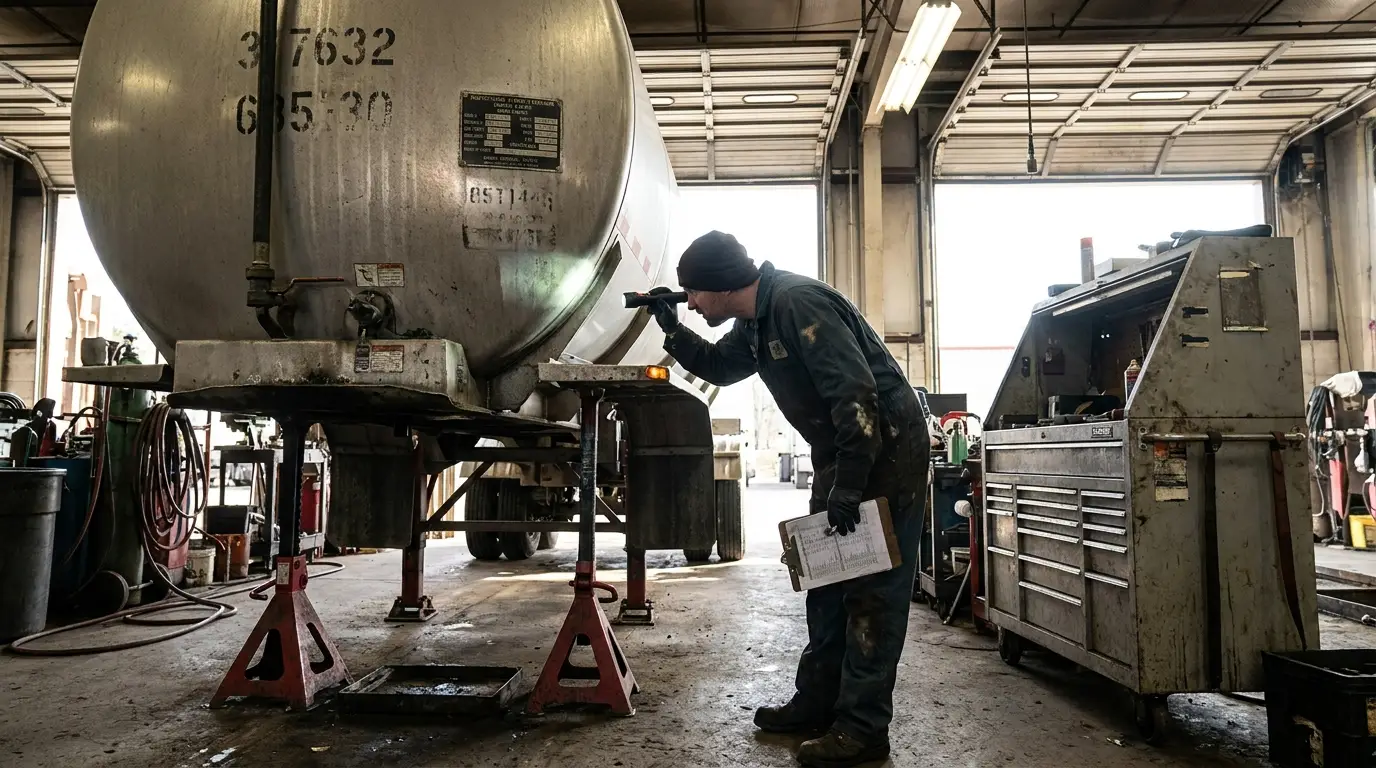
Under 180.409(a) whoever performs or witnesses those periodic tests must be registered with FMCSA under part 107 subpart F and meet the Registered Inspector definition. A cheap test from an unregistered shop is not a test.
Why this reaches the insurance side
Roadside is where it surfaces first. In the unannounced hazmat road blitz CVSA ran June 9 to 13, inspectors performed 4,629 inspections and 2,522 of the containers they examined were bulk cargo tanks. As Commercial Carrier Journal reported, they found 1,169 hazmat violations and 598 of them, about 51 percent, were out of service violations.
Those violations land in your FMCSA record, and Heavy Duty Trucking has reported that FMCSA's proposed rework of the Safety Measurement System would split the hazardous materials category by whether a carrier runs cargo tanks, grading tank fleets against other tank fleets.
Claims are the sharper edge. An expired retest date hands a plaintiff a documented compliance failure to build on, and it invites an adjuster to ask whether the tank was legally in service at all. Progressive corrosion found on a thickness test can read as wear rather than a sudden accidental loss, a very different conversation on the physical damage side than a collision is, and a liner failure that contaminates a load meets the same argument on the motor truck cargo side. Section 107.329 caps the hazmat civil penalty at $102,348 per violation, or $238,809 where a violation causes death, serious illness, severe injury, or substantial destruction of property, and each day of a continuing violation counts separately.
Put the dates on the same calendar as your renewal
Pull every stencil, write the six intervals into your maintenance file with due dates, and hold the reports until the next test of the same type clears. Bring that file to renewal, because a clean test history is the cheapest argument you have for a better tanker rate. For a second set of eyes on the coverage behind it, start with our commercial truck insurance for tank operations page. Get a truck insurance quote in about a minute at our quote form, or call or text 423-264-4255.
Common questions
Can I load a cargo tank if the retest is one day overdue
No. Under 49 CFR 180.407(a)(1) a specification cargo tank whose required test or inspection has come due may not be filled and offered for transportation or transported until that test has been successfully completed. The only exception is a tank that was already filled before the due date.
What do the letters near the specification plate mean
Section 180.415 abbreviates the test type. V is external visual, I is internal visual, P is pressure test, L is lining inspection, T is thickness test, and K is leakage test. The month and year appear with them, so a marking of 10-99 P, V, L means the tank passed those three in October 1999.
Do I have to keep the inspection reports if I do not own the tank
Yes. Under 49 CFR 180.417(b)(3) the owner and the motor carrier, when they are different parties, must each keep a copy until the next test of the same type is successfully completed. Leases of fewer than 30 days are excluded.
Does a clean test history actually change my tanker rate
It changes the underwriting conversation, because this class is priced largely on operating discipline. Bring the stencil dates and the signed reports to renewal. Get a truck insurance quote and see where you land by calling or texting 423-264-4255.
Ready for a better rate?
We shop A-rated carriers against each other to find your lowest rate, fast. Under a minute to start, and no obligation.
Prefer to talk it through? Call or text (423) 264-4255 and a licensed agent will walk you through your options.