When The Carrier You Haul For Goes Dark Overnight
TP Freight Lines told its people not to report to work on August 4 and missed payroll the next day. When a carrier you interline with or lease to stops operating, the cargo claims, the interchanged trailers and the dispatch based coverage all land somewhere, and it is usually on you.
A carrier founded in 1922 stopped running with no warning
TP Freight Lines, a Portland, Oregon less than truckload carrier that had been hauling since 1922, told its employees on August 4, 2026 not to report to work, then failed to make payroll the next day. FreightWaves reported the shutdown on August 20 in a piece by Todd Maiden, working from what Teamsters Joint Council 37 disclosed. More than 100 drivers and dockworkers were affected. The union said the company was also behind on health care premiums, leaving workers without coverage for over a month, and delinquent on retirement contributions. Ownership had changed hands around June 2025.
FreightWaves noted this is not an isolated event. Mountain Valley Express and Standard Forwarding Freight both closed recently while the large national LTL carriers posted better numbers. Regional carriers are the ones failing, and regional carriers are the ones small fleets and owner-operators actually do business with.
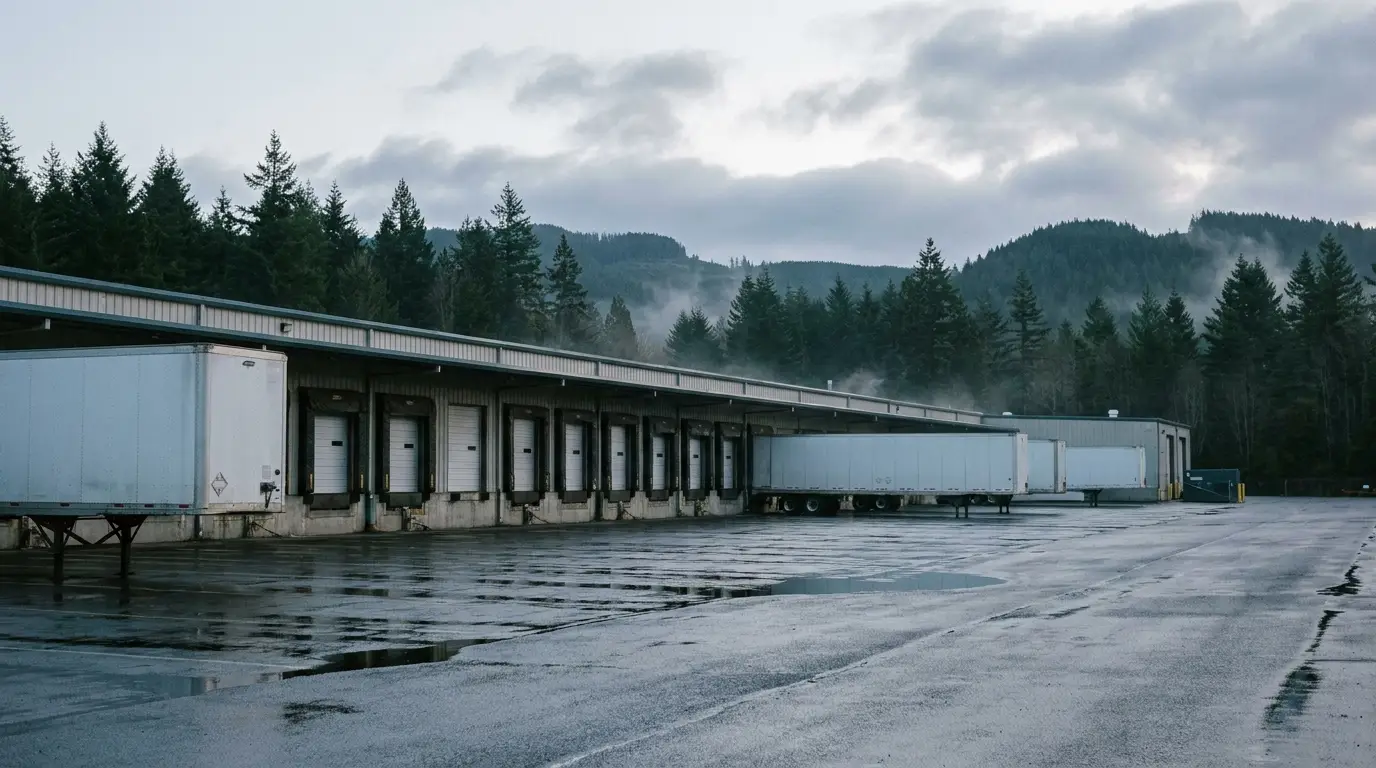
The exposure lands wherever the paperwork put it
If you never interlined a load with TP Freight, this story reads like someone else's bad week. The pattern behind it is not. Every small fleet has counterparties. You interline with regional carriers, you drop trailers at their docks, you take their overflow, or you are leased to one of them. When a company stops answering its phones, none of those relationships end cleanly. They end wherever the signed paperwork says they end, and that is usually not in your favor.
The three places this actually bites an owner-operator or a one to ten truck fleet are cargo, trailers, and dispatch.
Cargo in the system when the doors close
Freight does not stop existing because a terminal went dark. Loads sit on docks and in the middle of a linehaul run, and the claim starts with the carrier named on the bill of lading. If that is you and you interlined the load onward, you are the one holding the claim while the downstream carrier has no payroll, no staff, and nobody adjusting anything.
Your own motor truck cargo coverage is what stands between you and paying that out of pocket. Two things are worth checking before you need it. First, whether your policy covers freight while it is in the custody of another carrier, because a lot of cargo forms are narrower than owners assume. Second, whether your limit matches the real value of what moves on your busiest lane rather than the number someone picked when the policy was written.
Their trailer in your yard and your trailer at their dock
Interchange is the quiet one. A trailer interchange agreement is a contract, and a contract with a company that no longer operates is a very hard thing to enforce. If one of their trailers is sitting in your yard, you may still be responsible for damage to it under an agreement nobody is left to administer. If one of yours is behind a locked gate at their terminal, getting it back can take weeks.
Trailer interchange coverage responds to physical damage to a non-owned trailer in your possession under a written interchange agreement, which is exactly the situation a shutdown creates and then leaves hanging. If you regularly pull equipment that is not yours and you do not carry it, that is a gap worth closing this week rather than after the next carrier goes quiet.
If you were leased on, the coverage stopped when the dispatch stopped
This is the one that catches drivers off guard. A motor carrier liability policy covers a leased owner-operator while that driver is operating under dispatch for the carrier. No dispatch, no coverage. When a carrier suspends operations, the dispatch ends the same day the payroll does, and the truck sitting in the yard is running on whatever the driver personally carries.
Non trucking liability is the policy built for that in between time, when the truck is moving but not under anyone's authority. It is inexpensive and it is the difference between a bobtail accident being an insurance claim and being a personal lawsuit. Anyone leased to a single carrier should already have it, because you never get advance notice of a shutdown.
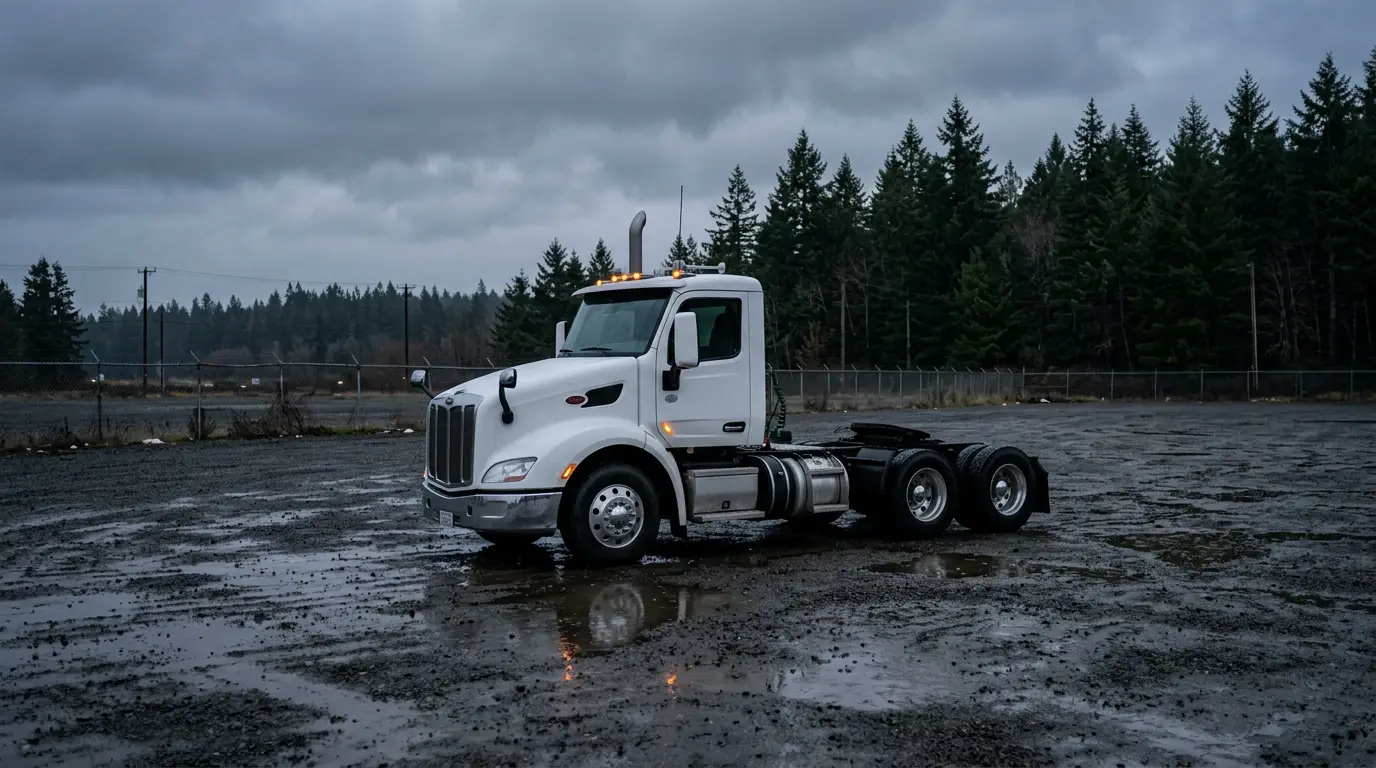
Do this before it is your counterparty
Pull the certificate of insurance on every carrier you interline with and check that the policy dates are still current. Watch the FMCSA record for the carriers you lease to or trade freight with for authority or insurance filing changes. Then look at your own policy and confirm cargo, interchange, and non trucking liability actually cover the way you operate now rather than the way you operated three years ago.
We write commercial truck insurance for owner-operators and small fleets, and we can tell you in one conversation where those gaps sit on your current policy. Get a truck insurance quote in under a minute at our quote form, or call or text 423-264-4255 and we will go through it with you.
Common questions
What happens to my cargo claim if the carrier I interlined with shuts down
The shipper claim generally starts with the carrier named on the bill of lading, so if that is you, the claim is yours to answer even though the downstream carrier had custody. A shut down carrier is not going to adjust or pay anything. Your own motor truck cargo policy is what responds, which is why the limit and the coverage terms on that policy matter more than the price.
Does the motor carrier insurance still cover me after they suspend operations
No. The carrier liability policy covers a leased owner-operator only while that driver is under dispatch for the carrier. Once operations stop there is no dispatch and no coverage under their policy. Non trucking liability is the coverage that fills that gap, and it needs to already be in place before the shutdown happens.
Am I responsible for a trailer that belongs to a carrier that went out of business
Often yes, because the interchange agreement you signed does not vanish when the company stops operating. Trailer interchange coverage handles physical damage to a non-owned trailer in your possession under a written agreement. If you are holding equipment that is not yours right now, confirm you carry it before you find out the hard way.
How fast can I add cargo or non trucking liability coverage
Usually the same day for a clean owner-operator or small fleet, since both are common endorsements rather than complicated placements. Get a truck insurance quote and we will price the pieces you are missing alongside what you already have. Call or text 423-264-4255 if you want it handled in one call.
Ready for a better rate?
We shop A-rated carriers against each other to find your lowest rate, fast. Under a minute to start, and no obligation.
Prefer to talk it through? Call or text (423) 264-4255 and a licensed agent will walk you through your options.