Delaware Is Building 600,000 Trailer Loads of New Drayage Work
Permits are issued and the Delaware Container Terminal at Edgemoor is moving. Here is what roughly 600,000 new trailer loads a year does to the coverage a small carrier needs before it takes port work.
Delaware just cleared the way for a lot of new container freight
On April 8, 2026, the state announced that the Department of the Army had issued the permits the Diamond State Port Corporation needed to start building the Delaware Container Terminal at Edgemoor, roughly three miles up the Delaware River from the Port of Wilmington. Delaware Public Media reported the same day that the permits let construction begin on the wharf and the dredging work in Phase One.
Then on May 26, 2026 the port corporation and its operating partner Enstructure announced an amended joint development agreement that reset the numbers. The Philadelphia Inquirer put the first phase at roughly $669 million and the finished terminal at up to 1.2 million TEUs a year, which the paper translated into about 600,000 full trailer loads annually. First cargoes are scheduled for 2028.
That last figure is the one that matters to anyone running equipment here. Six hundred thousand trailer loads is not a rounding error in a small state, and it is why commercial truck insurance in Delaware is about to get a different set of questions attached to it.
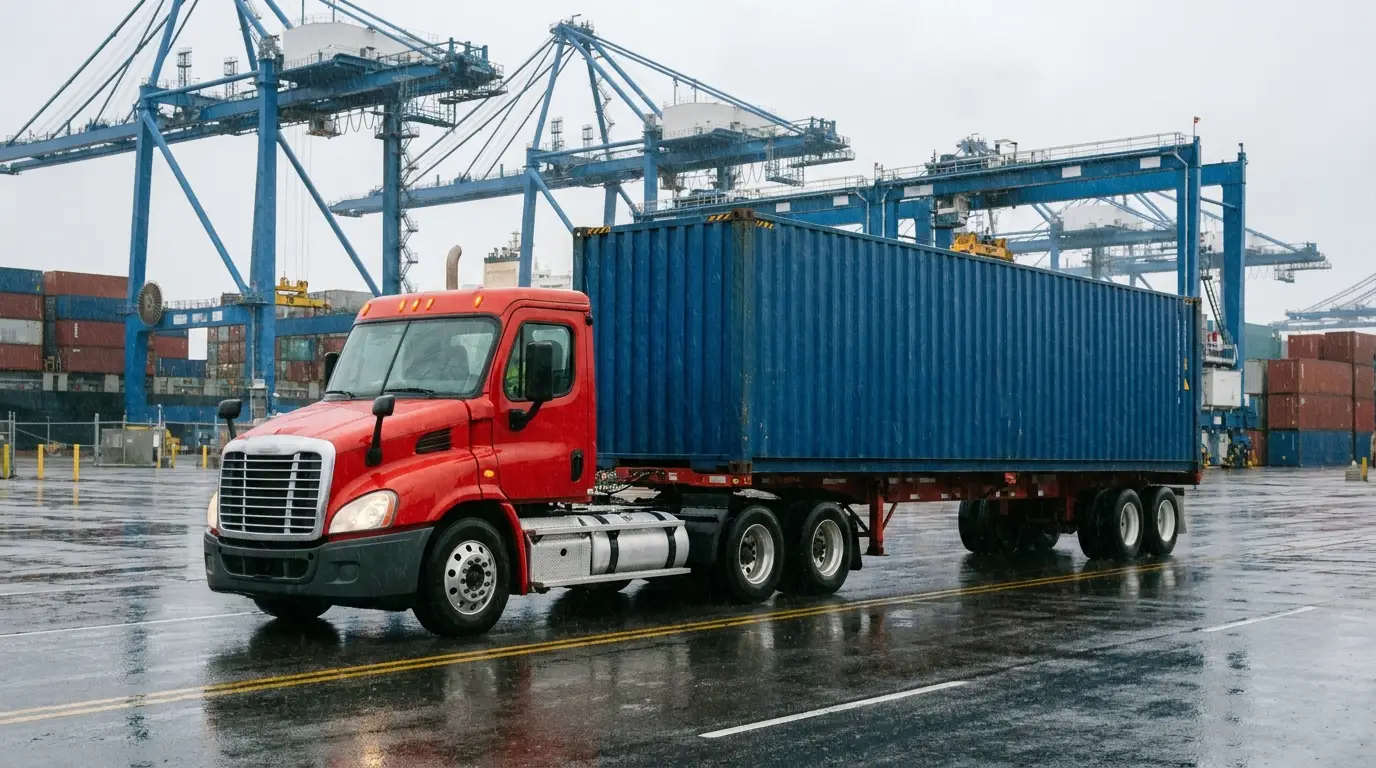
Why a 2028 opening is a 2026 decision
Ports do not generate over the road freight. They generate drayage, which is short, repetitive, appointment driven work moving boxes between the terminal and warehouses, rail ramps and distribution centers. Almost none of that gets hauled by the shipping line. It gets hauled by small carriers and owner operators under contract.
Delaware already moves more than 68 million tons of freight a year according to DelDOT, and I-495 is the artery feeding the Port of Wilmington, Cherry Island and Edgemoor. DelDOT began work on the 2026 Delaware State Freight Plan on July 1, 2025 with WILMAPCO and the Dover and Kent County MPO, with completion expected in December 2026. Truck route planning and bottleneck work around those hubs is part of it.
The point is that the carriers who will run this freight are being lined up now, not in 2028. Terminal access agreements, drayage contracts and insurance requirements get negotiated well ahead of the first ship. Showing up with the wrong coverage stack is how you lose the account before you ever turn a wheel.
Drayage looks simple and underwrites differently
Here is the part carriers new to port work get wrong. On a normal load you own the tractor and usually the trailer, and the coverage question is straightforward. With drayage truck insurance the starting point is different, because most of the steel you are pulling belongs to somebody else.
The container is the ocean carrier's. The chassis usually belongs to the terminal, a leasing company or a chassis pool. You take possession of both at the gate and you are responsible for them until you hand them back. That is not a hypothetical. A cracked chassis frame, a damaged container door or a unit that never makes it back is a claim against you, and a standard trailer schedule does not answer it. That is what trailer interchange coverage exists for, and it is the single biggest gap between an over the road policy and a port ready one.
Three things to settle before you sign a port contract
First, get the interchange question answered in writing. Find out who insures the chassis and the container while they are in your possession, what the equipment interchange agreement obligates you to, and whether your policy limit is anywhere near replacement cost on a chassis. Assuming the terminal covers it is the expensive assumption.
Second, size your cargo limit to a full container, not to an average load. A sealed forty foot box of electronics, pharmaceuticals or machinery can carry more value than anything you have hauled on a flatbed, and you generally cannot inspect it. Read your motor truck cargo form for the unattended vehicle and theft conditions too, because drayage means loaded boxes sitting in yards overnight between appointments.
Third, do not let the short mileage fool you into understating your operation. Port runs feed warehouses across the line in Pennsylvania, New Jersey and Maryland, so the radius on your application and the limits on your commercial auto liability need to match the lanes you will actually run, not the fifteen miles from the gate to I-495.
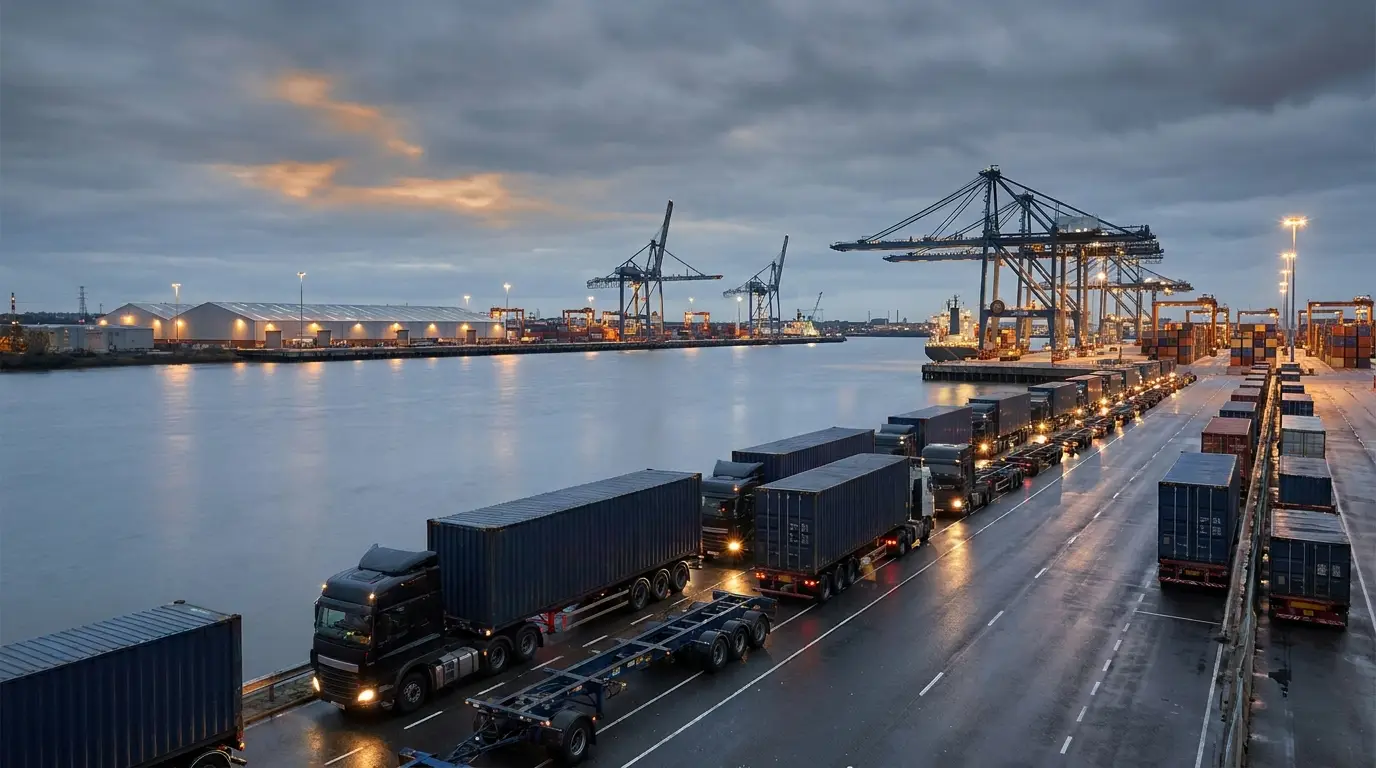
This freight is being fought over, which is the tell
The Inquirer reported that the Philadelphia Regional Port Authority and Holt Logistics had sued to block the project over the adequacy of the Army Corps permits, and that new permits were issued in early 2026. Delaware Secretary of State Charuni Patibanda-Sanchez, who chairs the port corporation, said it was time to move forward so Delaware's port could "compete fairly on the Delaware River." Governor Matt Meyer has called it a once in a generation opportunity for union jobs.
Rival ports do not sue over freight that is not worth having. If the terminal delivers what the state projects, a meaningful share of the container volume now moving through Philadelphia gets a new home about twenty miles south, and the trucking work follows it.
If you run New Castle County or the I-95 corridor, this is worth getting ahead of. Look at our Delaware truck insurance page for how we write coverage in this state, then call or text 423-264-4255 or get a truck insurance quote and we will check your cargo, interchange and liability limits against the port work you are planning to bid.
Common questions
When does the Delaware Container Terminal open?
First cargoes are scheduled for 2028. The Department of the Army issued the construction permits in April 2026, and the amended agreement announced May 26, 2026 put the first phase at roughly $669 million covering the wharf and dredging. At full buildout the terminal is projected to handle up to 1.2 million TEUs a year, which works out to about 600,000 trailer loads.
Do I need different insurance for port drayage than for over the road?
Usually yes. In drayage you pull a container and a chassis you do not own, so trailer interchange or intermodal coverage has to answer for that equipment while it is in your possession. Cargo limits also need to reflect a full sealed container rather than a partial load. Call or text 423-264-4255 and we will read your current policy against the interchange agreement before you sign it.
What is trailer interchange coverage and why does Delaware port work need it?
It covers damage to a trailer or chassis owned by someone else while you have it under a written interchange agreement. Marine terminals and chassis pools require it because the equipment leaving the gate belongs to them. If the Edgemoor terminal brings drayage work into New Castle County, this is the coverage most carriers coming from over the road freight do not already carry.
Does short mileage mean I can carry lower limits in Delaware?
No. Radius affects rating but it does not shrink your exposure, and Delaware drayage regularly crosses into Pennsylvania, New Jersey and Maryland to reach distribution centers. A crash on I-495 or I-95 near Wilmington is priced the same as one anywhere else. Get a truck insurance quote and confirm your liability limit fits the corridor rather than the mileage.
Ready for a better rate?
We shop A-rated carriers against each other to find your lowest rate, fast. Under a minute to start, and no obligation.
Prefer to talk it through? Call or text (423) 264-4255 and a licensed agent will walk you through your options.