An Overweight Dump Truck Ticket Does Not Go Where You Think It Goes
The fine at the scale house is the cheapest part. The bridge formula, your brake rating, and a plaintiff attorney all read that ticket differently than you do.
The citation is real but it lands somewhere unexpected
Most dump truck operators file an overweight ticket under nuisance. You pay it, the loader operator shrugs, and the day keeps moving. That reading is half right, and FMCSA's own paperwork explains why. The Safety Measurement System methodology states that size and weight violations have been removed from the Cargo Related BASIC, so an overweight citation does not move your CSA percentiles the way a brake or logbook violation does.
Here is the half that gets skipped. The same FMCSA document says roadside inspectors will continue to cite these violations and safety investigators will continue to address them through investigations, including potential enforcement action where it is appropriate. The record does not vanish. It just stops appearing in the one place you were checking. If you are shopping dump truck insurance, that gap between what your score displays and what your history actually holds is worth closing before an underwriter closes it for you.
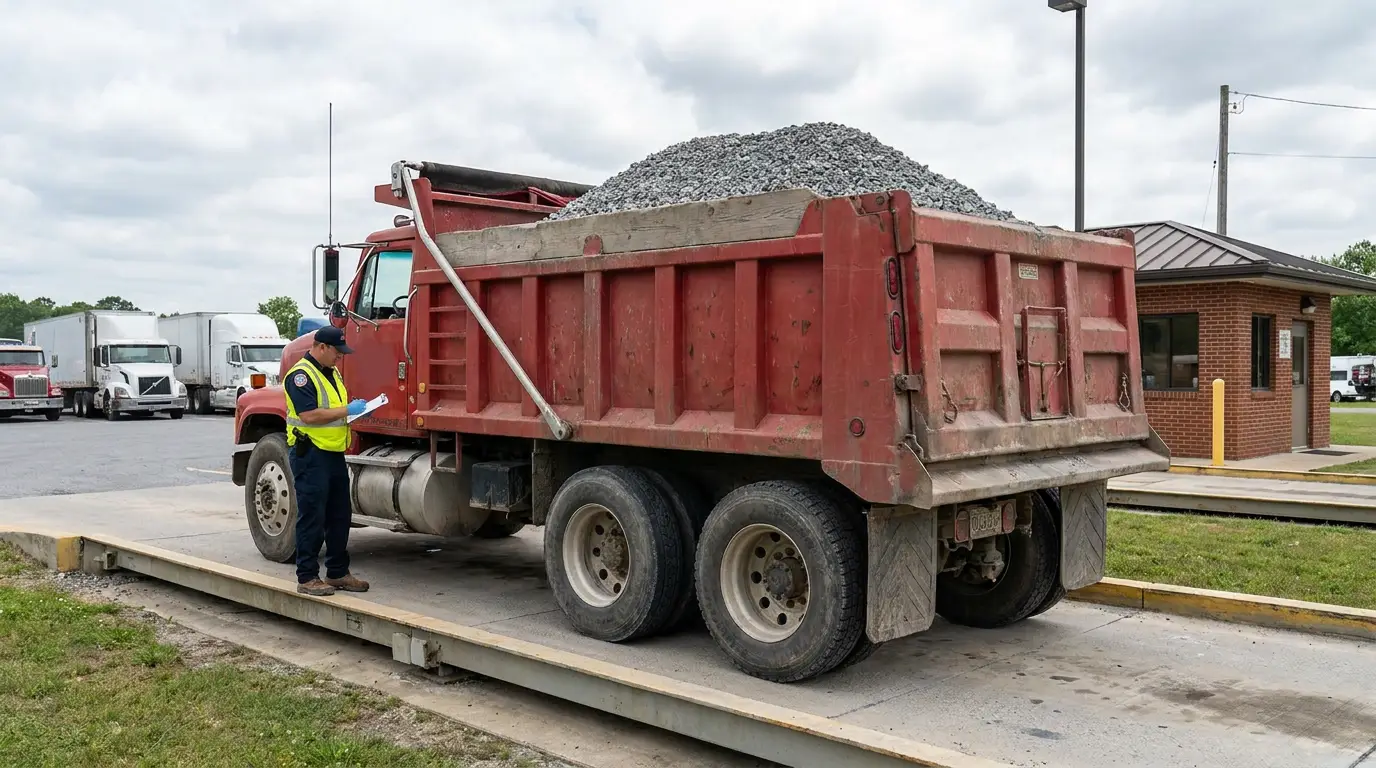
The bridge formula is why a legal load can still be too heavy
Federal weight limits on the Interstate System sit in 23 CFR 658.17. Maximum gross vehicle weight is 80,000 pounds under 658.17(b), maximum weight on any single axle is 20,000 pounds under 658.17(c), and maximum weight on tandem axles is 34,000 pounds under 658.17(d). Every dump operator knows those three numbers. Fewer know that clearing all three still does not make the load legal.
Section 658.17(e) adds the Bridge Gross Weight Formula, W = 500 (LN / (N minus 1) + 12N + 36). It caps weight across any group of consecutive axles based on how far apart those axles sit, because a short vehicle concentrates the same tonnage onto a smaller stretch of bridge deck. FHWA publishes a worked example. A truck carrying 17,000 pounds on each of four axles spanning 35 feet is fine on gross and fine on every individual axle, but the group totals 68,000 pounds against a formula limit of 65,500. Weight comes off or the axles spread.
This hits dump trucks harder than anyone. FHWA classifies closely spaced multi axle single unit trucks, dump trucks among them, as specialized hauling vehicles. A short wheelbase is the design brief, not a defect, and it is why a tri axle can sit well under 80,000 pounds and still fail at the scale.
Your brakes were rated against a number the bed can beat
Braking performance is not a matter of opinion. Under 49 CFR 393.52, a single unit vehicle with a manufacturer's GVWR over 10,000 pounds must stop from 20 miles per hour within 35 feet, at a deceleration rate of 14 feet per second per second. That standard was engineered against the rated weight of the vehicle. Load several thousand pounds of wet stone above that rating and nothing in the brake system changed. Only the mass it has to stop changed.
The same math runs through maintenance. Sustained overloading accelerates wear on brakes, tires, springs, and frame, and those failures surface as violations and repair bills long after the scale ticket is forgotten, which is where physical damage coverage absorbs cost you never trace back to the pit.
The loader filled it and the citation is still yours
49 CFR 392.2 requires every commercial motor vehicle to be operated in accordance with the laws, ordinances, and regulations of the jurisdiction it is operating in, and adds that where an FMCSA regulation imposes a higher standard of care, the FMCSA regulation must be complied with. Nothing in that sentence asks who was running the loader. On top of it, 49 CFR 392.9(a)(1) makes the driver responsible for cargo being properly distributed and adequately secured before the vehicle moves, with a check inside the first 50 miles under 392.9(b)(2) and another at each duty status change, 3 hours, or 150 miles, whichever comes first.
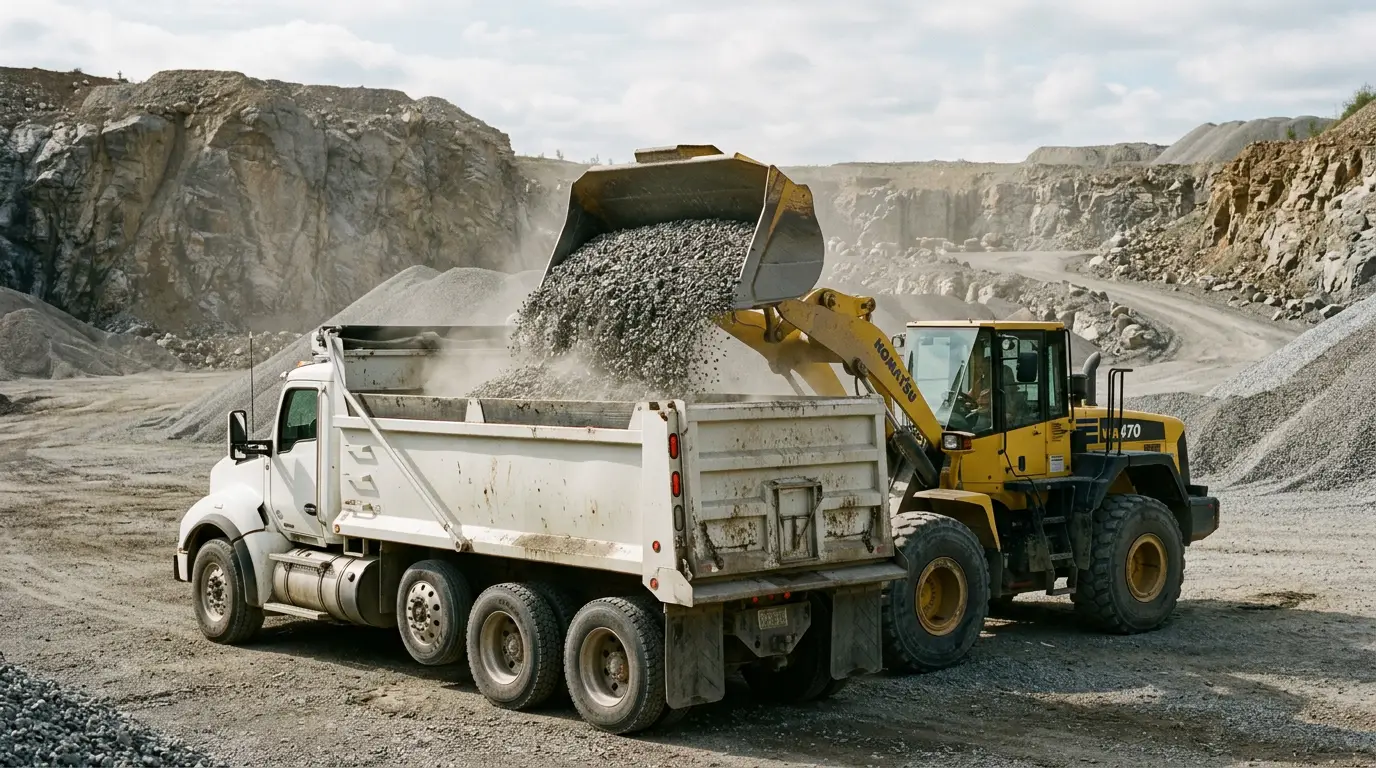
So the scale ticket from the quarry is your document, not theirs. Operators who keep those tickets, refuse the last bucket when the number looks wrong, and note who loaded them are building a file that answers questions later. The rest are trusting a stranger's estimate with their authority attached to it.
The real bill arrives after a crash
An overweight condition at the moment of a loss changes the shape of the claim. Opposing counsel does not need your CSA score to find it, because scale tickets, load tickets, and dispatch records are all discoverable. Once the weight is on the record, the argument stops being about a moment of driving and becomes about a pattern the company allowed. That is a much harder case to defend, and it is why your commercial auto liability limits matter more here than the fine ever did.
None of this makes one ticket a catastrophe. It makes it a signal. A carrier that runs chronically heavy is telling an underwriter how it dispatches and how hard it will argue with a loader operator to stay legal, and that is the read a good dump truck insurance program is built around.
If you run aggregate, demolition, or site work and want your program priced on how you actually operate, get a truck insurance quote in under a minute at our quote form, or call or text 423-264-4255.
Common questions
Does an overweight ticket hurt my CSA score
Not directly. FMCSA's Safety Measurement System methodology states that size and weight violations were removed from the Cargo Related BASIC, so they do not drive your public percentiles. The same document confirms inspectors still cite them at the roadside and safety investigators still address them during investigations, so the history is still there when someone goes looking.
Why is my dump truck overweight when the gross is under 80,000 pounds
Almost always the Bridge Gross Weight Formula in 23 CFR 658.17(e). It limits weight across a group of consecutive axles based on the distance between them, so a short wheelbase truck can pass on gross weight and on every single axle and still exceed the group limit. FHWA's published example shows four axles across 35 feet totaling 68,000 pounds against a formula cap of 65,500.
Who is responsible if the quarry loads me heavy
You are, on the road. 49 CFR 392.2 puts operation in compliance with state weight law on the commercial motor vehicle, and 49 CFR 392.9(a)(1) puts proper distribution and securement of the cargo on the driver before the vehicle moves. Keep every scale ticket and note who loaded you, because that file is what answers the question later.
Will insurance still cover me if I crash while overweight
The weight itself is usually not the coverage question, the policy form and the facts of the loss are. The larger exposure is the liability case, where an overweight condition gives the other side a pattern argument instead of a single mistake. Call or text 423-264-4255 and we will look at your limits against how your trucks actually load, or get a truck insurance quote online in under a minute.
Ready for a better rate?
We shop A-rated carriers against each other to find your lowest rate, fast. Under a minute to start, and no obligation.
Prefer to talk it through? Call or text (423) 264-4255 and a licensed agent will walk you through your options.