The English Proficiency Rule Is About To Become Permanent
A policy memo can be undone by the next administration. A codified rule cannot, and that changes how a small fleet builds a driver roster.
FMCSA moves English proficiency from policy into the rule book
The Federal Motor Carrier Safety Administration has a proposed rule heading for the Federal Register that would write English language proficiency into the federal safety regulations as an out of service condition. Land Line reported the proposal on August 7, 2026, and Trucking Dive covered it the same day. The notice publishes Monday, August 10, under docket FMCSA-2026-0826, and the public comment window runs 60 days from that publication date.
Today the out of service piece lives in enforcement policy and in the CVSA North American Standard Out of Service Criteria, with enforcement resuming on June 25, 2025. The proposal would line the federal regulations up with that criteria so a driver who cannot meet the standard gets parked rather than just written up. The Department of Transportation was blunt about why, saying that turning the guideline into a codified rule means future administrations will not be able to weaken the requirement.
Codifying it takes the variation out
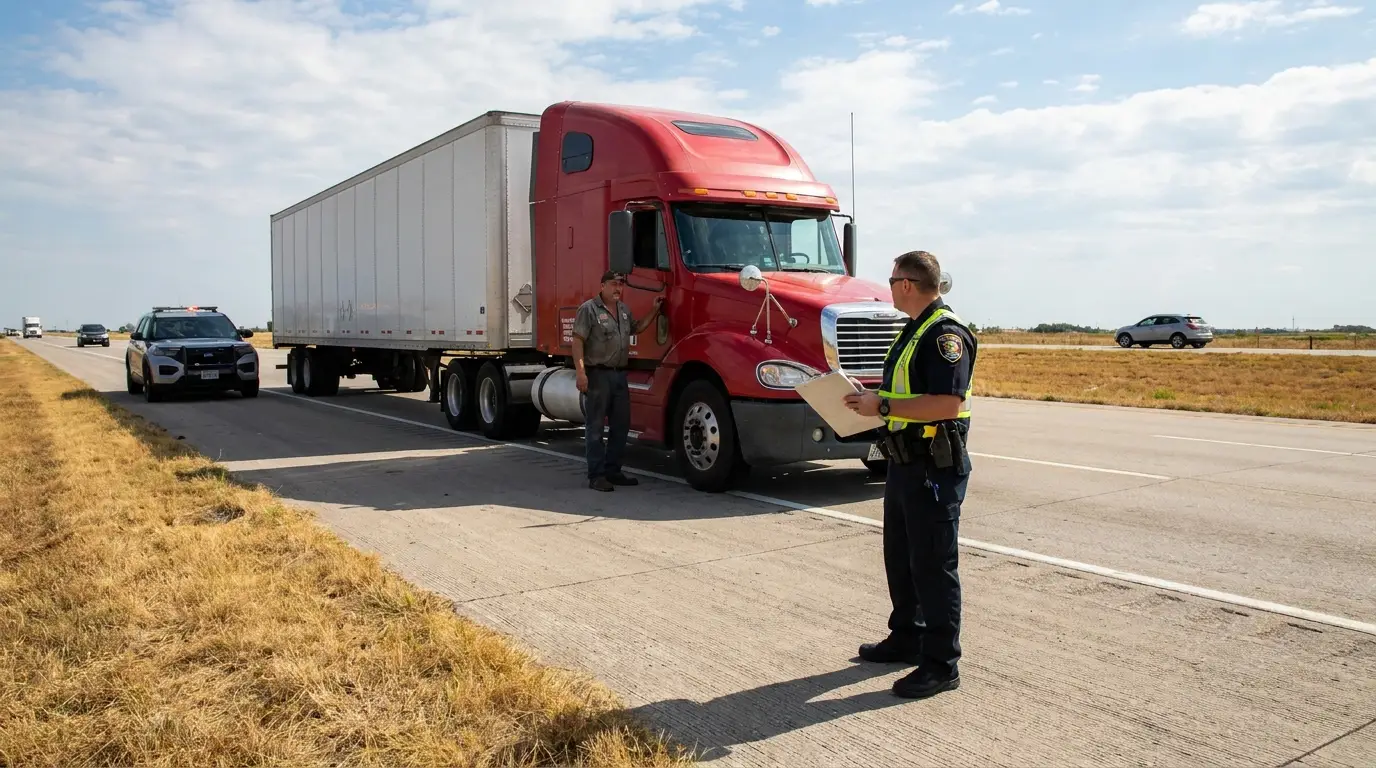
The practical change here is not the standard. It is who has to enforce it and how evenly. FMCSA's own reasoning is that codifying the out of service condition forces states to adopt a compatible requirement into their own law, which is how the agency gets uniform enforcement instead of a patchwork you can route around.
History says that matters. Land Line noted that CVSA added English proficiency to its out of service criteria back in April 2005 and then dropped it roughly ten years later. In 2014, while it was still in place, inspectors wrote 101,280 English proficiency violations but placed only 4,036 drivers out of service. A finding that mostly produced paperwork now stops the truck, and once it sits in the regulations it stops depending on which state pulled you in.
The border zone carve out follows the load, not the driver
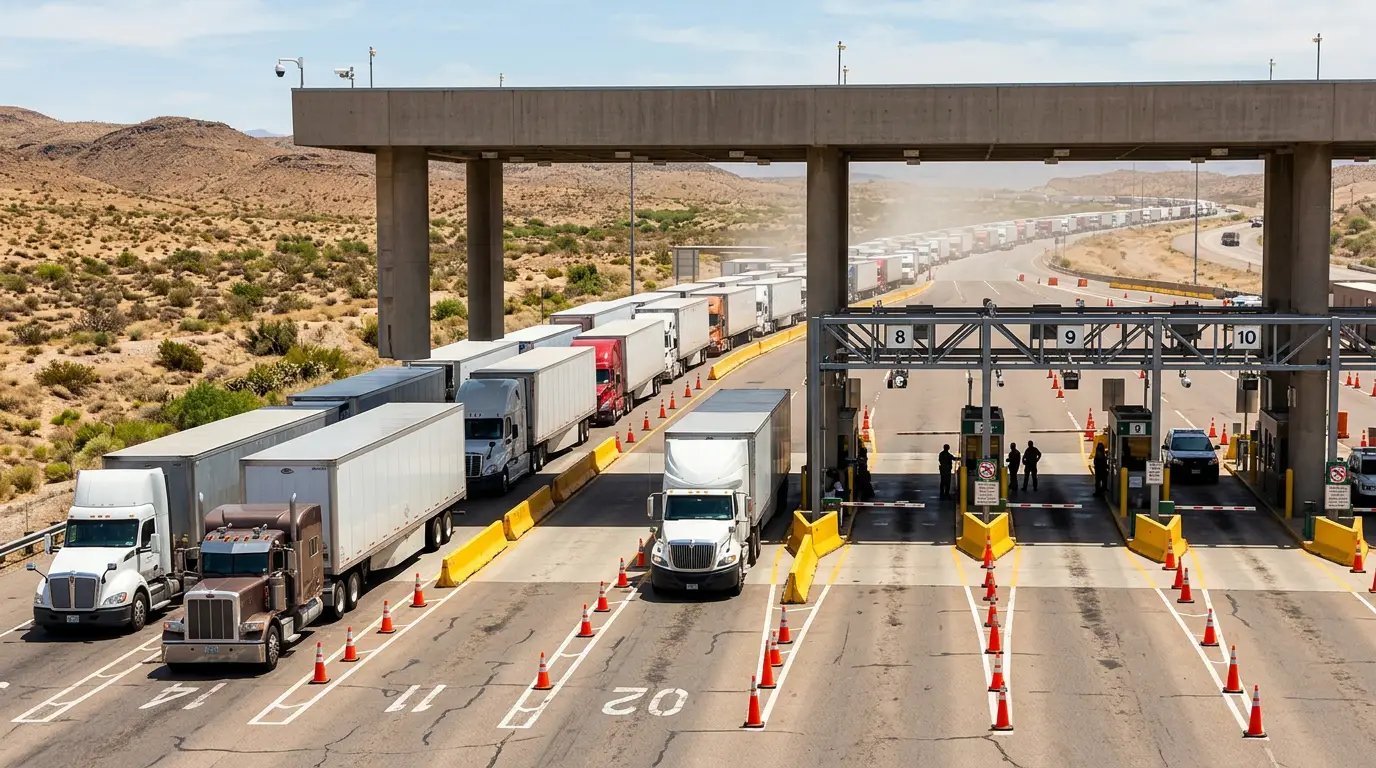
The proposal carries a narrow exception for drivers operating only inside the United States and Mexico border commercial zones. Inside those zones an officer can write the violation but cannot place the driver out of service. The exception falls apart the moment there is evidence the driver has been running, or plans to run, outside the zone. Trucking Dive used the cleanest example. A load from Laredo, Texas to Nuevo Laredo, Mexico sits inside the exception. A load from Laredo to Detroit does not.
Read that as a dispatch rule rather than a driver rule. The same driver in the same truck is protected on one turn and exposed on the next, and the thing that decides it is the load you handed him. In the analysis published with the proposal and summarized by CDLLife, FMCSA counted 41,563 English proficiency violations written inside those border zones between June 25, 2025 and March 19, 2026, with about 16 percent of them also carrying an out of service order.
Where a proficiency stop lands on your policy
Nothing in this proposal is an insurance rule, and no policy pays a fine. What it does is feed the two documents an underwriter actually reads. The first is your safety record, where driver findings sit in the Driver Fitness category and recent entries carry the most weight. Our guide on how a CSA score prices into your premium covers why the timing of a violation matters nearly as much as the violation itself.
The second is the roster you disclosed when you bought the policy. Commercial auto liability is quoted against named drivers with a stated record and experience profile. A driver who cannot clear a roadside proficiency check is not the risk you presented, and learning that after a loss is a far worse conversation than learning it at renewal.
There is an operating cost sitting underneath all of it. A parked driver means freight resting somewhere it was never meant to rest, which puts the conditions in your motor truck cargo coverage in play, and a service failure your customer remembers longer than you will.
The sixty days are the useful part
This is a proposal, not something you comply with tomorrow, and that gap is the opportunity. Run every driver through a plain roadside conversation, confirm they can read highway signs and answer an officer without reaching for a phone or an app, and put that check in the qualification file with a date on it. If you haul border zone freight, decide now which drivers you will and will not dispatch past the zone line. Comments go in under docket FMCSA-2026-0826 at regulations.gov. OOIDA, which pushed to bring the enforcement back in 2025, is already on the record, and Safety Director Doug Morris framed the safety case simply, saying that unless they are bilingual you have drivers not understanding the commands of officers.
Cleaning up a roster before a rule lands is also the cheap version of this. Rates follow the record you hand over, and our breakdown of what commercial truck insurance costs shows how much of that number is driver profile.
Get a truck insurance quote
If you are not certain how your current driver roster reads to an underwriter, that is a conversation worth having before renewal rather than after an inspection. Get a truck insurance quote in under a minute on our quote form, or call or text 423-264-4255 and we will go through the roster with you.
Common questions
What is the FMCSA English language proficiency proposed rule
It is a notice of proposed rulemaking under docket FMCSA-2026-0826 that would write English language proficiency into the federal safety regulations as an out of service condition, aligning the regulations with the CVSA North American Standard Out of Service Criteria. It publishes in the Federal Register on August 10, 2026 with a 60 day comment period. It is a proposal, so nothing changes on the day it publishes.
Does the border commercial zone exception cover my drivers
Only while they operate solely inside the United States and Mexico border commercial zones. Inside those zones an officer may write the violation but not place the driver out of service. The exception does not apply where there is evidence the driver has been operating, or intends to operate, outside the zones. A Laredo to Nuevo Laredo turn sits inside it. A Laredo to Detroit run does not.
Can an English proficiency out of service order raise my truck insurance rate
Indirectly, yes. The fine itself is not insurable, but driver findings feed the Driver Fitness data underwriters pull, and recent entries carry the heaviest weight in that scoring. It also raises the question of whether the driver matched the roster you disclosed when the policy was quoted. If you want that reviewed before renewal, get a truck insurance quote or call 423-264-4255.
What should a small fleet do during the comment period
Check every driver yourself with a plain roadside style conversation, document the check with a date in the driver qualification file, and decide which drivers you will dispatch past the border zone line. If you want to weigh in on the rule, comments go under docket FMCSA-2026-0826 at regulations.gov during the 60 days following publication.
Ready for a better rate?
We shop A-rated carriers against each other to find your lowest rate, fast. Under a minute to start, and no obligation.
Prefer to talk it through? Call or text (423) 264-4255 and a licensed agent will walk you through your options.