A Quiet Hurricane Forecast Does Not Make a Quiet Season for Florida Trucks
NOAA lowered its Atlantic outlook again on August 6 and now puts a below normal season at 75 percent. Here is why that forecast changes nothing about how one storm lands on a small Florida fleet.
NOAA cut the 2026 outlook again on August 6
NOAA released its updated Atlantic outlook on August 6, 2026 and lowered the numbers a second time, which is the kind of headline that makes a Florida carrier relax three months too early. Forecasters now expect 7 to 13 named storms, 2 to 6 hurricanes and no more than 2 major hurricanes, with a 75 percent chance of a below normal season. The May outlook had called for 8 to 14 named storms and put those odds at 55 percent.
The driver is El Nino, declared in June 2026 and strengthening every month since, building the wind shear that tears developing storms apart. Fox Weather reported the El Nino region running 2.07 degrees Celsius above average, which NOAA suggested could make it the strongest event since record keeping began in 1950. Colorado State University followed on August 5 with 9 named storms, calling it the least active season in more than a decade. An average season produces 14 named storms and 7 hurricanes. So far 2026 has produced Arthur and Bertha and no hurricanes at all.
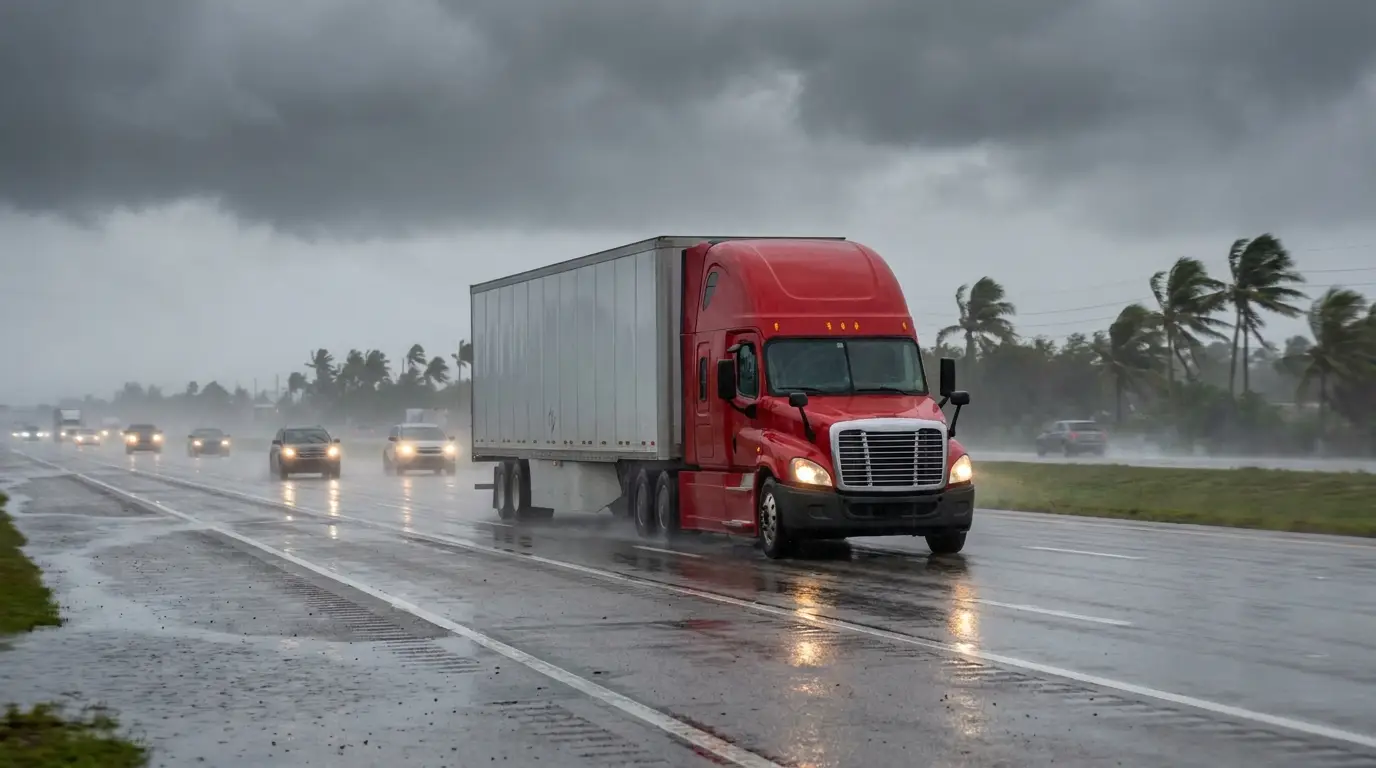
A seasonal outlook counts storms, it does not aim them
Here is the part that gets lost every August. A seasonal outlook forecasts how many storms form. It says nothing about where any of them go. A carrier with three trucks does not get hit by a season. It gets hit by one storm, on one week, on the lanes it happens to be running.
Arthur made the point already. It was never a hurricane. It still put an estimated 4 to 8 inches of rain across the Florida Panhandle, and in Louisiana it set a state record with 29.06 inches at Cottonport in 24 hours. National Weather Service Director Ken Graham said inland rainfall is a major cause of damage from tropical storms and hurricanes, as Arthur demonstrated.
More than 85 percent of tropical activity lands between August and October, and the season runs through November 30. If you buy commercial truck insurance in Florida, the next fourteen weeks are the ones that matter, quiet forecast or not.
One storm turns into three separate claims
Small fleets think about storm damage as one thing. Your policy does not. A single event usually splits across three coverages, each with its own limit and its own deductible.
The truck falls under physical damage, and specifically under comprehensive rather than collision. Wind, water, falling limbs and flying debris are comprehensive losses. If you dropped comprehensive on an older unit to save premium, a parked tractor in a flooded yard is your loss and nobody else's. Find out today whether yours is written on agreed value or actual cash value, because after a storm those settle very differently.
The freight falls under motor truck cargo. A load caught in transit when a lane closes, a loaded trailer parked somewhere unfamiliar for four days, or a reefer that loses power in an outage are all cargo questions, and reefer breakdown is usually its own agreement with its own conditions. Anything that leaves your equipment and damages someone else is liability instead.
Emergency waivers move the rules, not the liability
Florida runs a practiced emergency playbook. FDOT issues Emergency Road Use Permits suspending size and weight limits for divisible loads hauling fuel, emergency supplies and equipment, and agricultural commodities and citrus, with overweight movement tied to the permit office's current configuration maps. Federally, 49 CFR 390.23 grants relief from Parts 390 through 399 for carriers giving direct assistance, up to 30 days under a presidential declaration, 14 days under a governor or FMCSA declaration, 5 days under a local official and 24 hours for a tow truck answering a call.
Read what those actually do. The Florida permit letters state that nothing in them lets a vehicle exceed posted weight or height limits on bridges and structures, and nothing relieves a carrier from other statutory requirements. The federal relief ends the moment a driver hauls cargo not destined for the relief effort, and a driver needing rest must get at least 10 consecutive hours off duty before being required to return.
None of that is an insurance document. A waiver is permission from a regulator to run outside a rule. It is not a defense in a lawsuit. If a tired driver on hour nineteen of relief work rear ends somebody, the plaintiff's attorney reads the same waiver you did and argues it was permission you should not have used. Your commercial auto liability limit answers, exactly as it would in June.
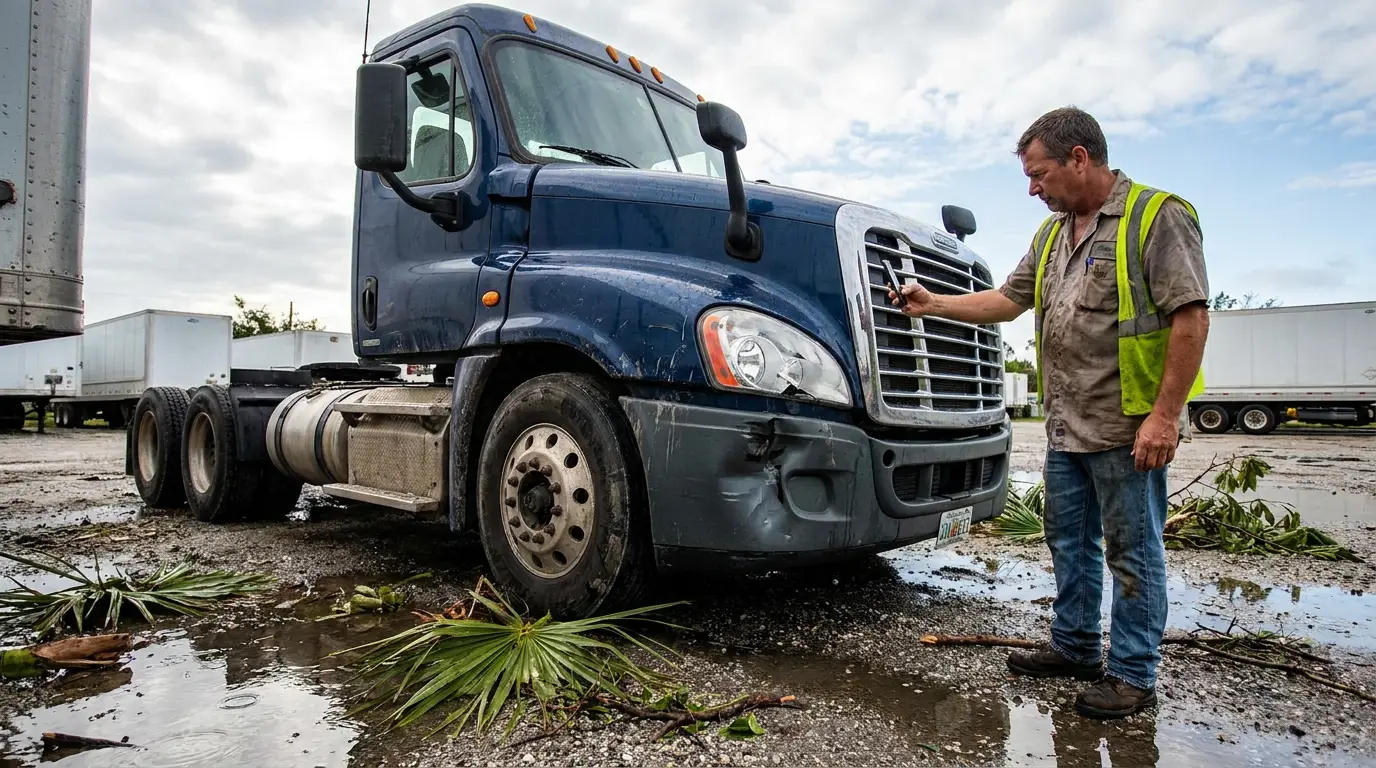
Three things to do while the forecast is still quiet
Confirm comprehensive is actually on every unit and trailer. Then photograph all of it now, four corners plus the VIN plate and the odometer, and store the file somewhere other than the truck. After a landfall you are one of thousands waiting on an adjuster, and pre loss photos settle condition arguments faster than anything else you can do.
Read the unattended vehicle and theft conditions in your cargo form before you need somewhere to leave a loaded trailer, because that is the week you park in places you would not normally choose. And do not let a policy lapse in the cash crunch after a bad storm. Everything else here is weather. That one is self inflicted, and it breaks your filings on the way out.
If you run Florida lanes, take ten minutes on this before the next name goes on the map. Look at our Florida truck insurance page for how we write coverage in this state, then call or text 423-264-4255 or get a truck insurance quote and we will check your comprehensive, cargo and liability limits against the season you are about to run.
Common questions
Does commercial truck insurance cover hurricane damage in Florida?
Wind, water, falling limbs and flying debris are comprehensive losses under a physical damage policy, so a truck damaged in a storm is covered only if you carry comprehensive and not collision alone. Freight on the truck is a separate motor truck cargo question with its own limit and deductible. Call or text 423-264-4255 and we will read your current forms before a storm rather than after one.
Does a Florida emergency declaration let me run extra hours?
It can. Under 49 CFR 390.23 a carrier giving direct assistance gets relief from Parts 390 through 399 for up to 30 days under a presidential declaration, 14 days under a governor or FMCSA declaration and 5 days under a local official. The relief ends as soon as you haul something not destined for the relief effort, and a driver needing rest must get at least 10 consecutive hours off duty. The waiver does not change your liability if there is a crash.
Will a below normal hurricane season lower my truck insurance rate?
No. Rates are built on your loss history, radius, limits, driver records and equipment values, and the catastrophe component is priced across decades of storm data rather than one August outlook. What actually moves your number is a clean record and limits that fit the work. Get a truck insurance quote and we will show you where yours sits.
What happens to my cargo if a storm closes the lane I am on?
Freight sitting in a stopped or parked trailer is still your responsibility, and most cargo forms carry unattended vehicle and theft conditions written on the assumption you left the trailer somewhere reasonable. Refrigerated loads add another layer, since reefer breakdown is usually a separate agreement requiring a pre trip and a continuous temperature record. Read both before hurricane season, not during it.
Ready for a better rate?
We shop A-rated carriers against each other to find your lowest rate, fast. Under a minute to start, and no obligation.
Prefer to talk it through? Call or text (423) 264-4255 and a licensed agent will walk you through your options.