Hotshot Trailer Brakes And The 15 Minute Breakaway Rule
The gooseneck behind your one ton carries its own federal brake rulebook, and the day it comes loose you find out how many coverage parts it touches
Your gooseneck brakes are regulated equipment, not an accessory
Most hotshot operators treat the trailer brakes as a convenience, something you dial in and forget. The federal rules do not. 49 CFR 393.40 lists the brake systems a commercial motor vehicle may run on, and two of the five sit under your deck. Paragraph (b)(4) covers electric brakes and (b)(5) covers surge brakes, and both land in the same performance sections as everything else on the road.
There is no light duty rulebook for a gooseneck. Once your combination hauls for hire across state lines, the trailer behind a pickup meets the same brake standard as a trailer behind a sleeper. Our hotshot truck insurance page covers how the truck and trailer get scheduled. This is about the part underneath.
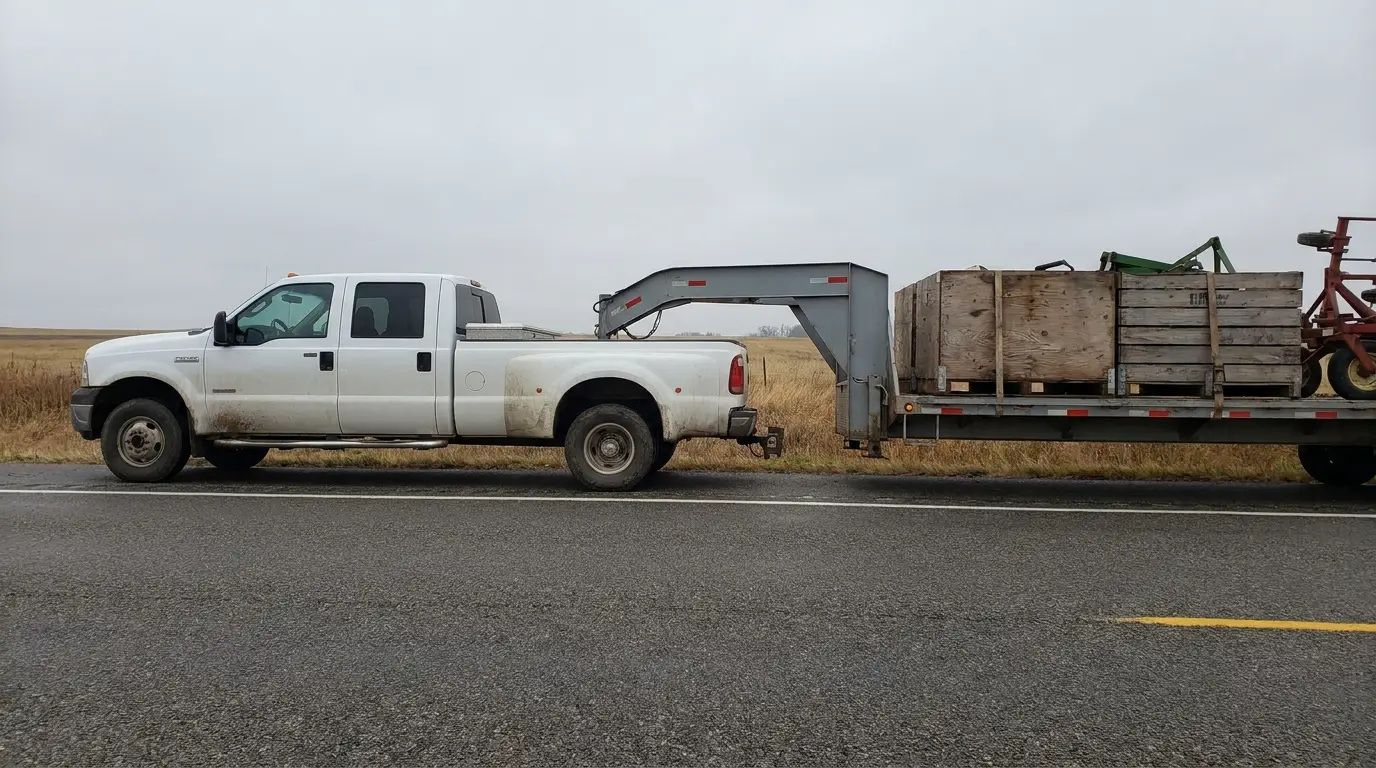
Brakes on all wheels, and the exemption that will not save you
49 CFR 393.42(a) is one sentence. Every commercial motor vehicle shall be equipped with brakes acting on all wheels. Operators hear about the exceptions secondhand and assume one applies, so read the line. 393.42(b)(3) exempts a semitrailer or pole trailer with a gross weight of 1,361 kg, which the rule states as 3,000 pounds or less, and only when the towed axle weight stays under 40 percent of the towing vehicle's axle weights.
An empty 40 foot deckover clears 3,000 pounds by a wide margin before you load it. That exemption was written for small utility trailers. It has never covered what hotshot runs.
Then there is 393.48(a). All brakes with which a motor vehicle is equipped must at all times be capable of operating. That is not a rule about having brakes, it is a rule about them working right now. One dead magnet on one axle is a violation the day an inspector finds it.
The 15 minute rule most operators have never read
49 CFR 393.43(d) is why the breakaway switch and its little battery box exist. Every trailer required to be equipped with brakes shall have brakes which apply automatically and immediately upon breakaway from the towing vehicle. Except on trailers with three or more axles, all of them must apply. Then the part almost nobody quotes correctly. The brakes must remain in the applied position for at least 15 minutes.
Fifteen minutes of holding power is a battery specification, not a hardware one. The switch can be bolted on, wired right and pinned to the truck, and the trailer still fails 393.43(d) because the battery behind it went flat in the spring. Nothing on your dash tells you. Chock the trailer, pull the pin, confirm the brakes lock.
393.43(a) handles the other half of the same event. A truck towing a braked trailer must have a means of ensuring that after a breakaway its own service brakes can still stop it. One rule for the runaway, one for what you are left driving.
The stopping standard loosens on paper and tightens in real life
Look at the brake performance table at 49 CFR 393.52(d) once. A single unit with a manufacturer's GVWR of 10,000 pounds or less must stop from 20 miles per hour in 25 feet. Hitch a trailer to it and you drop into the last row, all other property carrying vehicles and combinations, where the service brake distance is 40 feet, the emergency distance is 90 feet, and the required braking force is 43.5 percent of gross combination weight.
The standard gets 15 feet more generous at the exact moment you add several tons behind the bumper. That room is not a gift. A combination takes longer to build brake force, and the rig only meets the number if the trailer does its share of the stopping.
Parking is its own trap. 393.41(c)(1) requires a combination to hold on any grade it operates on. 393.41(c)(3) requires the parking brake to be held applied by energy other than fluid pressure, air pressure, or electric energy. Your electric trailer brakes are not a parking brake and were never allowed to be one. Carry chocks.
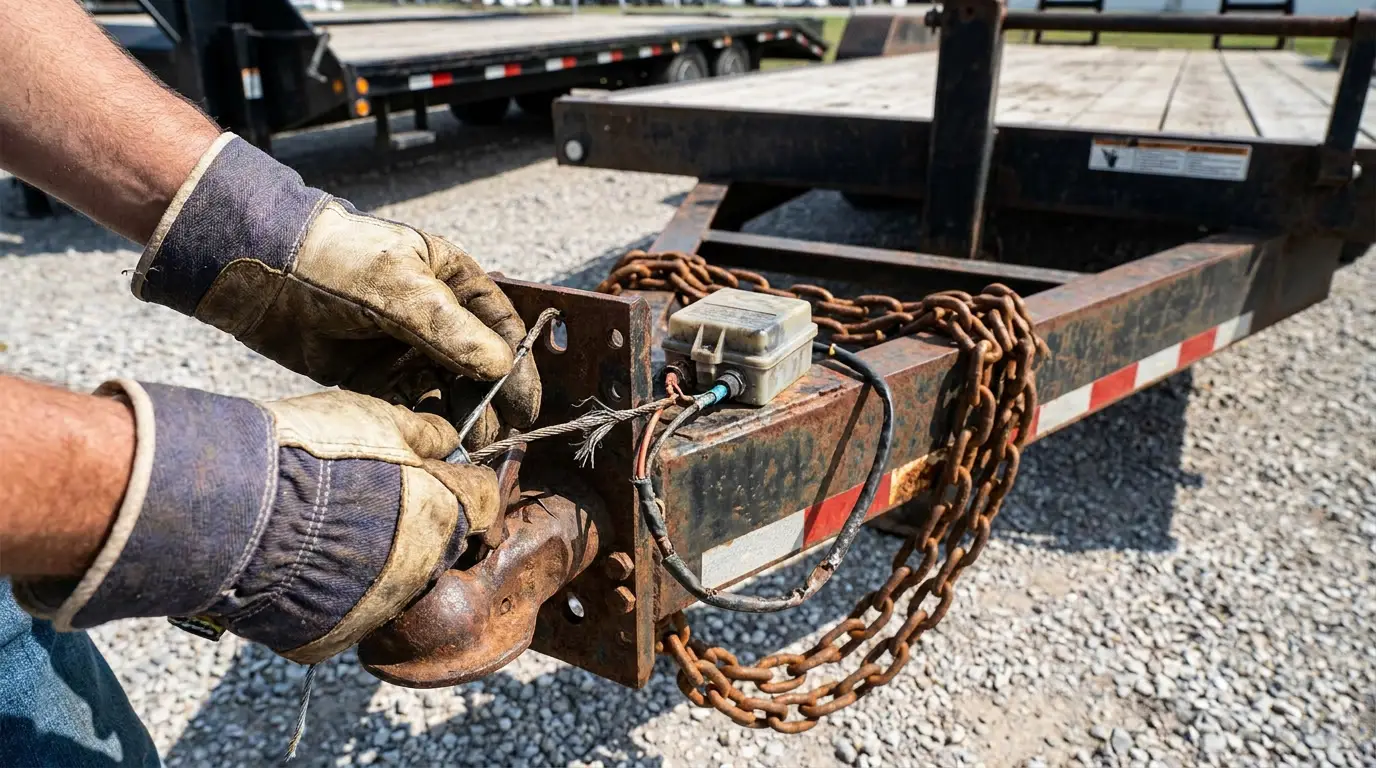
Why this is an insurance problem and not just a citation
CVSA released its 2026 International Roadcheck results on August 25. Inspectors ran 54,575 inspections across North America and parked 10,350 vehicles. The most common vehicle out of service violation was brake systems, 3,379 of them, 24.3 percent of the total. Add the 2,072 written for 20 percent defective brakes and brakes accounted for 39.1 percent of everything that took a truck off the road.
Now picture the trailer actually coming off. One event, three coverage parts. Whatever it hits is commercial auto liability. The trailer itself is physical damage, and only if you scheduled it with an accurate value. The load on the deck is motor truck cargo. Three claims, three deductibles, one loose coupler.
The quieter damage is what a brake finding does to a file that already has a crash in it. An out of service brake order sitting on your record a few weeks before a rear end collision changes the story a plaintiff attorney gets to tell.
If you run a gooseneck and you are not certain all three of those claims would be answered, let us look at it. Get a truck insurance quote in under a minute on our quote form, or call or text 423-264-4255. Our hotshot insurance page explains how we place this class.
Common questions
Does my gooseneck trailer legally need brakes on every axle?
Yes. 49 CFR 393.42(a) requires every commercial motor vehicle to be equipped with brakes acting on all wheels. The exemption at 393.42(b)(3) only reaches a semitrailer or pole trailer with a gross weight of 3,000 pounds or less, and even then only when the towed axle weight stays under 40 percent of the towing vehicle's axle weights. No hotshot gooseneck qualifies.
What does the breakaway switch actually have to do?
Under 49 CFR 393.43(d) the trailer brakes must apply automatically and immediately when the trailer separates from the truck, and they must stay applied for at least 15 minutes. That hold time depends entirely on the breakaway battery, so a switch that looks fine can still fail the rule. Test it with the trailer chocked before you trust it.
Can I use the trailer's electric brakes to hold the rig parked on a grade?
No. 49 CFR 393.41(c)(3) requires the parking brake to be held in the applied position by energy other than fluid pressure, air pressure, or electric energy, and 393.41(c)(1) requires a combination to hold on any grade it operates on. Electric trailer brakes do not satisfy either one, which is why chocks belong in the truck.
If my trailer comes loose and causes a wreck, which coverage pays?
Usually more than one. Damage to other people and property falls to commercial auto liability, the trailer itself falls to physical damage if it is scheduled with a real value, and the freight on the deck falls to motor truck cargo. That is three deductibles from one event. Call or text 423-264-4255 and we will check whether all three are actually in place before you find out the hard way.
Ready for a better rate?
We shop A-rated carriers against each other to find your lowest rate, fast. Under a minute to start, and no obligation.
Prefer to talk it through? Call or text (423) 264-4255 and a licensed agent will walk you through your options.