Idaho Lets You Haul 129,000 Pounds. Your Policy Might Not.
Idaho has designated more than 2,851 miles of highway for 129,000 pound loads. Heavier legal weight changes what your cargo, physical damage, and liability limits actually have to cover.
Idaho is one of the few states where 129,000 pounds is legal
Most of the country stops at 80,000 pounds gross. Idaho does not. Under Idaho Code Title 49, Chapter 10, the state can designate specific highways where a permitted combination runs up to 129,000 pounds, and according to the Idaho Transportation Department's 2023 Strategic Freight Plan the state has designated more than 2,851 miles of Interstate, U.S., and State highway that way.
The program began as a pilot in 2003, after the Legislature directed ITD to study what heavier trucks would do to the road, and the Legislature made it permanent in 2013 under Idaho Code 49-1004. The federal government signed off on Idaho's interstates on July 1, 2016, which is why I-84, I-86, I-15, I-90, and I-184 all carry the designation.
If you haul beets, hay, aggregates, lumber, gravel, or dairy anywhere in Idaho, you have probably run one of these routes. You may also have never mentioned it to whoever wrote your commercial truck insurance in Idaho.
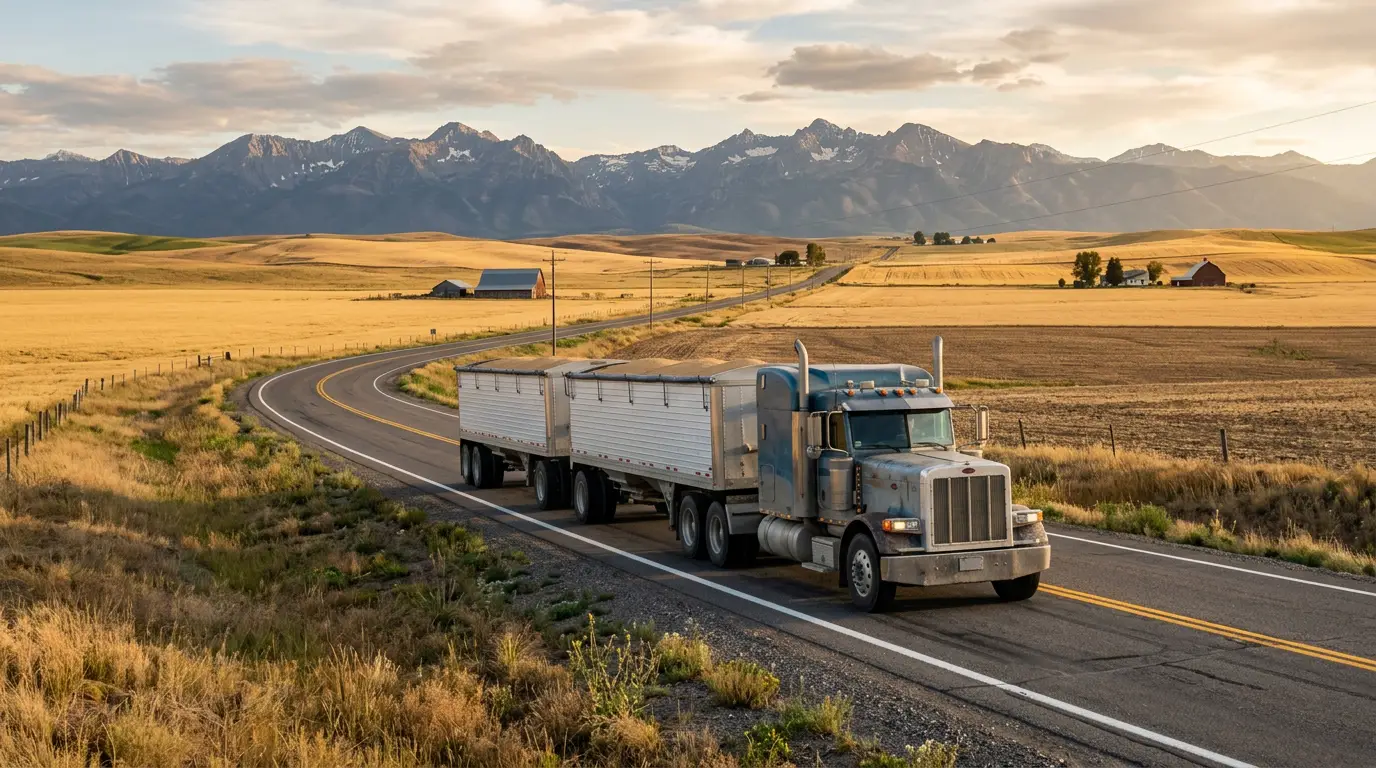
A designated route is not a permit
This is where owner-operators get caught. A designated 129,000 pound route means the road has been analyzed and approved. It does not mean you can load heavier and go. ITD states plainly in its published route Q&A that every truck operating over legal limits on one of these routes still has to be permitted, through the Idaho Division of Motor Vehicles under IDAPA 39.03.06.
Without that permit you are just overweight. Legal weight with no permit is 80,000 pounds gross, 20,000 on a single axle, and 37,000 on a tandem off the interstate. A new route also does not open the day the board votes. ITD says it takes effect 14 calendar days after the Idaho Transportation Board approves the application.
Combining two loads puts them under one limit
The whole economic argument for 129,000 pounds is fewer trips. ITD's freight plan reports that fleet owners in the pilot saw a 12 to 22 percent average reduction in trucks on approved routes, because one heavier truck replaces what used to be two lighter ones.
Run that through your policy and the problem shows up fast. Two trailers were two shipments, and each sat under your cargo limit on its own. Combine them and one fire, one rollover, or one theft takes out both at once, under a single limit, on a single occurrence. If your motor truck cargo limit was sized around a normal trailer load, a combined heavy haul can blow past it in one event. Look up what your limit is per occurrence before you accept a combined load, not after.
The equipment side works the same way. A 129,000 pound combination means more trailers, more axles, and often a converter dolly. If your physical damage schedule lists one trailer, the second trailer and the dolly are not on it, and an adjuster will notice that before you do.
Idaho's fatal truck crashes concentrate on exactly these roads
Here is the part that should change how you think about limits. ITD analyzed crash data from 2016 through 2020 and found 11,862 crashes statewide involving commercial motor vehicles, 192 of them fatal. In 2020 alone, 42 people died in CMV crashes, 20 percent of every traffic death in Idaho that year, and 71 percent of them were riding in a passenger car, van, SUV, or pickup.
Then look at where. In 2020, 81 percent of fatal CMV crashes happened on rural roadways, and U.S. and State highways accounted for 54 percent of fatal CMV crashes. Those are the roads the 129,000 pound network is built on. US-20, US-26, US-30, SH-24, SH-33, SH-34, and SH-78 run east and west as alternates to I-84 and I-86. US-91, US-93, US-95, SH-28, SH-75, SH-45, and SH-46 run north and south. Two lanes, no median, and a heavier truck.
A rural crash that kills someone in a passenger car is the claim shape that produces the largest verdicts in trucking, and your commercial auto liability limit is the only thing between that verdict and everything you own. Nobody set the old minimums with a 129,000 pound combination in mind.
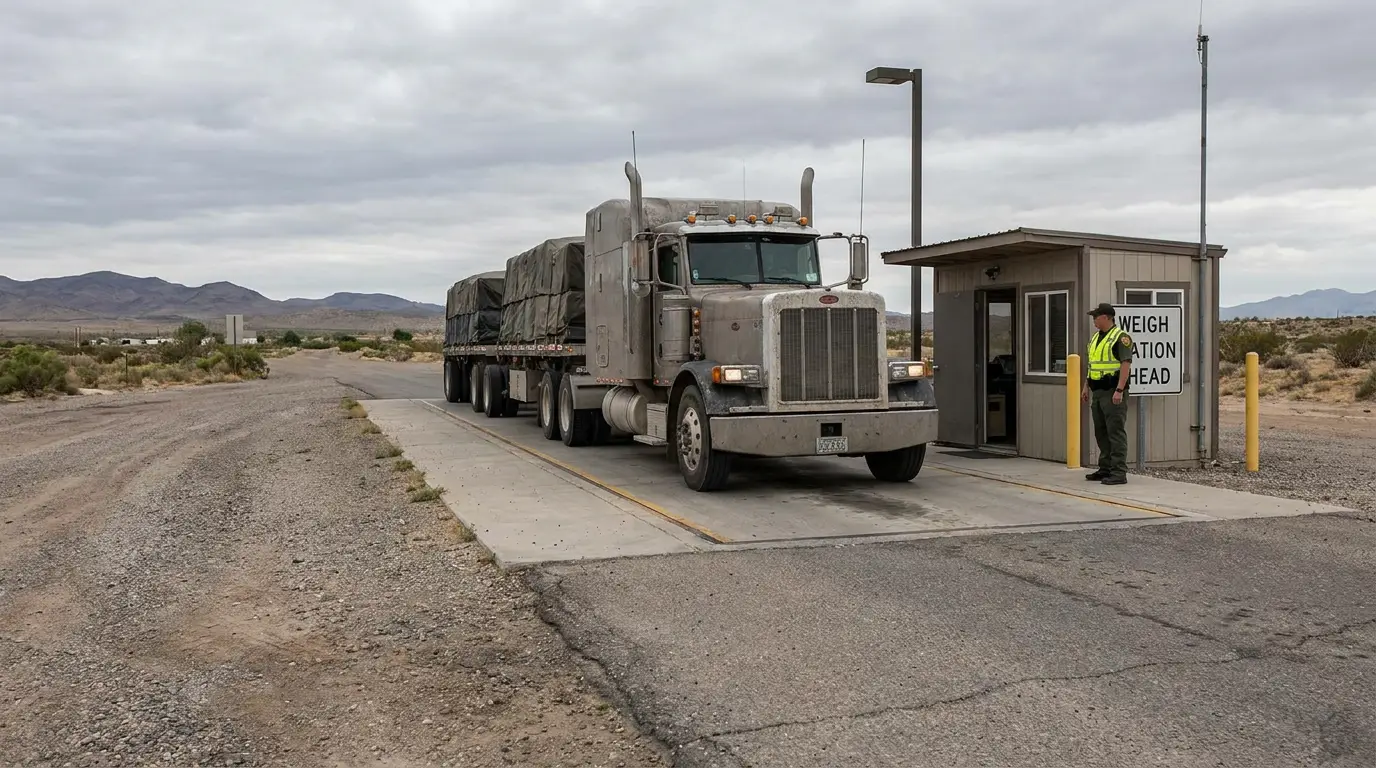
Tell your underwriter what you actually pull
Your rate reflects what the underwriter believes you do. If the policy was quoted on an 80,000 pound tractor-trailer and you run 129K permit loads on Idaho state highways, the file is wrong, and the moment to fix it is at renewal rather than during a claim investigation. Say it plainly and let the limits get sized to the work.
Keep the paperwork too. The permit, the approved route, and the scale tickets are all discoverable, and a plaintiff's attorney will ask for them. Being permitted and legally on an approved route is a good fact for you. Being overweight and off route is the opposite.
Get a quote before your next combined load
If you run heavy in Idaho, get a truck insurance quote that reflects it. We write owner-operators and small fleets, and we can size cargo and liability to a 129,000 pound operation instead of a generic one. Start on our Idaho truck insurance page or request a quote here. You can also call or text 423-264-4255 and we will go through your routes and your limits together.
Common questions
Does an approved 129,000 pound route mean I do not need a permit in Idaho?
No. The route designation only makes that stretch of highway eligible. ITD requires every truck running over legal limits on a designated route to carry a permit issued through the Idaho Division of Motor Vehicles under IDAPA 39.03.06. Without the permit you are simply overweight, no matter which road you are on.
Will my cargo limit cover a combined 129,000 pound load?
Not automatically. Combining two shipments into one heavier haul puts both under a single per occurrence cargo limit, so one loss can exceed a limit that was sized for a single trailer. Check the per occurrence number before you accept the load. If you want someone to read your limits against the loads you actually haul in Idaho, call or text 423-264-4255.
Do I have to tell my insurance company I run 129K permit loads?
Yes. Gross weight and combination configuration are rating factors, not details. A policy quoted on an 80,000 pound tractor-trailer does not describe a 129,000 pound combination with extra trailers and a dolly, and the gap tends to surface during a claim investigation, which is the worst possible time to find it.
How fast can I get a quote for an Idaho heavy haul operation?
Quickly. You can get a truck insurance quote started in under a minute on our site, and a licensed agent picks it up from there to size cargo, physical damage, and liability to your routes. Call or text 423-264-4255 if you would rather just talk through it.
Ready for a better rate?
We shop A-rated carriers against each other to find your lowest rate, fast. Under a minute to start, and no obligation.
Prefer to talk it through? Call or text (423) 264-4255 and a licensed agent will walk you through your options.