Illinois Truck Tolls Jump 30 Percent and the Free Route Has a Legal Limit
Illinois truck tolls are set to rise about 30 percent in January 2027. Before you plan a free route around them, state law limits how far a long combination may leave the designated system.
The increase is planned and the date is set
CDLLife reported in June 2026 that the Illinois Tollway proposed raising commercial vehicle rates roughly 30 percent for I-PASS users starting January 1, 2027, which would put commercial operators at about 90 cents per mile on average. It funds Driving Connections, a 15 year, $26.5 billion capital plan running from 2027 through 2042.
The authority came earlier. Land Line reported in November 2025 that lawmakers approved SB2111, the Northern Illinois Transit Authority Act, raising truck tolls 30 percent beginning in January 2027 with biennial increases after that, capped at 4 percent a year starting in January 2029. The increases were projected to generate about $180 million a year, and the same bill redirects the state sales tax on trucking fuel away from roads and toward transit. It stacks on an escalator that already runs, since the Tollway's December 2025 budget release noted its revenue includes an annual commercial truck rate increase the board first approved in 2008. If you are pricing this state, look at commercial truck insurance in Illinois alongside the rest of the math.
The road you would be leaving is the worst in the country
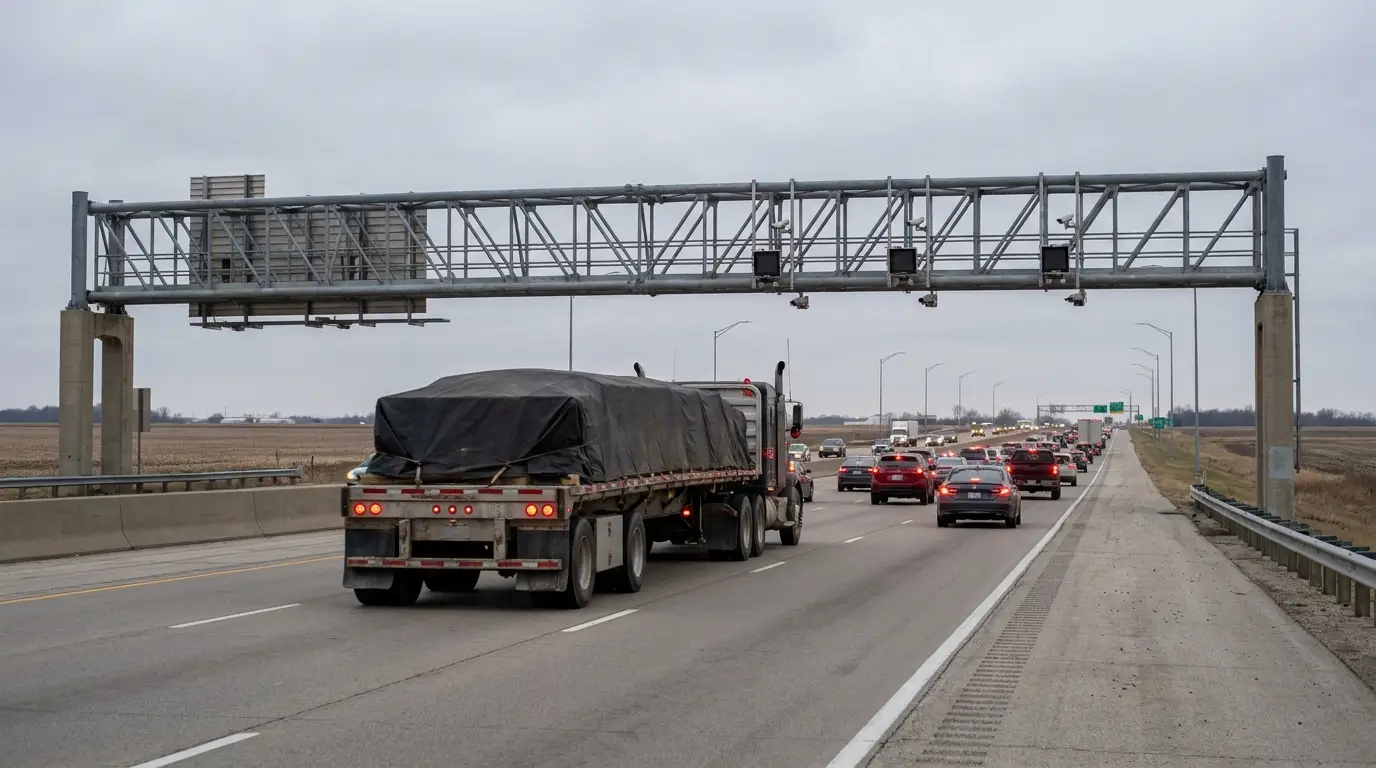
In February 2026 the American Transportation Research Institute released its annual Top 100 Truck Bottleneck List, and the Chicago interchange where I-294 meets I-290 and I-88 came in first in the nation, displacing Fort Lee, New Jersey, which had held the top spot for years. ATRI monitored more than 325 freight critical locations and measured average rush hour truck speeds of 33.2 mph, dropping to 29.6 mph across the ten worst.
Note which roads those are. I-294 and I-88 are both Illinois Tollway. The plan asks small carriers to pay roughly a third more to sit in the most congested truck bottleneck in the country, which is exactly what makes a free parallel route look smart on a Sunday night.
Illinois limits how far you may leave the designated system
Under 625 ILCS 5/1-126.1 the state sorts highways into classes, and Class I expressly includes interstate highways, expressways and tollways. Class II covers state highways and designated local roads not built to interstate standards with lane widths of at least 11 feet. Everything else, county, township and municipal roads included, is non designated.
Then 625 ILCS 5/15-107 sets what a long combination may do off that system. For combinations over 65 feet, the statute allows access from a Class I highway onto any street or highway for one highway mile, and from a Class I or Class II highway onto a non designated highway for five highway miles. Both allowances are limited to loading, unloading, food, fuel, repairs and rest, both require that no sign prohibits the access, and the five mile allowance adds a condition that matters here. The route may not be used as a thoroughfare between Class I or Class II highways. Household goods carriers and towaway trailer transporter combinations get broader access under subsection (e-3).
Read that thoroughfare clause again. A route chosen to get from one designated highway to another while skipping the toll is the precise use the statute does not permit. The text on the General Assembly site reflects Public Act 103-1079, effective January 1, 2026, so this is live law.
The routing choice ends up in the claim file
Most drivers file route restrictions under ticket risk. The bigger exposure lands after a crash. Your ELD and telematics record where you were, and in a serious injury suit the route is among the first things produced. If the truck was using a county road as a shortcut between two designated highways, opposing counsel puts that in front of a jury whether or not the routing caused the crash. It reframes the file from an accident into a decision, and your commercial auto liability limit stands behind that argument.
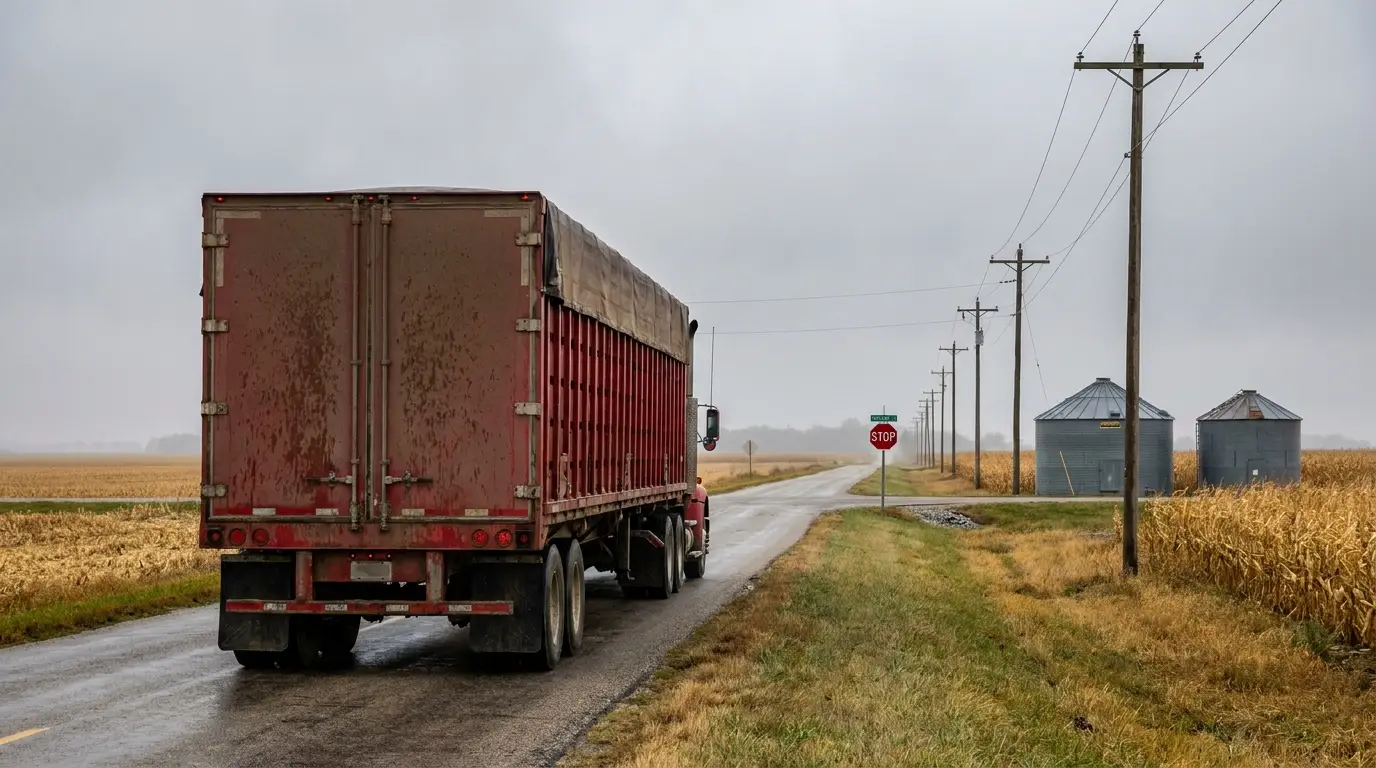
The physical facts change too. A tollway is controlled access with wide lanes, full shoulders and no cross traffic. A non designated road has field entrances, farm driveways, stop controlled intersections and often no shoulder. Slower speeds do not mean smaller claims when the crash type shifts from a rear end in slow traffic to an angle collision at an unprotected intersection. No shoulder also means a breakdown blocks a live lane, and recovering a loaded unit off soft ground is a physical damage bill before anyone discusses the freight.
What to sort out before January
Price the route honestly rather than by instinct. Thirty percent of a toll is a known number, while the added hours, miles and fuel often erase the savings on their own. If you do shift traffic off the Tollway, learn which parallel routes IDOT has designated Class II, because a designated route carries no five mile limit and no thoroughfare condition.
Then make sure the operation on your policy matches the one you run. Coverage is quoted against a described exposure, and moving Illinois miles from controlled access highway onto two lane county roads changes that exposure. Tell your agent before it shows up in a loss. Our Illinois truck insurance page covers how carriers price this state.
Get a truck insurance quote in under a minute and see what your Illinois miles should actually cost. Start at our quote form or call or text 423-264-4255 and we will look at your limits, your radius and your routes together.
Common questions
How much are Illinois truck tolls going up and when?
The Illinois Tollway proposed raising commercial vehicle rates roughly 30 percent for I-PASS users beginning January 1, 2027, which works out to about 90 cents per mile on average. Under SB2111 the increases continue on a biennial basis, capped at 4 percent a year starting in January 2029.
How far off an Illinois designated truck route can a 53 foot combination legally go?
Under 625 ILCS 5/15-107, a combination over 65 feet may run one highway mile off a Class I highway, or five highway miles off a Class I or Class II highway onto a non designated road. Access is only for loading, unloading, food, fuel, repairs and rest, no sign may prohibit it, and the five mile route may not be used as a thoroughfare between designated highways.
Can taking a shortcut around a toll affect an insurance claim?
It can affect the liability side. Your route is recorded by your ELD and telematics and it comes out in discovery, so running a road your configuration was not entitled to use as a thoroughfare hands the other side an argument even when the routing did not cause the crash. That is why liability limits and honest disclosure of how you run both matter. Call or text 423-264-4255 if you want yours reviewed.
Does my policy care whether I run tollways or county roads in Illinois?
Yes. Coverage is priced against the operation you describe, and shifting miles from controlled access highway to two lane county roads changes the crash types you are exposed to. Tell your agent before the change shows up in a loss, and get a truck insurance quote if you want to see what the different route profile actually prices at.
Ready for a better rate?
We shop A-rated carriers against each other to find your lowest rate, fast. Under a minute to start, and no obligation.
Prefer to talk it through? Call or text (423) 264-4255 and a licensed agent will walk you through your options.