A Driver Put A Loaded Trailer Through A Storefront. Whose Policy Pays
FreightWaves reported on September 18 that a driver deliberately drove a loaded tractor-trailer into a store entrance in East Nashville. Nobody was hurt. The coverage questions start the second a police report says intentional.
FreightWaves reported on September 18, 2026 that a truck driver deliberately drove a loaded tractor-trailer through the front entrance of an Aldi grocery store in East Nashville shortly after midnight. The store was closed, so no employees or customers were inside, and the driver was not hurt. Police said he showed no sign of alcohol or drugs and acknowledged that he drove into the building on purpose. He was charged with felony vandalism involving more than $250,000 in damage and held on a $35,000 bond.
For most owner-operators this reads as a strange one-off story. For anyone running a small fleet it is a coverage problem with real teeth, because the moment a police report uses the word intentional, the ordinary claim path stops working the way you expect it to.
What happened in East Nashville
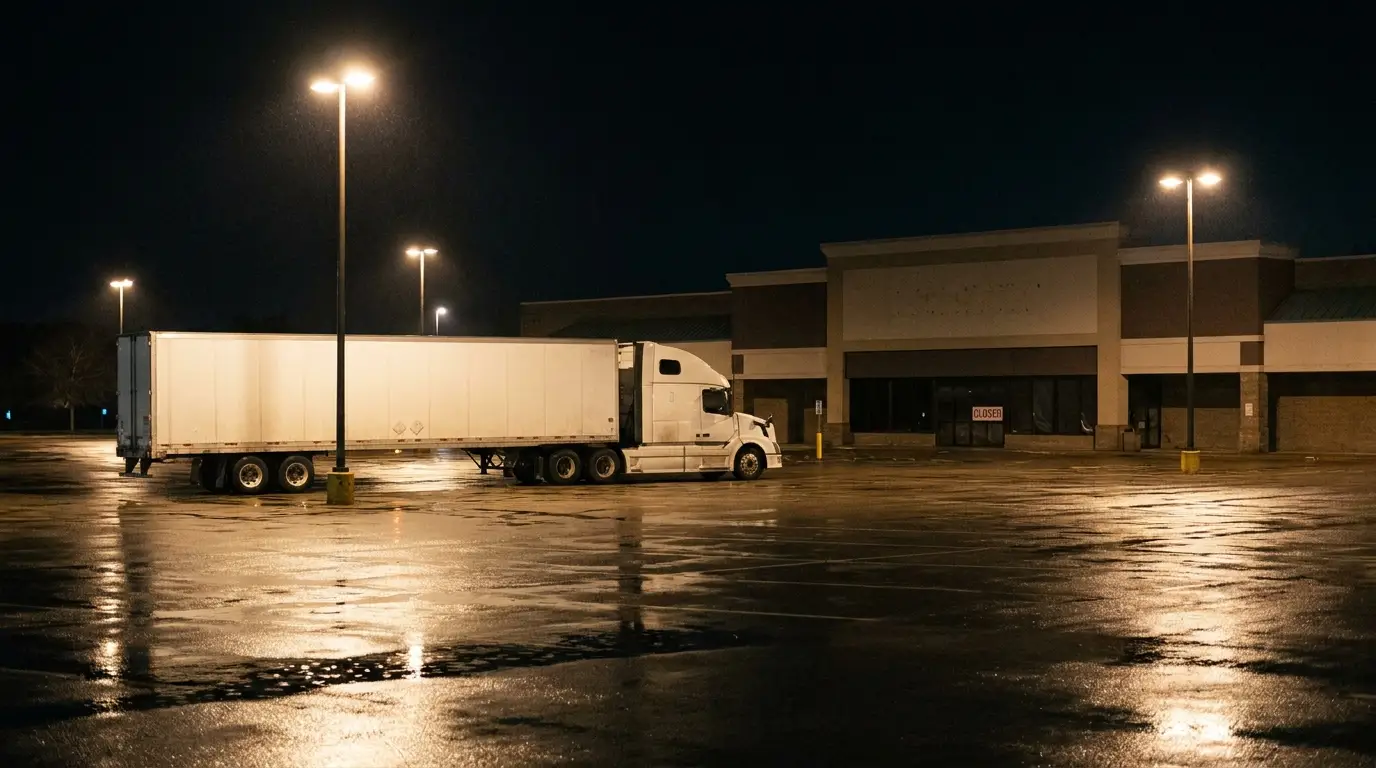
According to FreightWaves, surveillance video showed the truck sitting in the lot for several minutes before it accelerated back into the storefront. The trailer ended up lodged in the entrance. Combined damage to the store and the truck was put at more than $250,000. Aldi said it was assessing the damage and cooperating with investigators. The carrier was not named in the reporting, and nothing is public about how the truck was insured.
Why the word intentional changes the claim
Liability insurance is built to pay for accidents. Nearly every commercial auto form excludes bodily injury or property damage that is expected or intended from the standpoint of the insured. That one sentence is the whole fight. If the driver counts as an insured under the policy, his own defense and indemnity are usually gone. Whether the same exclusion reaches the trucking company that hired him is a separate question, and it turns on the exact wording of the form and on the law of the state where the loss happened. Some policies apply the exclusion only to the insured who committed the act. Others are written far more broadly.
That is why reading your own form matters. Pull the commercial auto liability policy and find the exclusion. If it is written against "that insured" rather than "the insured," your company's coverage may well survive an act you had nothing to do with. If it is not, you want to know that on a quiet Tuesday and not on the phone with a claims adjuster.
Three policies get pulled into a loss like this
The building and everything inside it is third party property, so it lands on the auto liability side along with any injury claim. The tractor and trailer land on physical damage, where a collision caused on purpose by your own driver raises the same intent question from the other direction. Whatever was on the trailer lands on motor truck cargo, and cargo forms carry their own dishonesty and conversion wording that decides whether a load wrecked by the driver is covered at all. One event, three forms, three different answers.
The exposure that does not come from the policy
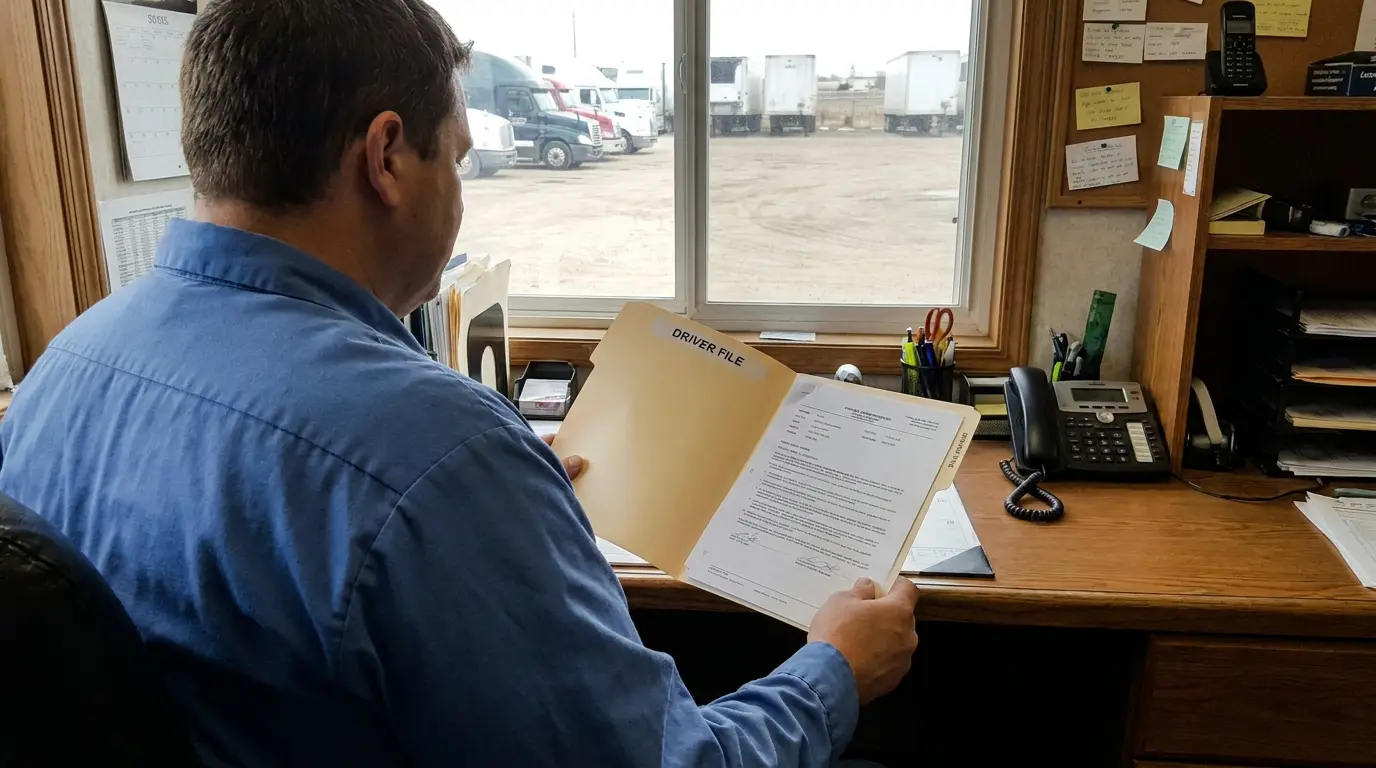
Even where an intentional act exclusion knocks out the driver, the claim against the company is usually repleaded as negligent hiring, negligent retention, and negligent supervision. Those are ordinary negligence theories and they are generally not excluded. The evidence is your driver qualification file, your motor vehicle record pulls, your road test, and whatever you did or did not do about any earlier complaint. A thin file is what turns a single truck incident into a company level case.
Do not assume general liability quietly backstops any of this either. GL forms exclude bodily injury and property damage arising out of the use of an auto, so a loss caused by the truck itself gets handed straight back to the auto policy.
What a small fleet should do this week
Three things, none of them expensive. Read the intentional act wording on your auto and cargo forms so you know whose conduct sets it off. Make every driver file complete and current, because that file is your defense in the negligence claim that follows. And size your limits against a building rather than against a car, since one closed storefront put more than $250,000 on the table before anyone was even injured.
One more thing worth knowing. If you run under an MCS-90 endorsement, understand what it actually does. It protects the public by making your insurer satisfy a judgment the policy might not otherwise cover. It does not protect you. The insurer can turn around and collect every dollar of it back from the carrier.
If you are not sure how your current form handles a deliberate act, that is a ten minute conversation worth having. Get a truck insurance quote in under a minute on our quote form and we will read your existing coverage next to the options. Call or text 423-264-4255 and talk it through with a person.
Common questions
Does truck insurance cover damage a driver caused on purpose
Usually not for that driver. Commercial auto forms exclude damage that is expected or intended from the standpoint of the insured, so a driver who admits he drove into a building on purpose generally has no defense or indemnity. Whether the motor carrier still has coverage depends on whether the exclusion is written against "that insured" or against every insured on the policy, and on the law of the state where it happened.
Can my company be sued if the driver acted alone
Yes, and it usually is. Even when the driver's own act is excluded, the plaintiff pleads negligent hiring, negligent retention, and negligent supervision against the company. Those are negligence claims, not intentional ones, so they are generally covered and generally defended. Your driver qualification file is the evidence that decides them.
Does general liability cover a truck hitting a building
No. General liability forms exclude bodily injury and property damage arising out of the ownership, maintenance or use of an auto. A tractor-trailer that goes through a storefront is an auto loss, so it belongs on the commercial auto policy no matter how much the damage looks like building damage.
How do I get a truck insurance quote that checks these exclusions
Send your current declarations page and we will read the actual wording rather than a summary of it. You can get a truck insurance quote in under a minute on the quote form, or call or text 423-264-4255 and we will go through the exclusions line by line with you.
Ready for a better rate?
We shop A-rated carriers against each other to find your lowest rate, fast. Under a minute to start, and no obligation.
Prefer to talk it through? Call or text (423) 264-4255 and a licensed agent will walk you through your options.