Kentucky's New PIP Rules Start at Your Renewal Date
Kentucky rewrote its no fault benefits on July 15, and whether the new numbers apply to your truck depends on a date printed on your own policy.
Kentucky rewrote its no fault benefits on July 15
House Bill 627 became law in Kentucky on April 14, 2026 without the Governor's signature, and the Legislative Research Commission bill record lists it as an act relating to insurance. It took effect July 15, 2026 and it changed the personal injury protection side of Kentucky auto policies, commercial ones included. If you run trucks through the Commonwealth this is the first real movement in the state's reparations system in years, and it landed in the middle of the renewal calendar.
The headline numbers are simple enough. Weekly work loss went from $200 to $500. Replacement services went from $200 to $500. Funeral and burial expense went from $1,000 to $5,000. Medical bills are now paid at the maximum allowed on the Kentucky workers compensation fee schedule under KRS 342.035 rather than at whatever the provider billed, and providers have 180 days to submit a statement of charges. What did not change is the size of the pot. Basic reparation benefits are still $10,000 per injured person. Anyone shopping commercial truck insurance in Kentucky should know which side of that change their policy sits on.
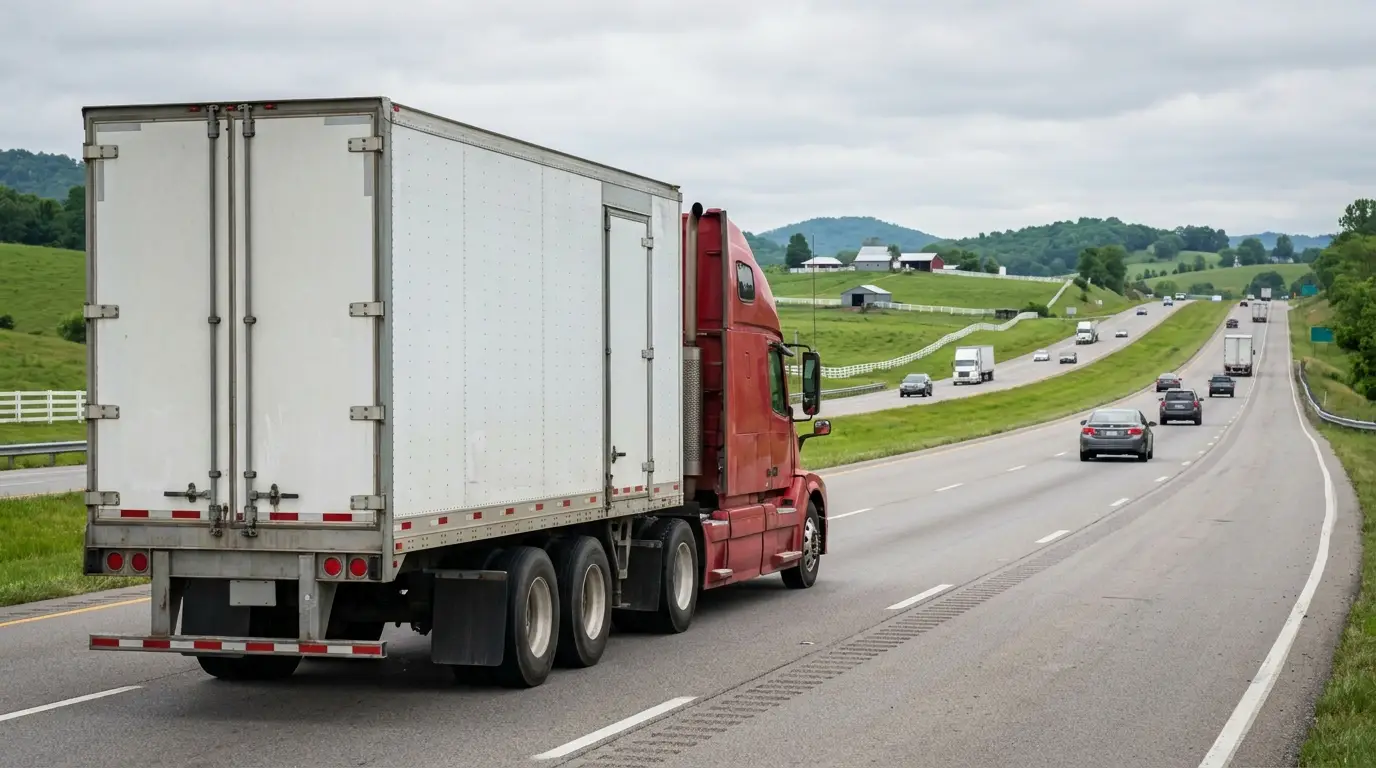
The date that matters is your renewal, not July 15
Here is the part that catches people. The new benefits apply to basic and added reparation benefits issued or renewed on or after the effective date. Being hurt after July 15 is not enough on its own. The Lexington firm Garmer and Prather made the same point in a July 14, 2026 note, that a policy written before the change keeps running under the old schedule until it comes up for renewal.
For an owner operator with one policy that is a single date to write down. For a small fleet with units added mid term, or with separate paper on a trailer or a non trucking exposure, it means two vehicles in the same operation can sit under two different benefit schedules for months. Nothing about the equipment changes. The paperwork does.
The same $10,000 can empty a lot faster now
Run the arithmetic on the caps. At $200 a week, wage loss by itself needed fifty weeks to consume the full $10,000. At $500 a week it needs twenty. The medical side pushes the other direction, since repricing to the comp fee schedule generally pays less than a billed charge, so medical draws the pot down more slowly than it used to. The net effect is that the mix inside the benefit shifts, and for an injured person who is out of work the money can run out far sooner than it once did.
That matters to a motor carrier because reparation benefits are the first money on the table. When they are gone, the conversation moves to the liability side of the policy. Faster exhaustion means the claim against your limit opens earlier, while the medical picture is still unsettled and before anyone knows what the injury really is. Adjusters price uncertainty conservatively. So do plaintiff lawyers.
Kentucky's tort gate does not stop a serious truck crash
Kentucky is a choice no fault state, and KRS 304.39-060(1) says any person who registers, operates, maintains or uses a motor vehicle on the public roadways of the Commonwealth is deemed to have accepted the subtitle. There is no residency test anywhere in that sentence. An Indiana or Tennessee owner operator running I-65 through Louisville or I-75 through Covington is inside Kentucky's system for a Kentucky accident.
Subsection (2)(a) abolishes tort liability to the extent reparation benefits are payable. Subsection (2)(b) then hands most of it back. A plaintiff can recover for pain, suffering, mental anguish and inconvenience once medical expense benefits exceed $1,000, or where the injury involves permanent disfigurement, a fracture to a bone, a compound, comminuted, displaced or compressed fracture, loss of a body member, permanent injury within reasonable medical probability, permanent loss of bodily function or death.
Read that list against what a loaded tractor trailer actually does in a collision. One broken bone clears the gate on its own with no dollar test at all. The tort exemption is genuine protection on a dock bump or a low speed parking lot scrape. On the crash that threatens your limit it is close to no protection whatsoever.

What to ask before your next renewal
Three questions. When does the policy renew, because that is the date the new benefit schedule attaches. Is basic reparation coverage listed on every unit, because KRS 304.39-110 makes it part of the required security alongside a liability floor of $25,000 per person, $50,000 per accident and $25,000 property damage, or a $60,000 single limit. And is anyone confusing that state floor with a trucking limit, because it is not one. It is the number a passenger car needs to be registered. Federal minimums for interstate motor carriers sit far above it, which is one of several reasons truck insurance costs what it does.
None of this is a reason to change carriers. It is a reason to read the declarations page before it renews rather than after a claim. Your commercial auto liability limit is the number that gets tested once the reparation benefit is spent, and in Kentucky that can now happen in twenty weeks.
Get a truck insurance quote in under a minute and we will look at how your Kentucky exposure is actually written, not only what it costs. Call or text 423-264-4255, start on our Kentucky truck insurance page, or request a quote here.
Common questions
Does Kentucky's new PIP law apply to my truck policy right now
It applies to basic and added reparation benefits issued or renewed on or after July 15, 2026. If your policy was written before that date it keeps the old benefit schedule until it renews. Ask your agent for the renewal date, or call or text us at 423-264-4255 and we will read the declarations page with you.
I am not based in Kentucky, does any of this reach me
Yes, for accidents that happen there. KRS 304.39-060(1) covers any person who registers, operates, maintains or uses a motor vehicle on Kentucky public roadways, with no residency requirement, so a truck passing through on I-65, I-75, I-24 or I-64 is inside the system while it is in the state.
Did the $10,000 basic reparation benefit go up
No. House Bill 627 raised the weekly work loss and replacement services caps to $500 and funeral and burial expense to $5,000, and it moved medical payments onto the Kentucky workers compensation fee schedule, but the total basic reparation benefit is still $10,000 per injured person.
Does the tort threshold protect me from being sued after a Kentucky truck crash
Rarely in a serious one. Under KRS 304.39-060(2)(b) a claim for pain and suffering opens once medical expense benefits exceed $1,000 or the injury includes a bone fracture, permanent disfigurement, permanent injury, permanent loss of bodily function or death. A single fracture clears it. Get a truck insurance quote and size your limits for that reality rather than for the threshold.
Ready for a better rate?
We shop A-rated carriers against each other to find your lowest rate, fast. Under a minute to start, and no obligation.
Prefer to talk it through? Call or text (423) 264-4255 and a licensed agent will walk you through your options.