Two Clocks Run on a Loaded Livestock Trailer
The twenty eight hour law, the agricultural exemption, and why the rest stop shows up in your claim file
Two clocks run on a loaded livestock trailer
Most owner operators can recite the hours of service rules from memory. Far fewer know that a load of cattle starts a second federal clock the moment the last animal walks up the ramp, and that the second clock belongs to the Department of Agriculture rather than to FMCSA. It is the twenty eight hour law, it sits at 49 U.S.C. 80502, and the first version of it passed in 1873. Both clocks run at once and neither one knows about the other. Our livestock hauler insurance page covers the coverage side. This post is about the timing, because timing is what most livestock claims turn on.
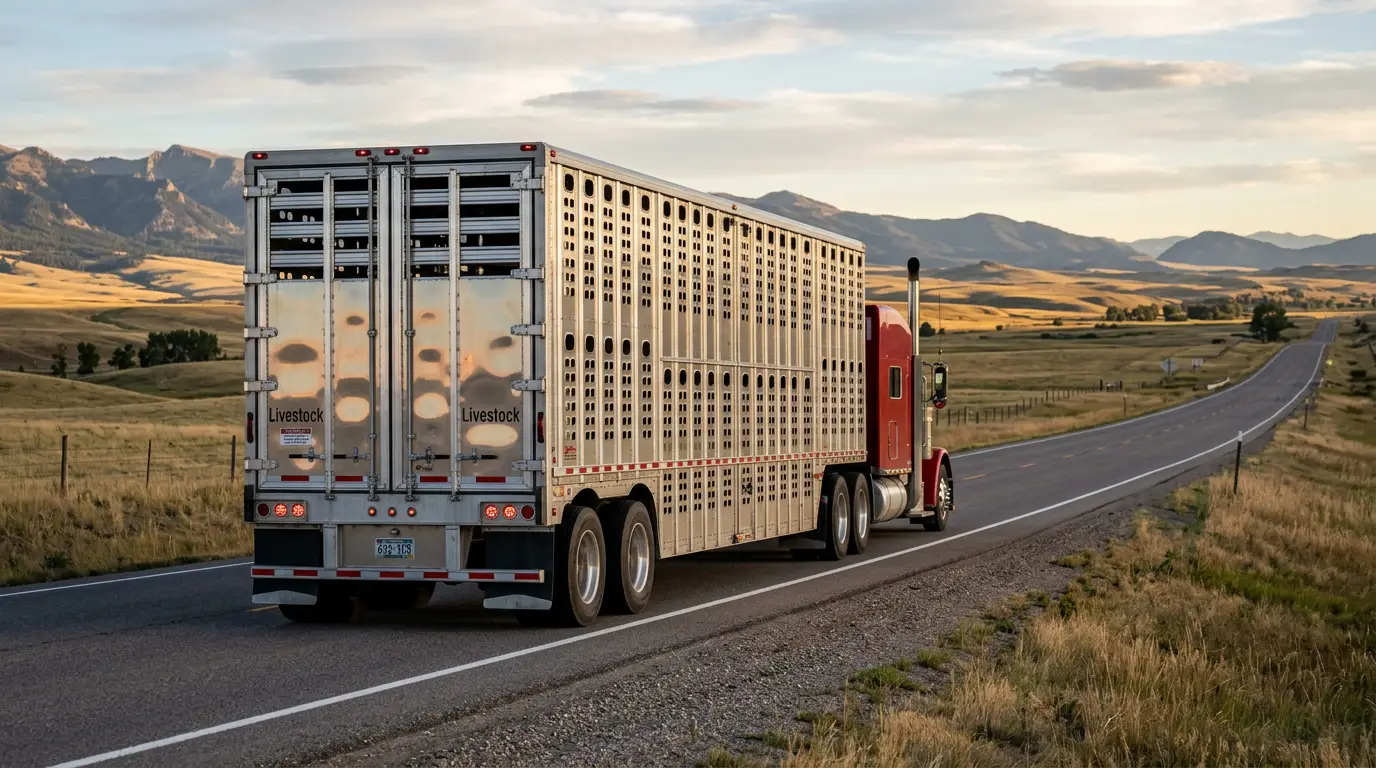
What the twenty eight hour law actually says
The statute is short and worth reading once. A rail carrier, express carrier, or common carrier, other than by air or water, may not confine animals in a vehicle or vessel for more than 28 consecutive hours without unloading them for feeding, water, and rest. The 28 hours stretch to 36 when the owner or the person having custody of the animals requests it in writing, separate from the bill of lading. Animals that come off have to be unloaded in a humane way into pens equipped for feeding, water, and rest for at least 5 consecutive hours. Sheep get an additional 8 hours when the 28 hour period would end at night. A violation carries a civil penalty of at least $100 and not more than $500.
The exception at the end of the section does the most work in practice. The law does not apply when animals are transported in a vehicle in which the animals have food, water, space, and an opportunity for rest. That one sentence is why a trip plan matters more than a stopwatch.
Yes, it reaches trucks
Plenty of haulers still treat this as a railroad rule. When the statute was recodified in 1994 the language became vehicle or vessel, and in 2006 USDA publicly confirmed that truck shipments are covered. The implementing rules never caught up. USDA enforces through 9 CFR Part 89, where section 89.3 is still titled feeding, watering, and resting livestock in the car. Nothing in Part 89 describes a pot load, so the yardstick that survives is space. Section 89.3 says animals should be unloaded into pens unless there is ample room for all of them to lie down at once, which is the same test as the in vehicle exception in the statute.
The hours of service clock is a separate animal
Part 395 has its own carve out and it is generous. Under 49 CFR 395.1(k) the hours of service rules do not apply during planting and harvesting periods, as determined by each State, to drivers hauling agricultural commodities from the source of the commodity to a point within a 150 air mile radius of that source. Section 395.2 defines agricultural commodity to include livestock, by reference to section 602 of the Emergency Livestock Feed Assistance Act of 1988 at 7 U.S.C. 1471.
Congress later added the other end. Section 23018 of the Infrastructure Investment and Jobs Act, Public Law 117-58, signed November 15, 2021, created what is now 49 CFR 395.1(k)(4), exempting drivers hauling livestock within 150 air miles of the final destination. Both ends of the run are exempt, the middle is not, and once you pass that ring the log starts. What catches people is that the exemption relieves the hours of service clock and does nothing at all to the twenty eight hour clock. You can be perfectly legal on hours and still have animals confined past 28.
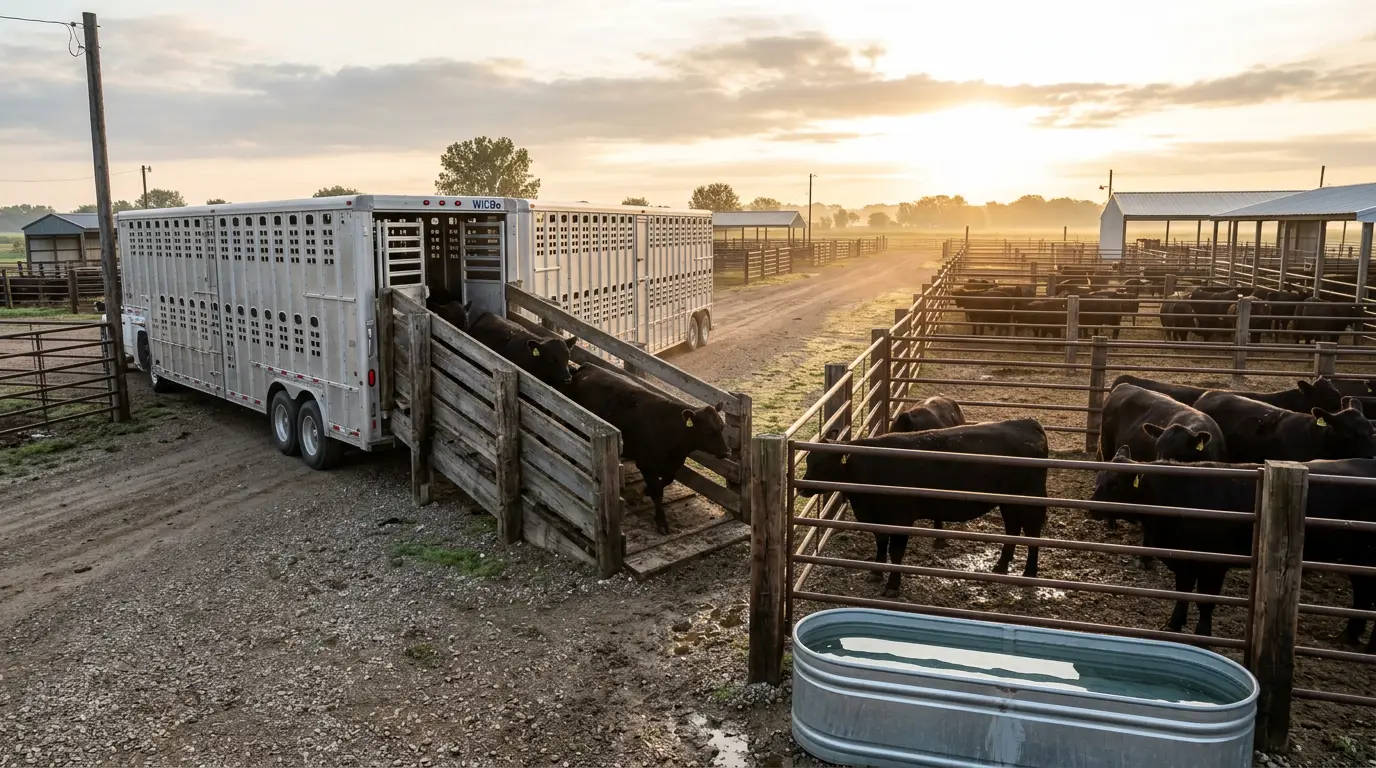
Where both clocks land in your claim file
Most livestock mortality is not a collision. Animals die from heat, from suffocation, and from going down in a crowded compartment, and a typical live animal cargo endorsement answers for death from a covered peril rather than from those causes unless it has been specifically endorsed. So the claim becomes a question of what you can prove, and the proof is a timeline. An adjuster reconstructing a heat loss will ask when the trailer was loaded, when it rolled, how long it sat, and when the animals last had water. That is the twenty eight hour record whether or not you kept it under that name. Running agricultural exempt makes it sharper, because inside the 150 air mile ring you may have no electronic record at all. A dated loading sheet, a scale receipt, and a note of the rest stop fill that hole and protect the motor truck cargo side of the loss.
One more split is worth knowing. Animals that get loose at a chute, at a rest pen, or at a wreck stop being a cargo problem the moment they reach a roadway. Vehicles that strike them are third party claims against your commercial auto liability limit, separate from the value of the animals you lost. A rest stop is an unloading event, and unloading events are where gates get left open.
Keep it simple and keep it written
Log the load time and the roll time. Save proof of any unload stop, where it happened and how long it lasted. If you rely on the extension to 36 hours, get that request in writing from the owner or the person with custody and keep it separate from the bill of lading, because that is exactly what the statute requires. For a second set of eyes on the form, start with our livestock hauler insurance page.
Get a truck insurance quote in under a minute and we will size the cargo limit against a full load at current market, check whether your policy answers for heat and suffocation, and look at the liability limit behind a loose animal claim. Start your quote here, or call or text 423-264-4255.
Common questions
Does the twenty eight hour law apply to trucks or only to railroads
It applies to trucks. The statute at 49 U.S.C. 80502 covers common carriers other than by air or water and refers to confinement in a vehicle or vessel, wording that came in with the 1994 recodification. USDA publicly confirmed in 2006 that truck shipments are covered. The implementing rules at 9 CFR Part 89 still read as though they were written for rail cars, which is why the confusion has lasted this long.
How long can livestock stay on the trailer
28 consecutive hours without unloading for feeding, water, and rest, or 36 hours when the owner or the person having custody of the animals asks for the extension in writing and separate from the bill of lading. When animals do come off they have to be unloaded into pens equipped for feeding, water, and rest for at least 5 consecutive hours. The law does not apply at all when the animals have food, water, space, and an opportunity for rest in the vehicle.
Does the agricultural hours of service exemption cover the twenty eight hour law too
No. They are separate rules from separate agencies. The exemption at 49 CFR 395.1(k) suspends the federal hours of service rules within 150 air miles of the source of the livestock and, since the 2021 infrastructure law, within 150 air miles of the final destination as well. It has no effect on the animal confinement limit that USDA enforces.
Will my cargo policy pay if animals die from heat on a delayed load
Only if the form says so. A live animal endorsement commonly answers for death from a covered peril such as collision or overturn, and death from heat, suffocation, or an animal going down often has to be added on purpose. Have the wording read before you need it. Call or text 423-264-4255 and we will go through your form line by line, or get a truck insurance quote and we will build it correctly from the start.
Ready for a better rate?
We shop A-rated carriers against each other to find your lowest rate, fast. Under a minute to start, and no obligation.
Prefer to talk it through? Call or text (423) 264-4255 and a licensed agent will walk you through your options.