What Michigan's 164,000 Pound Axle Law Does To Your Coverage
Michigan limits axle loads instead of gross weight, and the 164,000 pound ceiling quietly changes what your cargo limit and equipment schedule are actually worth
Michigan is the state where a completely legal load can weigh more than twice the federal limit, and plenty of owner operators running in from Ohio or Indiana learn that only after they have committed to the freight. If you move aggregate, steel, cement, asphalt or logs inside the state, the weight law shapes your coverage more than your home terminal does.
Michigan Caps Axle Loads, Not Gross Weight
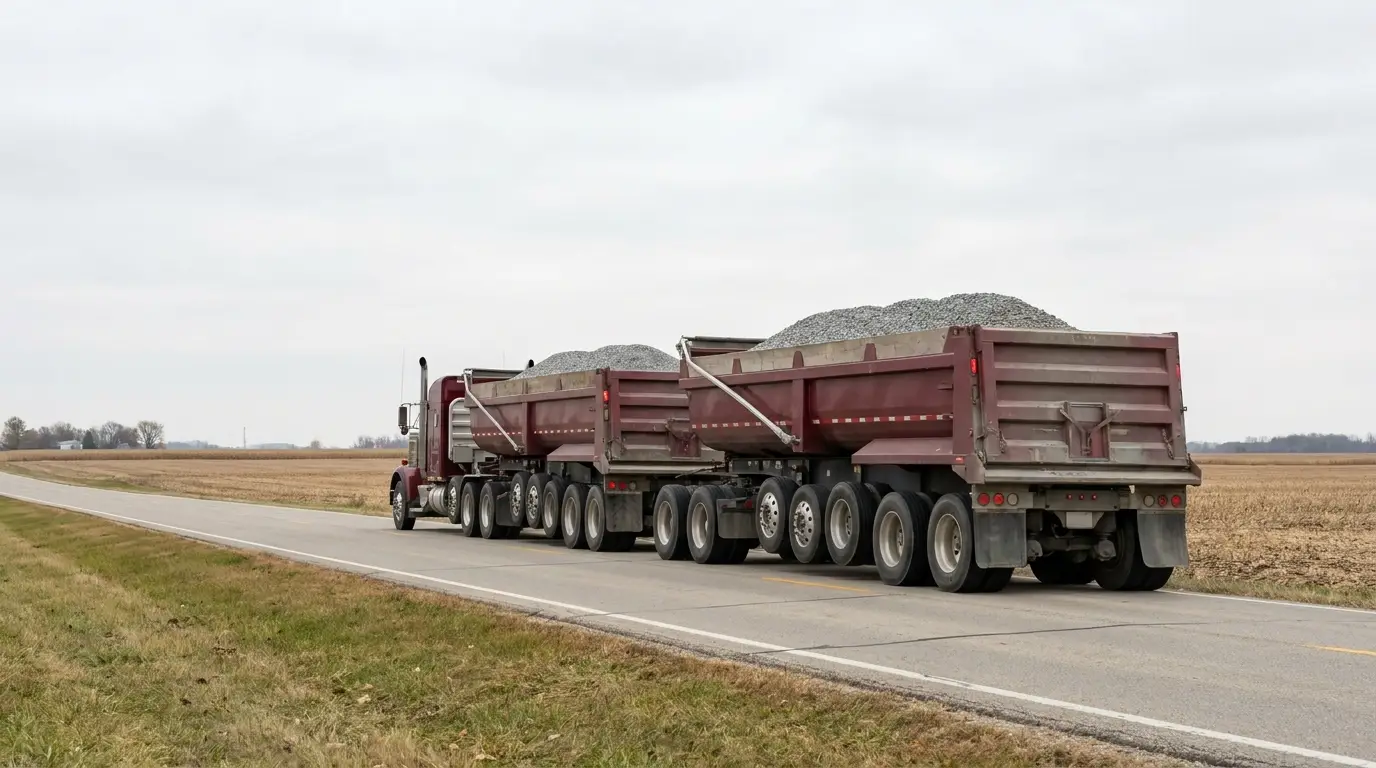
MDOT lays it out in its truck weight law summary, last updated April 7, 2026. Michigan does not build its limits around gross vehicle weight the way other states do. It limits the weight allowed on each individual axle based on the spacing between them, with a hard ceiling of eleven axles. Since 1967 that structure has produced a maximum gross vehicle weight of 164,000 pounds. A federal weight law truck stops at 80,000 pounds on five axles, four carrying 17,000 pounds each and the steer axle carrying 12,000. On the heaviest Michigan combination, most of the eleven axles carry only 13,000 pounds apiece.
The whole thing survives on a grandfather clause in federal law, and MDOT notes that if the law were ever repealed it could not be re enacted. So this is a Michigan advantage and a Michigan exposure at the same time. Before you commit to a Michigan lane, look at what applies to commercial truck insurance in Michigan so your limits match the loads you are really pulling.
Your Cargo Limit Was Probably Written For An 80,000 Pound Truck
Here is where the weight law quietly breaks a policy. A cargo limit applies to the load on the truck, not to the number of trips it took to move that freight. One Michigan combination can legally carry what would take two trucks in Indiana, and it does it under one policy, one limit and one deductible. Nothing about running the heavier configuration raises your motor truck cargo limit on its own. Add axles to haul more per trip, leave the cargo line alone, and you have cut your effective coverage per pound roughly in half.
MDOT names the commodities that ride these heavier units, and several of them carry real value density. Automotive and structural steel, factory tooling, power trains, aggregate, cement, asphalt, petroleum, lumber and sugar beets. A tarped steel load at Michigan weight is a very different claim than the same trailer at 80,000 pounds.
Eleven Axles Is A Lot More Equipment To Insure
Weight is not the only thing that scales. A Michigan train is a tractor plus multiple trailers and the dollies that connect them, and each unit is a separate scheduled item with its own value and its own deductible. One rollover can involve the whole string. Operators who add a unit to chase the weight allowance often leave the newer equipment on a stated value from years ago, and that is a problem you discover at total loss time. Check the schedule on your physical damage coverage against what the equipment is worth today.
The Overweight Fine Is Graduated And No Policy Pays It
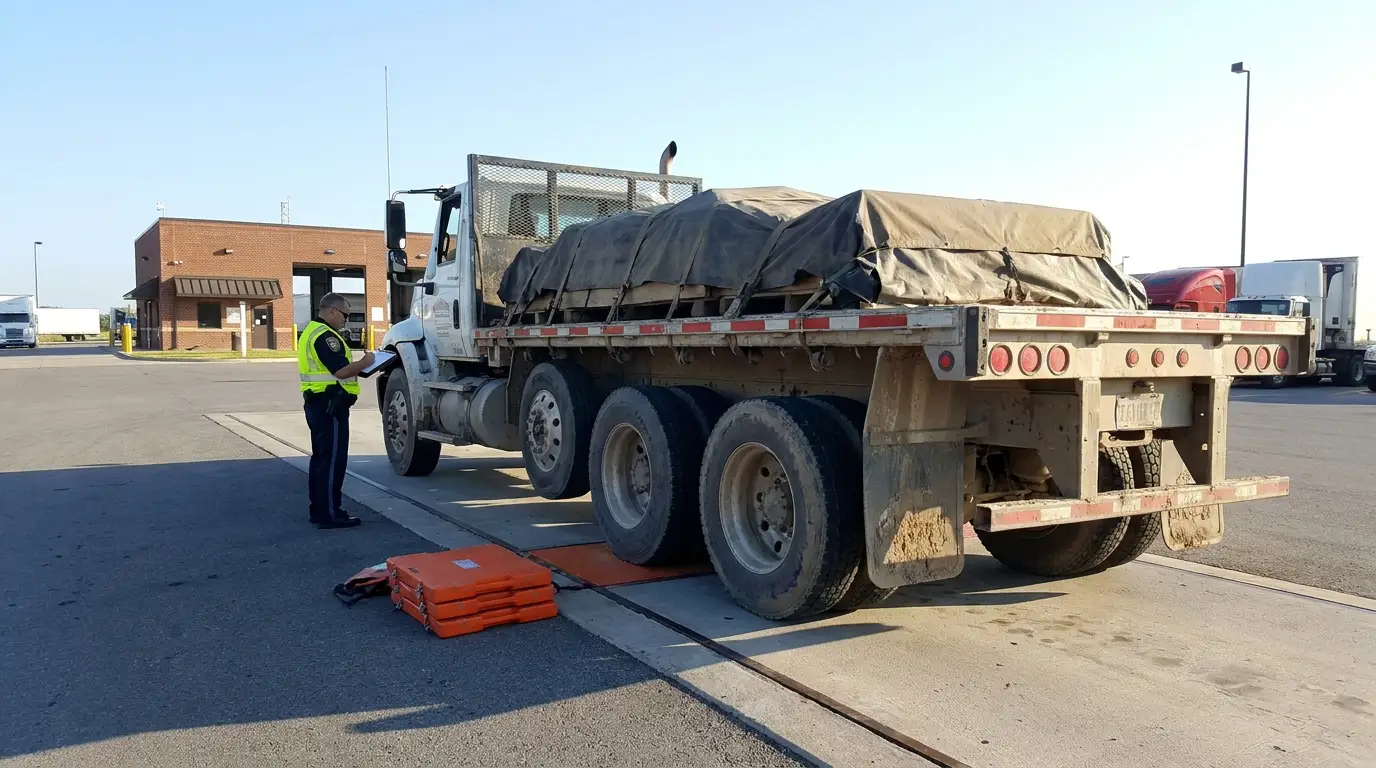
Michigan writes the penalty into the vehicle code at MCL 257.724, and it climbs fast. The civil fine runs 3 cents per pound of excess load when you are 2,000 pounds over or less, then 6 cents, 9 cents, 12 cents, 15 cents, and 20 cents per pound once the excess passes 10,000 pounds. There is also a misload fine of 200 dollars per axle, on up to three axles, for a load that would have been perfectly legal if it had been distributed properly. That last one stings, because the freight was never too heavy, it was in the wrong place on the deck.
None of that is an insurable loss. Fines are yours. What insurance touches is everything downstream. The statute lets an officer require the driver to shift or remove enough of the load to get legal, and it puts that unloaded material at the risk of the owner or operator. Product damaged during a forced roadside offload is a cargo conversation.
For Roughly Three Months A Year Your Legal Weight Changes
Michigan also takes weight away seasonally and the calendar catches people. MDOT announced on February 12, 2026 that spring weight restrictions would take effect at 6 p.m. Tuesday, February 17, on all state trunkline highways from the Indiana and Ohio borders north. On routes marked all season in green and gold on the MDOT Truck Operators Map there is no reduction in legal axle weights. On seasonal routes marked in red there is a posted reduction of 25 percent on rigid concrete pavement and 35 percent on flexible asphalt, plus a 35 mph maximum for some vehicles. MDOT lifted restrictions across southern Michigan effective 7 a.m. April 30 and held them longer up north.
So the same truck on the same road is legal in January, illegal in March, and legal again in May. Reroutes onto all season routes mean extra miles and unfamiliar roads, a different risk profile than the lane you rated. MDOT keeps a restriction line at 800-787-8960.
Get A Quote That Matches The Weight You Really Run
If your operation touches Michigan weight, the honest question is whether your cargo limit and equipment schedule were built for 80,000 pounds or for what you actually haul. Get a truck insurance quote in under a minute, or call or text 423-264-4255 and we will price the real configuration. Start on our quote form, or read our Michigan truck insurance page first.
Common questions
How much weight can a truck legally carry in Michigan?
Up to 164,000 pounds gross, but only with eleven properly spaced axles. MDOT limits the weight on each individual axle rather than capping gross weight, so the heaviest Michigan combination gets there with most axles carrying only about 13,000 pounds each. A standard federal weight truck is still held to 80,000 pounds on five axles.
Does running Michigan weight change my insurance limits automatically?
No. Your cargo limit, liability limit and equipment schedule stay exactly where you set them. Hauling roughly twice the freight per trip under the same cargo limit cuts your coverage per pound. If you added axles or trailers to run heavier, get the policy reviewed. Call or text 423-264-4255 and we will go through the schedule with you.
Will my policy pay a Michigan overweight ticket?
No. Civil fines under MCL 257.724 are not an insurable loss, and they scale from 3 cents per pound of excess up to 20 cents per pound once you are more than 10,000 pounds over, plus a 200 dollar per axle misload fine on up to three axles. Cargo damaged during a forced roadside offload is a separate question and that one can involve coverage.
When do Michigan spring weight restrictions apply?
They run from late winter into spring, set by frost depth rather than a fixed date. In 2026 MDOT imposed them at 6 p.m. on February 17 and lifted them across southern Michigan on April 30, holding them longer up north. Seasonal routes drop 25 percent on concrete and 35 percent on asphalt while they are in effect. You can get a truck insurance quote any time at 423-264-4255.
Ready for a better rate?
We shop A-rated carriers against each other to find your lowest rate, fast. Under a minute to start, and no obligation.
Prefer to talk it through? Call or text (423) 264-4255 and a licensed agent will walk you through your options.