What Minnesota's Truck Inspection Decal Proves, and What It Does Not
The Mandatory Inspection Program decal proves one morning, and the file sitting behind it is what an adjuster and a plaintiff lawyer both read
Minnesota runs its own annual inspection on top of the federal one
Most states let the federal annual inspection stand on its own. Minnesota does not. Under Minnesota Statutes section 169.781, it is unlawful to operate a commercial motor vehicle registered in Minnesota unless that vehicle displays a valid safety inspection decal issued by an inspector certified by the commissioner. That is the Mandatory Inspection Program, and it is one reason buying commercial truck insurance in Minnesota comes with paperwork questions an out of state carrier never sees.
The threshold is a single unit with a gross vehicle weight over 26,000 pounds, or two or more units with a combined gross vehicle weight over 26,000 pounds. A bus built to carry more than 15 people including the driver needs one. So does a vehicle of any size hauling hazardous materials in a quantity that requires placards. Self propelled special mobile equipment mounted on a commercial chassis is covered too.
The inspection standard itself is federal. The State Patrol handbook sends inspectors to the criteria in 49 Code of Federal Regulations section 396.17, Appendix A. What Minnesota adds is who is allowed to sign it and a sticker that has to be on the truck.
The decal is a date, not a condition
An inspector punches the month of the inspection into the decal, and the decal is valid for 12 months following the last day of that month. The decal itself costs the inspector no more than two dollars. The sticker on the door is not proof the truck is roadworthy today. It is proof that on one morning inside the last year, every inspected component passed. Everything since then lives in daily driver reports, repair invoices, and whatever the last roadside inspection turned up.
Two copies of the inspection file exist and you control only one
The owner has to keep a copy of the inspection report for at least 14 months, at the location in Minnesota where the vehicle is domiciled or maintained. The certified inspector keeps a separate copy for the same 14 months at their own place of business, available for review by an authorized federal, state, or local official.
State Patrol employees and Minnesota Department of Transportation motor transportation representatives may review those records and run random vehicle inspections and audits at an owner's facility, and an audit can include watching an inspection being performed. When a vehicle fails and gets taken somewhere else for repair, a failed report is issued anyway. So a truck that gets shopped from one bay to the next until it passes leaves a dated record at the first shop, sitting in a file you do not hold.
Brakes and tires decide claims they did not cause
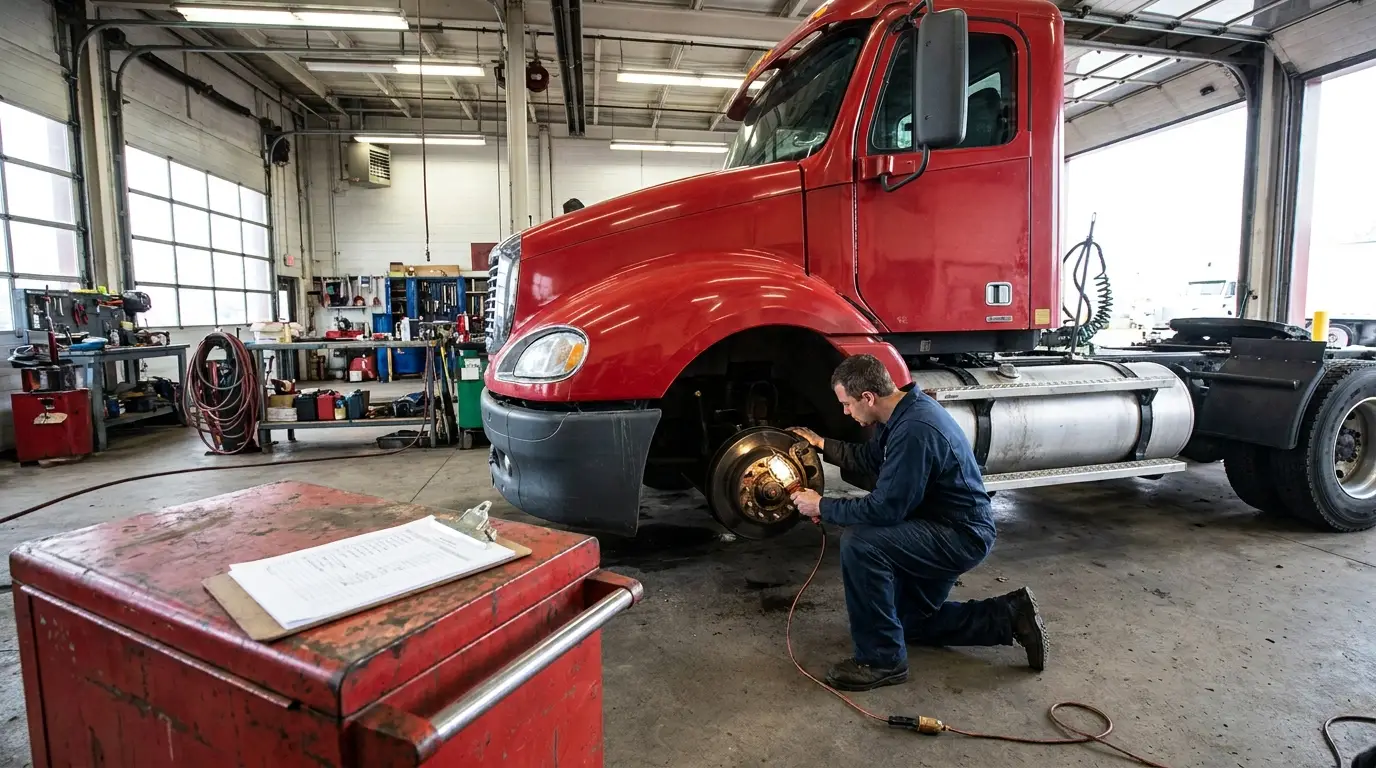
The report is not a receipt. It carries the full vehicle identification number, the plate, the USDOT number, the date and location, every component checked with a pass or a fail, and the inspector's printed name, certification number, and signature. After a crash it lands in the file right next to the police report.
Lieutenant Dana Miletich, who oversees State Patrol Commercial Vehicle Station 4750, told the North Shore Journal that the three violations his people write most often are bad brakes, worn tires, and hours of service. The first two are exactly what an opposing expert reaches for, because both are arguments about stopping distance, and stopping distance is an argument about cause. A commercial auto liability claim that should have been a fight over who had the right of way turns into a fight about how the company maintains its equipment.
Those same records shape what you pay before anything happens. The State Patrol logged 55,174 commercial vehicle inspections in 2025 and recorded 77,395 violations. Maintenance findings follow the DOT number, and CSA scores move your premium long before a jury ever reads a file.

The person signing your decal is carrying risk too
Minnesota certification runs two years and requires retraining to renew. Let it lapse by more than six months and the full course has to be repeated. More to the point, the commissioner shall revoke a certificate when a certified person issued a decal for a truck they knew, or reasonably should have known, was in a state of repair that would have been declared out of service. For a Mandatory Inspection Program inspector, out of service criteria is a failed Minnesota annual inspection. The friendly sticker is a real risk to the person you asked for it.
The operating side carries teeth as well. A violation of the annual inspection statutes is a misdemeanor punishable by a fine of up to 1,000 dollars, up to 90 days in jail, or both. Faking a decal is a gross misdemeanor. One housekeeping note for this year. The approved inspection form carries a revision date of January 1, 2026, so an old form is the wrong form, and at the Commercial Vehicle Section window in Mendota Heights same day decal processing now applies only to cash and check.
Get a quote before your next decal comes due
A clean 14 month file is worth money at renewal, and worth a great deal more on the day something goes wrong. If you run out of Minnesota, start with our page on Minnesota truck insurance, then send us your information. Get a truck insurance quote in under a minute with our quote form, or call or text 423-264-4255.
Common questions
Which trucks need a Minnesota inspection decal?
Any commercial motor vehicle registered in Minnesota with a gross vehicle weight over 26,000 pounds, or a combination whose combined gross vehicle weight is over 26,000 pounds. A bus built for more than 15 people including the driver needs one, and so does a vehicle of any size carrying hazardous materials in a quantity that requires placards. Trucks on Minnesota dealer or in transit plates do not display a decal.
How long is a Minnesota inspection decal valid?
The decal is valid for 12 months following the last day of the month punched on it. The inspection has to be done by an inspector certified by the commissioner, using the criteria in 49 CFR 396.17, Appendix A.
How long do I have to keep the inspection report?
At least 14 months, kept at the Minnesota location where the vehicle is domiciled or maintained. Your inspector keeps a separate copy for the same 14 months, and both copies have to be available to an authorized federal, state, or local official on request.
Does a clean inspection history lower my truck insurance?
It helps, because maintenance findings follow your DOT number into the safety data underwriters price from, and a documented file is also what defends you after a crash. Get a truck insurance quote in under a minute on our site, or call or text 423-264-4255 and we will walk through your equipment list with you.
Ready for a better rate?
We shop A-rated carriers against each other to find your lowest rate, fast. Under a minute to start, and no obligation.
Prefer to talk it through? Call or text (423) 264-4255 and a licensed agent will walk you through your options.