What a Montana Oversize Permit Makes You Liable For
The state wrote the damage clause into the permit. Most drivers never read it.
Montana rewrote the fine print on July 27
The Montana Department of Transportation refreshed its eTRIPs permit restriction sheet on July 27, 2026. It is the list of numbered conditions stapled onto every oversize and overweight permit the state issues through eTRIPS, the permitting system MDT launched on December 5, 2025. Most drivers scroll past it. It is also the part that decides who pays when a load touches something it should not have touched, which makes it an insurance document as much as a permit document. If you run heavy or wide anywhere in the state, read it before your next trip and read your commercial truck insurance in Montana policy right after it.
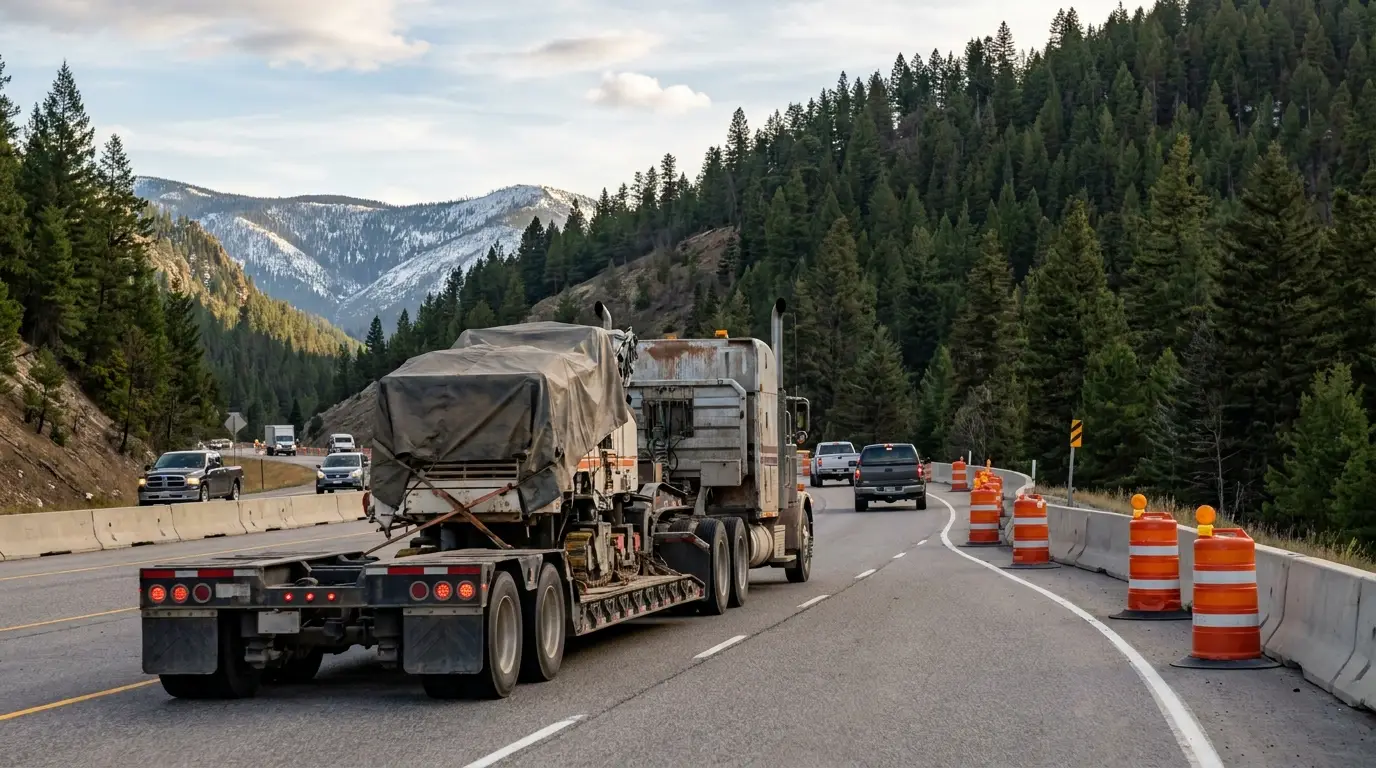
The clearance is your problem
Under the general conditions, the permittee is responsible to determine clearance of structures. MDT publishes a bridge clearance lookup and points permittees to it, then states that the information is for reference only and does not relieve you of the route analysis. The same section makes you responsible for checking 511 for closures, width restrictions, and road conditions before you roll.
That is a transfer of risk in one sentence. A permit is not the state telling you the route will fit. It is the state telling you that measuring is your job.
Restriction 25 is the expensive one
The restriction reads that the carrier shall be liable for any damages to property caused by the permittee, that failure to correct damage to department property may result in revocation of permit privileges, and that repairs not completed within a reasonable timeframe may be repaired by the department and the costs billed to the permittee. The permit's indemnification provision goes further, requiring the applicant to indemnify, defend, and hold harmless the State of Montana, its officers, employees, and agents from any claim or action for injury or damage arising directly or indirectly from the issuance or use of the permit, and citing ARM 18.8.509 for carrier liability for damage to property.
Three things follow. A struck bridge rail or a scarred overpass becomes a bill from the state rather than a negotiation. Your commercial auto liability limit is what answers a property damage claim of that size, and a thin limit on a heavy haul operation is a bad match. Damage to your own tractor and trailer in the same incident is a separate question that only physical damage coverage answers.
Bridges, pilot cars, and the 15 minute clock
On interstate highways, travel up to 18 feet wide is allowed 24 hours a day, seven days a week, and no pilot vehicles are required unless the permit adds them. Off the interstate the rules tighten fast. Loads over 10 feet wide, 150 feet long, or 15 feet 6 inches high move in daylight only. Overweight loads may not exceed 55 miles per hour or the posted limit, whichever is less, and must slow to 10 miles per hour before and across bridge centerlines. Only one overweight vehicle is allowed on a bridge at a time, and stopping or shifting gears on a bridge is prohibited.
Where pilot vehicles are required on non interstate routes, the sheet calls for a minimum of two, one front and one rear, as defined in ARM 18.8.510(A). The movement may not delay traffic more than 15 minutes, per ARM 18.8.509(8)(d). A violation sitting in the file turns the argument after a crash from bad luck into a choice.
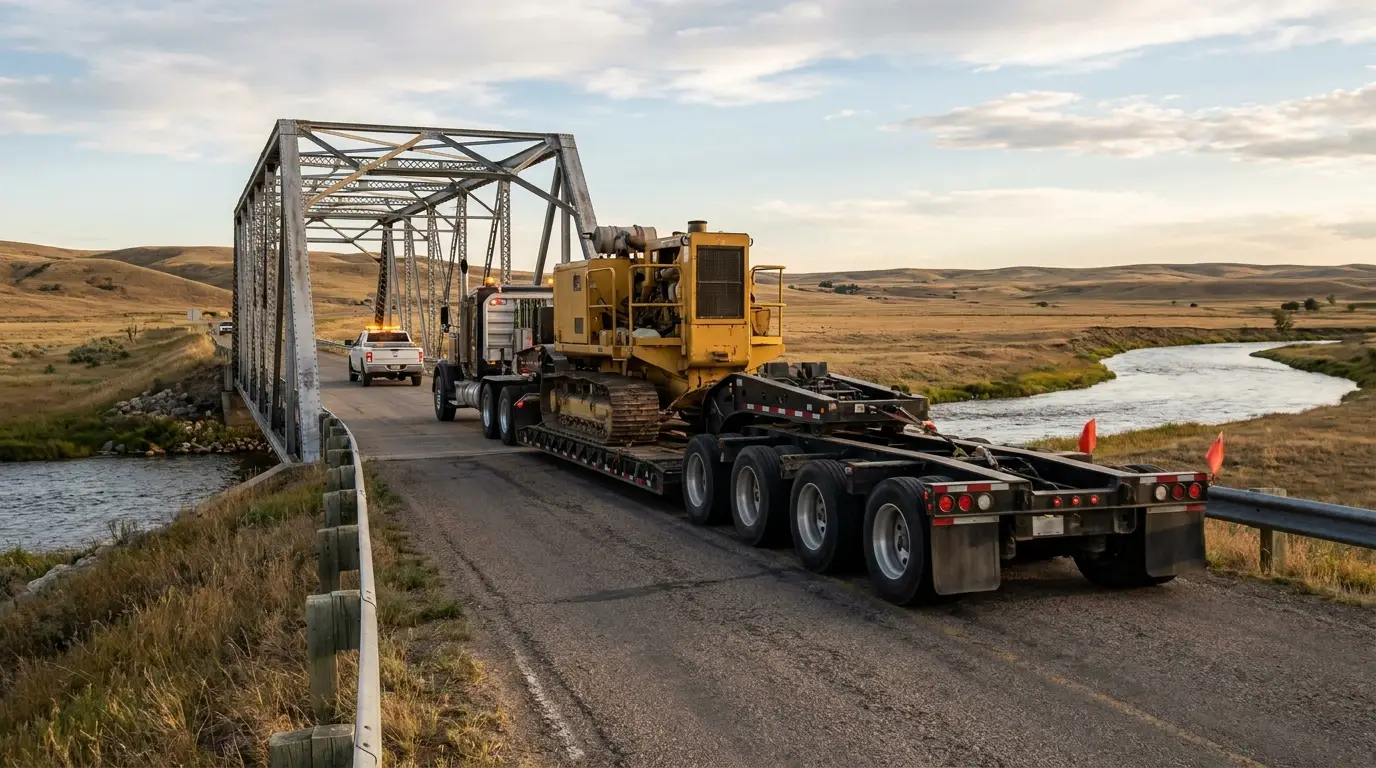
Two I-90 projects that change the plan this season
MDT and Knife River, Inc. Mountain Division began reconstructing about 3.5 miles of I-90 starting at the Montana and Idaho border near Taft the week of April 13, 2026. It runs two construction seasons, with this year's work in the eastbound lanes, so traffic moves on single lanes and crossovers that put everyone in the westbound lanes. Loads 12 feet wide or more have to be staged, and the window is 7 a.m. to 9 a.m. Mountain time, Monday through Friday. If your lane starts in Idaho and crosses at Lookout Pass, that window is the whole day's plan.
About 9.5 miles west of Alberton, MDT is replacing the westbound I-90 bridge over the Clark Fork River. Work started in spring 2026 and runs to fall 2027, with single lane traffic, reduced speeds, and width and length restrictions in the zone. A crossover and a temporary narrowed lane are exactly where a wide load meets a barrier.
What to check before the next permit run
Confirm the physical damage limit on the trailer reflects what a multi axle lowboy costs to replace today, not what you paid for it. Confirm the machine riding on the deck is insured by someone, because hauling a customer's equipment is a cargo question and motor truck cargo coverage carries limits and exclusions that matter on high value freight. Confirm your liability limit is sized for a state that has already told you in writing that you own the damage.
Get it priced instead of guessed
If you are hauling permitted loads in Montana on a policy written for a general freight operation, the paperwork and the coverage no longer match. Get a truck insurance quote and we will read the exposures with you. Call or text 423-264-4255, or start a quote online in under a minute. Our Montana truck insurance page covers filings and limits for carriers based in the state.
Common questions
Does a Montana oversize permit make me pay for a bridge my load hits
Yes. The MDT permit restriction sheet states the carrier shall be liable for any damages to property caused by the permittee, and that repairs not completed in a reasonable timeframe may be made by the department and billed to you. The permit also carries an indemnification provision citing ARM 18.8.509. Failure to correct damage to department property may cost you your permit privileges as well.
How wide can I run on a Montana interstate without a daylight restriction
Up to 18 feet wide, 24 hours a day, seven days a week, including essential services within one half mile of the interstate, with lights displayed full length and width per 49 CFR 393.11. Holiday and holiday weekend interstate travel keeps that same 18 foot allowance, and loads wider than 18 feet cannot travel on a holiday or holiday weekend at all.
Do I need pilot cars for an overweight load in Montana
On the interstate, no pilot vehicles are required unless the permit adds them. On non interstate routes the sheet calls for a minimum of two, one front and one rear, as defined in ARM 18.8.510(A), with a 10 mile per hour crossing speed at bridge centerlines and no more than a 15 minute traffic delay under ARM 18.8.509(8)(d).
Does physical damage coverage pay for the machine on my trailer
No. Physical damage covers your tractor and trailer. The equipment riding on the deck is a cargo exposure, and high value machinery often needs a limit and a set of terms a standard cargo form does not carry. If you are not sure which of yours applies, get a truck insurance quote or call or text 423-264-4255 and we will go through the schedule with you.
Ready for a better rate?
We shop A-rated carriers against each other to find your lowest rate, fast. Under a minute to start, and no obligation.
Prefer to talk it through? Call or text (423) 264-4255 and a licensed agent will walk you through your options.