The Trailer You Borrowed Is Yours Until You Hand It Back
Hook a trailer you do not own and you pick up two exposures at once. Damage to the trailer itself, and every federal maintenance duty that follows the equipment while it sits under your control.
The paperwork is what makes the swap legal
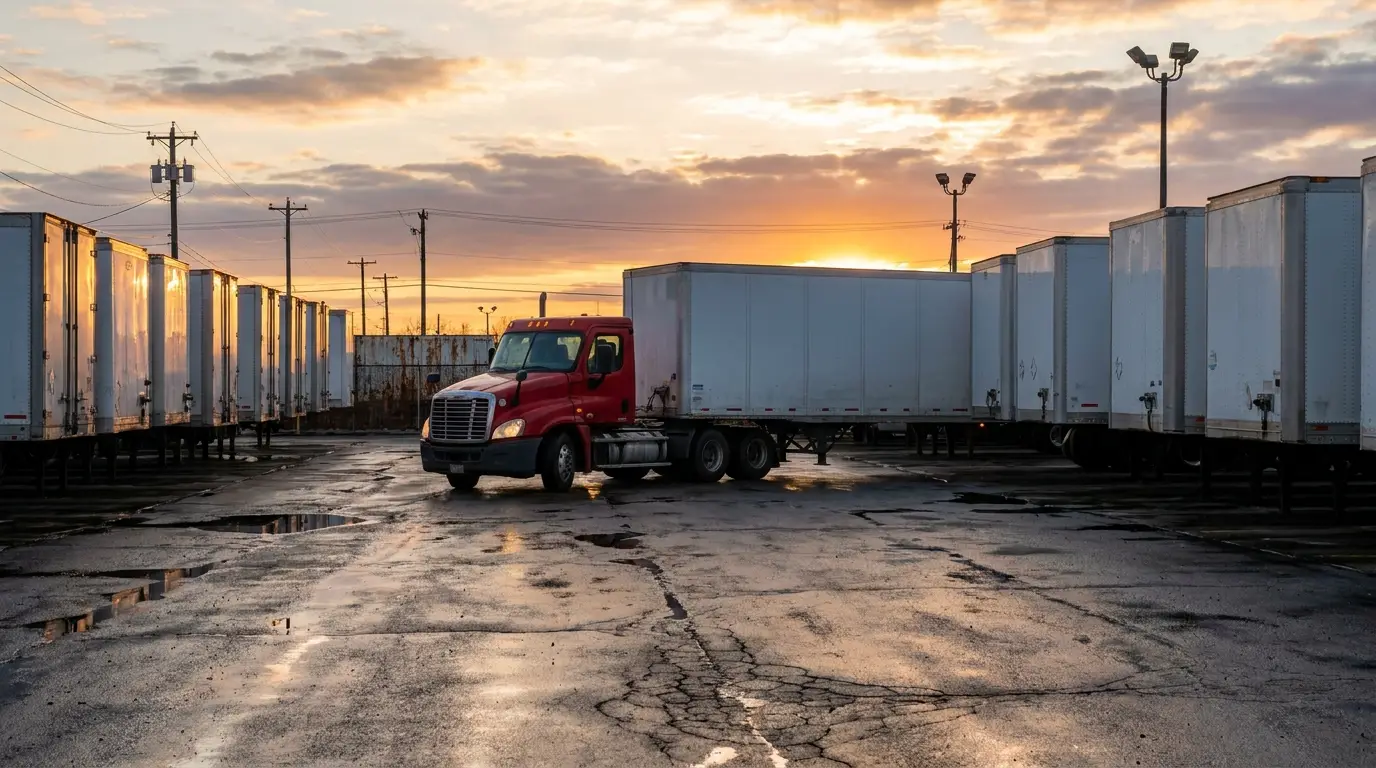
Interchange between authorized for hire carriers is a regulated transaction, not a favor. Under 49 CFR 376.31(a) there has to be a written contract, lease, or other arrangement that specifically describes the equipment, sets out the points of interchange, and states how it will be used and what the compensation is. Both parties have to sign. Paragraph (b) adds that both carriers must be registered to haul those commodities at the exchange point.
Here is the part that trips people up. Paragraph (d)(2) normally makes the receiving carrier carry a signed statement showing the equipment, the interchange point, and the date and time it took responsibility. That requirement does not apply where the interchanged equipment consists only of trailers or semitrailers. So a trailer swap travels with less paper in the cab, and it starts to feel informal. It is not. Line up trailer interchange coverage and the written agreement together, not one without the other.
On the intermodal side the contract is already written for you. The Intermodal Association of North America administers the Uniform Intermodal Interchange and Facilities Access Agreement, which it calls the only standard industry contract for interchange between intermodal trucking companies and equipment providers, and says roughly 95 percent of North American equipment interchanges run under it. Being signed up is not the same as reading the damage and indemnity language, and that language decides who pays.
The maintenance rules follow control, not ownership
This is the piece owner operators miss. 49 CFR 396.3(a) says every motor carrier must systematically inspect, repair, and maintain all motor vehicles subject to its control. Not the ones it owns. A trailer behind your tractor is subject to your control.
The record keeping in 396.3(b) applies to each vehicle a carrier controls for 30 consecutive days, and 396.3(b)(1) says that when the vehicle is not owned by the motor carrier, the record must name the person furnishing it. The rule was written expecting borrowed equipment. Those records stay one year, and six months after the vehicle leaves your control, under 396.3(c). Annual inspection reaches the trailer too. Under 396.17(a) each vehicle in a combination gets inspected, and 396.17(c) wants documentation of an inspection inside the preceding 12 months on the vehicle. A trailer handed to you without it becomes your problem at the scale house, not the owner's.
An intermodal chassis splits the blame on paper
Intermodal is the one place the rules draw a clean line. 49 CFR 390.42(a) says that before operating intermodal equipment over the road, the driver accepting it must inspect the components listed in 49 CFR 392.7(b) and be satisfied they are in good working order. That list runs nine groups, visible service brake components with trailer brake connections, lighting and conspicuity material, wheels rims lugs tires, air line connections hoses couplers, the king pin upper coupling device, rails or support frames, tie down bolsters, locking pins clevises clamps or hooks, and sliders or the sliding frame lock.
The reg then puts teeth in it. A driver who takes the equipment out on the road is deemed to have confirmed those components were in good working order when it was accepted. In exchange, 49 CFR 390.44(b) says violations on components outside the 392.7(b) list will not be used by FMCSA in a safety fitness determination of the motor carrier, unless the driver or carrier caused or substantially contributed to them. DataQs is where you raise it if the record lands on you anyway.
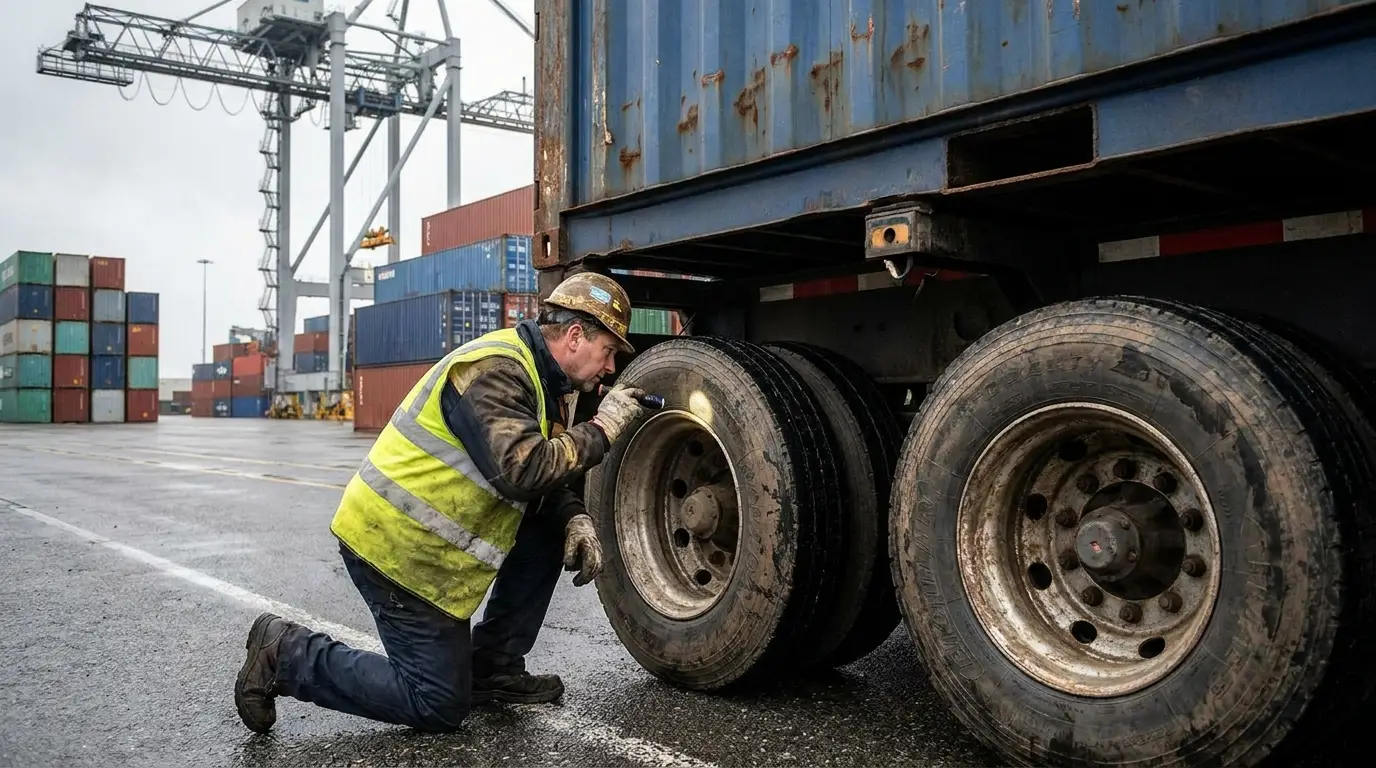
Under 49 CFR 390.42(b) you must report known damage, defects, or deficiencies to the provider when you hand the equipment back. And if an inspector marks a unit out of service, 49 CFR 396.9(c)(2) means nobody may operate it until the required repairs are done, and operate includes towing, except by crane or hoist.
Where the insurance actually sits
Trailer interchange physical damage responds while a non owned trailer is in your possession under a written interchange agreement. That trigger is the same document 376.31(a) already requires, which is why a handshake swap is the worst of both worlds, no contract and no coverage. Set the limit against what the trailer is worth to its owner, because the owner's demand is what shows up. Your own equipment sits under physical damage coverage instead. Freight inside the box is a third question, cargo. If you run containers, read intermodal coverage and trailer interchange insurance side by side.
Five minutes before you hook
Read the paragraph that says who pays for damage and whether fault matters, because plenty of them make you responsible regardless. Photograph the trailer at pickup and at return, all four corners, the roof line, the tires. Confirm the annual inspection documentation is on the unit. Walk the nine items and write down what you find before you move. Report defects in writing when you drop it and keep your copy. Driver inspection reports under 49 CFR 396.11(a)(1) cover each vehicle operated at the end of the day, with provider tendered intermodal equipment carved out, and 396.11(a)(4) holds them three months.
Every one of those steps is free. The gap they close is not. If you hook equipment you do not own, call or text 423-264-4255 and we will read your interchange language against your policy form before a claim does it for you. You can also get a truck insurance quote in under a minute.
Common questions
Does trailer interchange coverage apply without a written agreement
No. The coverage is built around a written interchange agreement, which is the same thing 49 CFR 376.31(a) requires between authorized carriers. With no agreement you are left relying on non owned trailer physical damage wording, if your policy carries it at all. Call or text 423-264-4255 and we will read your form.
If a borrowed trailer gets a roadside violation, whose record does it hit
Usually yours as the operating carrier, because 49 CFR 396.3(a) makes you responsible for vehicles subject to your control rather than only vehicles you own. Intermodal equipment is the exception. Under 49 CFR 390.44(b) violations on components outside the 392.7(b) pre trip list will not be used in your safety fitness determination unless you caused or substantially contributed to them, and DataQs is where you challenge the record.
Do I need a daily inspection report on a trailer I did not buy
49 CFR 396.11(a)(1) requires the report at the completion of each day's work on each vehicle operated, with intermodal equipment tendered by an intermodal equipment provider carved out, and 396.11(a)(5) exempts a carrier operating only one commercial motor vehicle. Reports and repair certifications are kept three months under 396.11(a)(4).
Does trailer interchange cover the freight inside the trailer
No. It answers for damage to the trailer itself. The load is a cargo question and it is priced separately. Get a truck insurance quote or call 423-264-4255 and we will quote both together so you can see where the gap is.
Ready for a better rate?
We shop A-rated carriers against each other to find your lowest rate, fast. Under a minute to start, and no obligation.
Prefer to talk it through? Call or text (423) 264-4255 and a licensed agent will walk you through your options.