Oregon Truck Enforcement Now Starts At 10,001 Pounds
SB 839 took effect January 1 and pulled box trucks, duallies and small fleets into the same roadside system as the heavy iron.
The line moved to 10,001 pounds on January 1
Oregon Senate Bill 839 took effect on January 1, 2026, and the quietest thing it did was change who counts as a truck. The old version of ORS 810.530 pointed the citation and arrest authority of a weighmaster or a motor carrier enforcement officer at a commercial motor vehicle. The amended version reaches a commercial motor vehicle or a commercial vehicle with a gross vehicle weight rating, gross combination weight rating, gross vehicle weight or gross combination weight of 10,001 pounds or more.
That is a one ton dually with a loaded gooseneck behind it. That is a 16 foot box truck running appliances around Portland. Units like that now sit in the same roadside system as the 80,000 pound trucks, and the policy you bought when it was just a work truck deserves a second look. Our page on commercial truck insurance in Oregon covers the state side, and commercial auto liability is where the limits question lives.
Scale bypass got cheaper and more permanent at the same time
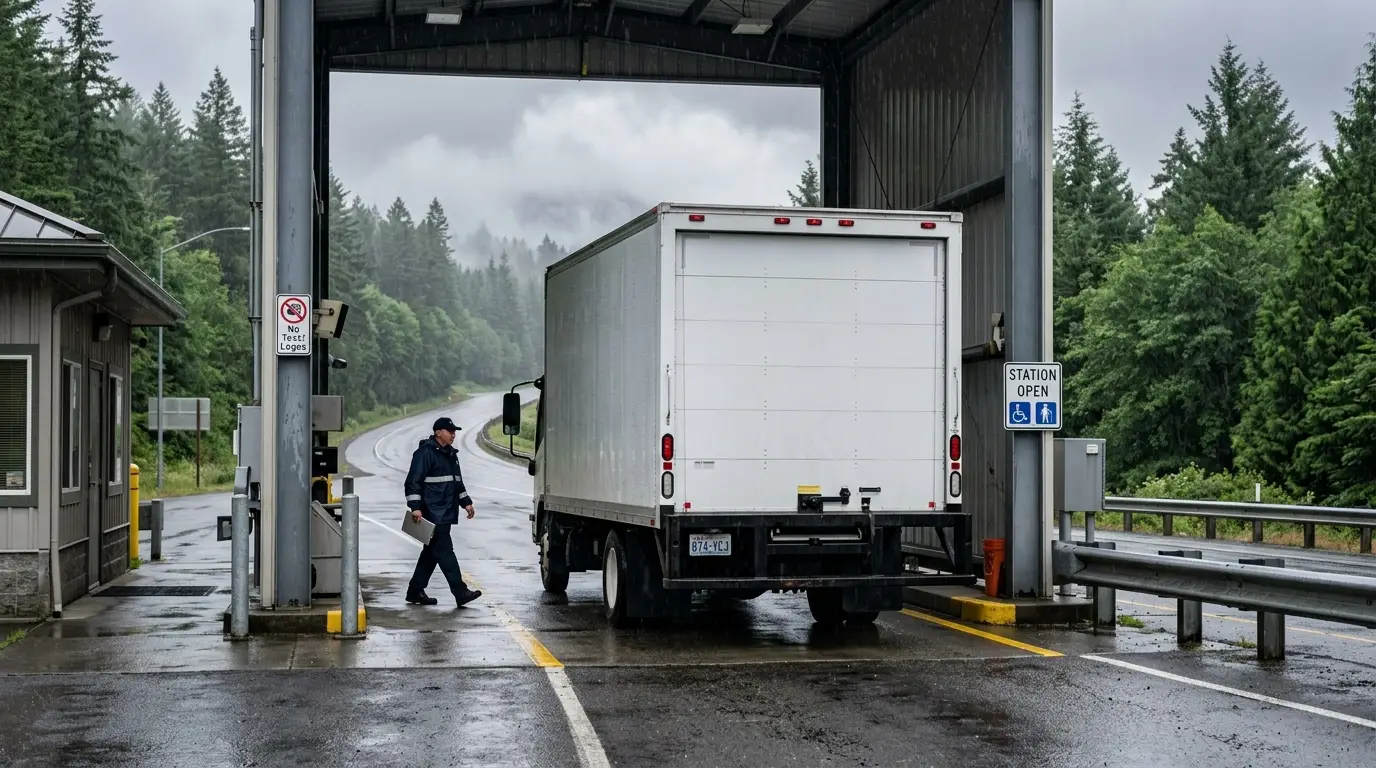
SB 839 rewrote ORS 818.400, the failure to comply with commercial vehicle enforcement requirements statute, and split it in two. Driving past an OPEN sign at a permanent truck scale, or failing to move right when a weigh in motion sign tells you to, dropped from a Class B misdemeanor to a Class A traffic violation. Ignoring a signal or the directions of a police officer, a motor carrier enforcement officer or a weighmaster stayed a Class B misdemeanor. The roadside consequence for rolling past the scale got lighter.
The part that costs you sits elsewhere in the same bill. SB 839 also amended ORS 810.370, which lists the convictions a court need not report to the Department of Transportation, and struck 818.400 off that list. A bypass conviction used to stop at the courthouse. Now the court forwards it within 24 hours of sentencing. A cheaper ticket that lands on the record is not a bargain, because the record sets what commercial truck insurance costs at your next renewal.
Oregon has been running the stops
This is not a paper change. The ODOT Commerce and Compliance Division and Oregon State Police ran bypass enforcement events along I-84 in late April and early May of 2025. They stopped 490 commercial drivers for passing open scales and placed 122 of them, roughly one in four, out of service for safety or regulatory violations, including false logs and tampered electronic logging devices, as Heavy Duty Trucking reported. Carla Phelps, then the division's interim administrator, said the state takes bypass seriously and is acting on it.
That one in four number is the useful one. A bypass stop is almost never only a bypass stop. It becomes an inspection, and an inspection of a unit that has been running quietly tends to find the rest.
The citation does not stop with the driver
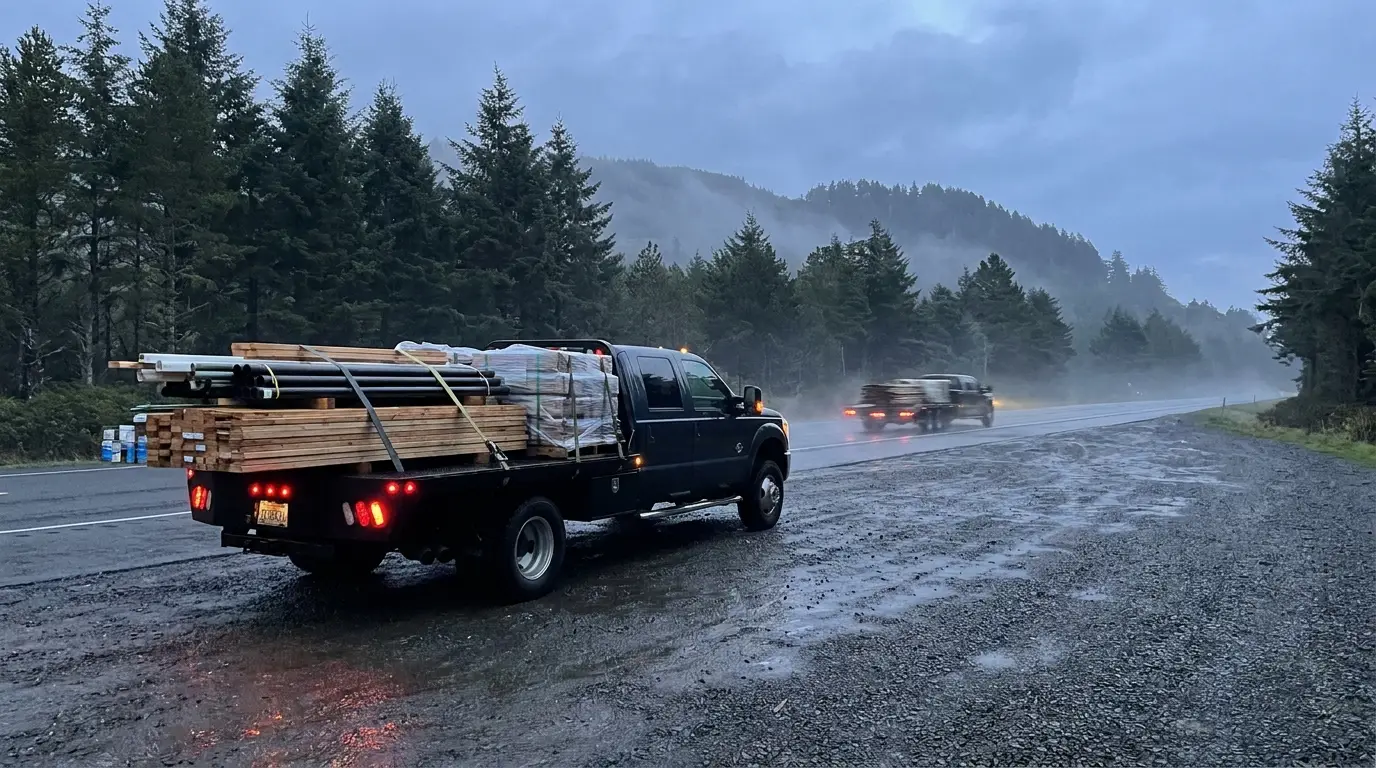
If you own the truck and somebody else drives it, read this twice. ORS 818.400 says operating in violation is prima facie evidence that the owner caused or permitted it, and that the owner is liable for the penalties. The amended ORS 810.530 goes further. A citation written to an operator who is not the owner is treated as having been issued to the motor carrier that owns the vehicle.
The offenses in that subsection are Class A traffic violations and most are administrative rather than driving errors. Delinquency in paying a fee or tax owed to the department. Failing to maintain required records or produce them for examination. Filing an application that is false about who owns or controls the equipment. None of those happen at the roadside. All of them land on the owner.
Advertising a move is now the violation by itself
The sharpest change is in household goods. New ORS 825.100(2) says a person may not offer to transport, advertise as willing to transport, or transport household goods for hire in intrastate commerce without a valid certificate. Each of those acts is a separate violation carrying up to $3,000 under ORS 825.950, three times the prior $1,000, and every day a violation continues counts separately.
Before January 1 the department generally needed a move underway to act. Now the listing is enough. Leah Cisneros, the ODOT investigations and compliance unit manager, told OPB in December that the department expected an uptick in cases early in the year, and ODOT's own counts show how thin the old enforcement was, one violation a year in 2022 and 2023 against 25 back in 2020. If you move other people's property for money, the certificate question and your motor truck cargo coverage are one conversation, because the limit has to fit the load and not the truck.
Where this lands on your policy
Three things worth checking before an Oregon officer checks them for you. First, a unit between 10,001 and 26,000 pounds is the one most likely to be sitting on a policy written for a contractor's pickup, and a stop on I-84 is a poor place to find that out. Second, certificate and authority status is now an exposure with a dollar figure on it. Third, the record. Bypass convictions flow to the department, out of service orders sit in the safety data, and an underwriter reads both long after the ticket is paid.
Get a truck insurance quote in under a minute and we will tell you straight whether the unit you run in Oregon is scheduled the way the state now sees it. Call or text 423-264-4255, or start at our quote form. If you run the I-84 corridor or the Portland metro, our Oregon truck insurance page has the rest of the state detail.
Common questions
Does Oregon's 10,001 pound rule mean I need a CDL for my box truck?
No. SB 839 changed who can cite you and for which offenses, not the federal commercial driver license thresholds. What it means is that a weighmaster or motor carrier enforcement officer in Oregon can now cite or arrest the driver of a 10,001 pound or heavier commercial vehicle for operating without driving privileges or while suspended, where the old statute reached only commercial motor vehicles.
Will an Oregon weigh station bypass ticket show up on my insurance?
It can now. SB 839 removed ORS 818.400 from the list of convictions a court does not have to report, so the court forwards a bypass conviction to the Department of Transportation within 24 hours of sentencing. The offense itself got lighter, a Class A traffic violation instead of a Class B misdemeanor, but it reaches the record where it did not before. If you want to know what that does to your rate, call or text 423-264-4255.
I only move household goods in Oregon a few times a year. Do I really need a certificate?
Yes, if it is for hire and intrastate. Since January 1, 2026, ORS 825.100(2) makes it a violation to advertise as willing to transport or to offer to transport household goods for hire without a valid ODOT certificate, whether or not a move is underway, and each act carries up to $3,000. A continuing violation counts every day separately.
What coverage should a 14,000 pound straight truck running in Oregon carry?
At minimum, liability sized to the roads you run rather than to the truck you own, physical damage that reflects what the unit is actually worth today, and cargo coverage with a limit that matches the heaviest load you haul rather than an average one. The fastest way to check is to get a truck insurance quote and have somebody read the schedule against how you actually operate. Call or text 423-264-4255.
Ready for a better rate?
We shop A-rated carriers against each other to find your lowest rate, fast. Under a minute to start, and no obligation.
Prefer to talk it through? Call or text (423) 264-4255 and a licensed agent will walk you through your options.