What an Oversize Permit Does Not Do for Your Flatbed Load
There is no federal oversize permit and no federal height limit, and on a bridge the margin gets measured in inches.
The permit is a state document, not a measurement of your load
There is no such thing as a federal oversize permit. FHWA states plainly that the federal government does not issue permits for oversize or overweight vehicles and that this is a state option. What the federal rules do is draw the lines that decide when a state permit becomes necessary.
Those lines are tighter than most open deck operators assume. Under 23 CFR 658.15(a) no state may set a width limit of more or less than 102 inches on the National Network. Under 23 CFR 658.13(b)(1) no state may hold a semitrailer to less than 48 feet. Height is the one that catches people, because there is no federal height limit at all. FHWA puts state height standards in a range from 13 feet 6 inches to 14 feet 6 inches, so the number you are legal at can change at a state line while nothing about your trailer changed. If you already carry flatbed truck insurance, permit work is the operating detail your underwriter was really asking about.
What does not come off the measurement
23 CFR 658.16(a) sets the default. Components not excluded by law or regulation are included in the measurement. The exclusion list at 658.16(b) is short and very specific. Mirrors, turn signal lamps, cab entry handholds, splash and spray suppressant devices, and load induced tire bulge come off, along with non property carrying devices that stay within 3 inches of each side or the rear. Then 658.16(c) closes the door, because each allowance is specific and may not be combined with another. Nothing on that list is your cargo, your coil racks, your tarps, or the machine hanging past the deck. All of that gets measured.
Nondivisible is the word that decides whether you get a permit at all
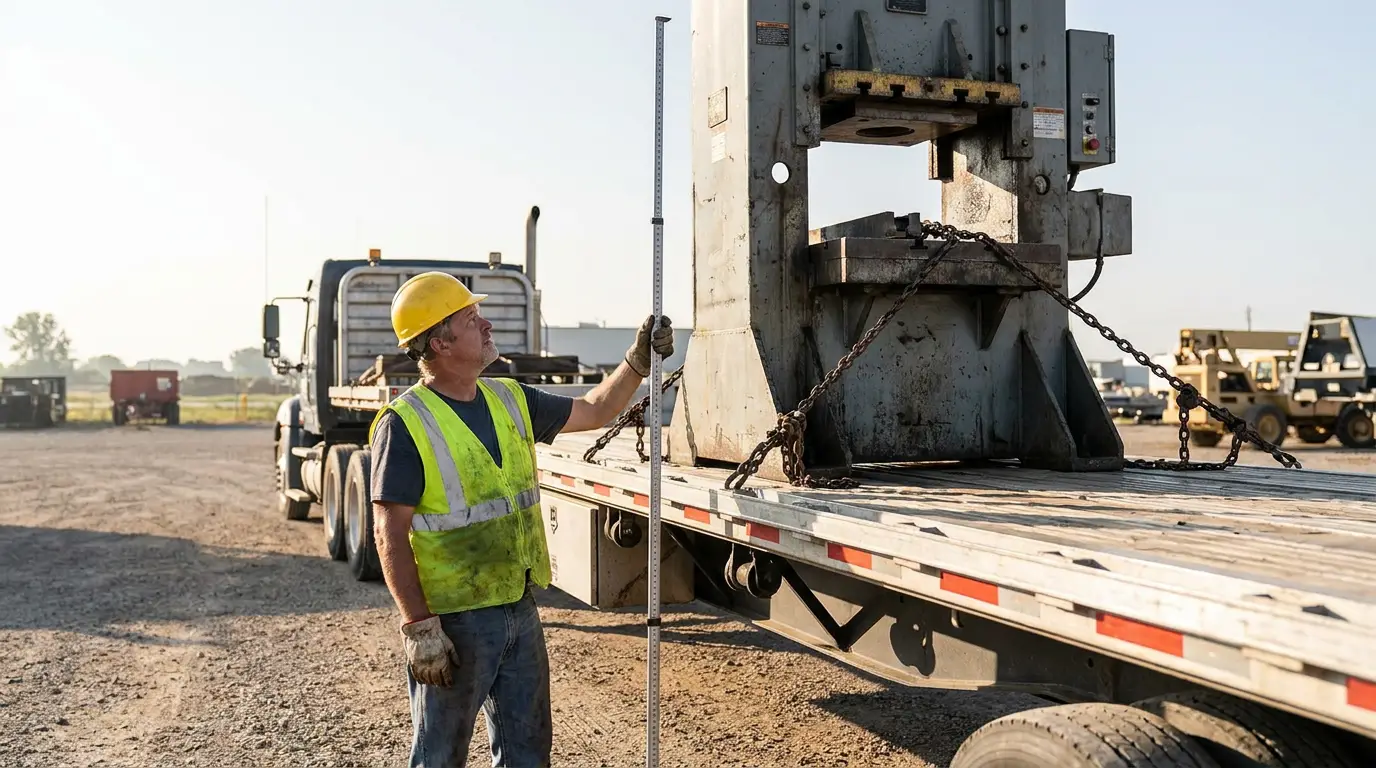
23 CFR 658.17(h) lets states issue special permits without regard to the axle, gross, or Bridge Formula limits, but only for nondivisible vehicles or loads. The definition sits at 23 CFR 658.5 and it is where a lot of arguments end. A load is nondivisible if separating it would compromise the intended use of the vehicle, destroy the value of the load, or require more than 8 workhours to dismantle using appropriate equipment. The same paragraph puts the burden of proof on the applicant as to the number of workhours. A heavy steel load that could have gone across two trailers is divisible, and a permit issued on a thin nondivisible claim is a weak document to hold once an adjuster and a plaintiff attorney start reading your file.
What a bridge strike investigation actually finds
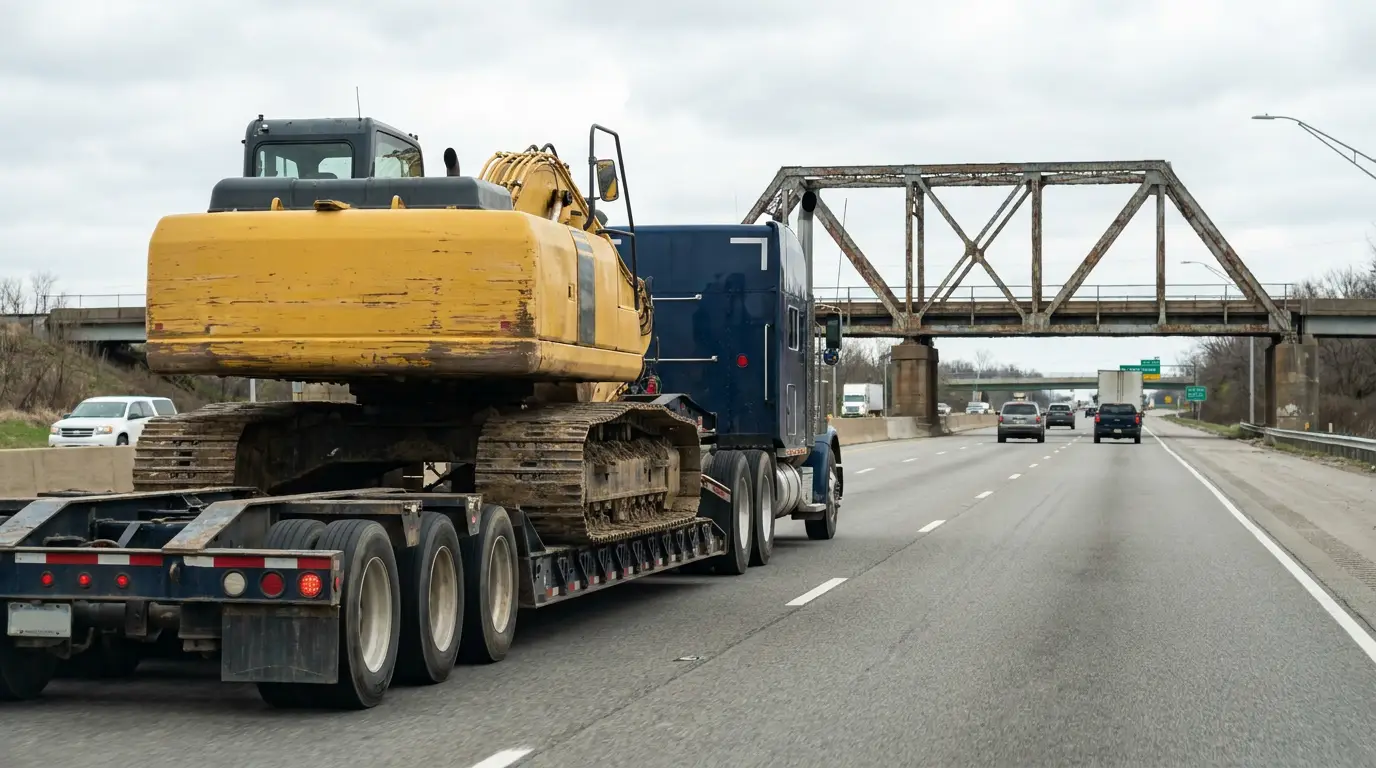
The clearest picture of how thin the margin gets is the NTSB report on the Interstate 5 Skagit River Bridge in Mount Vernon, Washington, struck by an oversize combination vehicle on May 23, 2013. Span 8 of the 12 span bridge went into the river and three of the eight people caught in the collapse were injured.
Read the numbers next to each other. The Washington permit listed a total load height of 15 feet 9 inches, a figure the driver had reached with a steel tape the NTSB described as having somewhat worn numbers. Investigators measured the actual height at 15 feet 11 inches after the crash. The lowest clearance across the southbound lanes was at the right edgeline and ranged from 15 feet 8 inches to 15 feet 11 inches. The load would have cleared in the left lane. The escort carried a height pole set at 16 feet 2 inches, 5 inches above the permitted height exactly as the state pilot car training directs, but it sat at an inboard angle of about 5 degrees, which is why it never touched the low braces.
The NTSB probable cause named deficiencies across the whole system of safeguards, including insufficient route planning by the trucking company and its driver, the certified escort driver failing to perform required duties partly because of cell phone distraction, and the state's inadequate evaluation of permit requests along with no low clearance signs ahead of the bridge. Here is the part worth keeping. In the six months before the collapse that same carrier had run 53 permitted oversize trips over that same bridge, with load heights from 13 feet 6 inches to 16 feet 4 inches, and every one cleared. A clean record on a route proves nothing about the next trip.
Where this lands on your policy
When an overheight load hits a structure, very little of what follows is a cargo claim. The machine on your deck is cargo. The bridge, the vehicles under it, and the people in them are commercial auto liability, and your cargo limit has nothing to do with any of that. Infrastructure damage plus bodily injury on one event is the loss that runs past a small carrier's primary limit.
Three things are worth doing before the next permit load moves. Read your own form for an oversize or overweight exclusion, warranty, or dimensional condition, because some forms do restrict operation beyond stated dimensions. Get the escort company's certificate and limits in writing, since the Skagit findings show how directly an escort's failure lands in your file. And keep route planning as a written record with the clearance checks in it, because the NTSB assigned that failure to the carrier and not only to the driver. Sizing the rest of it, from physical damage values on a lowboy or an RGN to the cargo limit on a machinery move, is the same conversation.
If you run step decks, lowboys, or anything that needs a permit, we place it with markets that want the class rather than tolerate it. Flatbed and open deck coverage is what we work on all day. Get a truck insurance quote in under a minute on our quote form, or call or text 423-264-4255 and we will go through the permit load question with you.
Common questions
Is there a federal height limit for an oversize flatbed load?
No. The federal rules fix width at 102 inches on the National Network and protect a 48 foot semitrailer, but they set no height limit at all. FHWA puts state height standards in a range from 13 feet 6 inches to 14 feet 6 inches, so your legal height is a state question and it can change partway through a trip.
What makes a load nondivisible on an oversize permit?
23 CFR 658.5 gives three tests. Separating the load would compromise the intended use of the vehicle, destroy the value of the load, or take more than 8 workhours to dismantle using appropriate equipment. The regulation also puts the burden of proof on the applicant as to the number of workhours, so the claim needs to be real.
Does my truck insurance cover an oversize permit load?
That depends entirely on your form. Some restrict or exclude operation beyond stated dimensions, so permit work needs to be disclosed at underwriting and confirmed in writing rather than assumed. Call or text 423-264-4255 and we will read your form with you before the next permit load moves.
If the pilot car misses a low bridge, is that on me?
At least in part, yes. In the Skagit River Bridge investigation the NTSB faulted the certified escort driver and also assigned insufficient route planning to the trucking company and its driver. Get the escort's certificate and limits, and keep your own clearance checks in writing. You can get a truck insurance quote from us in under a minute if you want the coverage side looked at too.
Ready for a better rate?
We shop A-rated carriers against each other to find your lowest rate, fast. Under a minute to start, and no obligation.
Prefer to talk it through? Call or text (423) 264-4255 and a licensed agent will walk you through your options.