The FDA Rule That Decides Who Owns a Rejected Reefer Load
A rejected load gets settled by paperwork more than by thermometers, and this rule says which paperwork counts.
The rule running underneath every food load you haul
Most refrigerated freight in this country moves under a federal food safety rule that never once mentions insurance, which is exactly why it ends up deciding so many cargo claims. It is the FDA sanitary transportation of human and animal food rule, at 21 CFR part 1 subpart O. It published April 6, 2016, took effect June 6, 2016, and gave larger businesses one year to comply and small ones two, so April 6, 2018 was the last grace period anyone got. It reaches shippers, loaders, carriers, and receivers, so you are inside it the moment you accept a food load.
There is a floor. 21 CFR 1.904 defines a non covered business as one with less than $500,000 in average annual revenues, adjusted for inflation, across the prior three years. Above that you are covered. For the compliance clock a motor carrier counted as a small business under $27.5 million in annual receipts, which is nearly every fleet reading this. If you already carry reefer truck insurance, the operation your underwriter asked about is the operation this rule is asking about.
One paragraph decides how much of it is yours
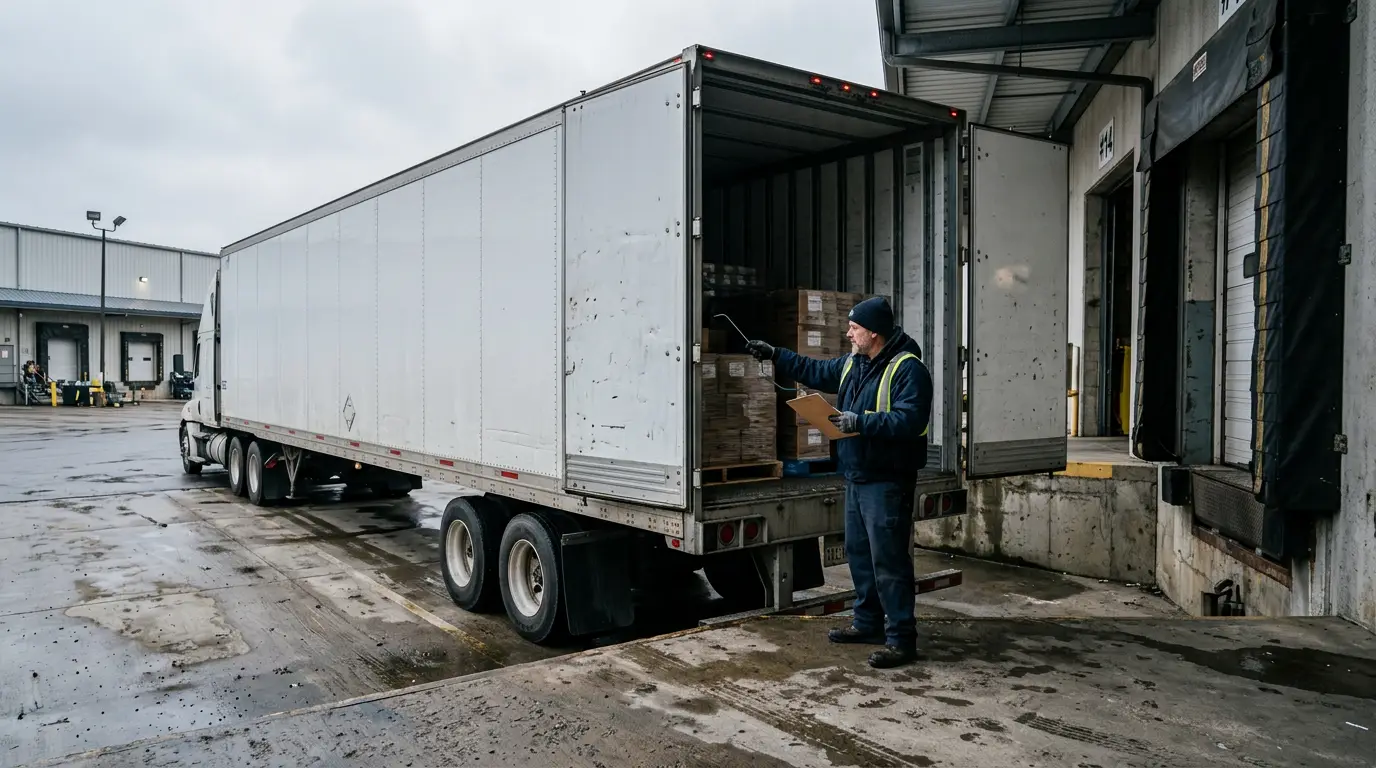
The part almost nobody reads is 21 CFR 1.908(a)(1). It lets a party subject to the rule reassign its responsibilities to another party in a written agreement. That one sentence is why two carriers hauling identical produce can carry completely different obligations. The difference is not in the truck. It is in the contract packet the broker emailed you.
Watch what turns on it. Under 1.910(a) the training requirement only attaches when the carrier and shipper have agreed in a written contract that the carrier is responsible, in whole or in part, for sanitary conditions during transportation. Where that agreement exists you owe training and records of it. Where it does not, you owe neither. So before you argue about a rejected load, find out what you signed.
What the rule actually asks a reefer carrier to do
The shipper moves first. Under 1.908(b)(2) it must specify an operating temperature to the carrier in writing. That written number is the standard everything else gets measured against, which is why a load running on a verbal setpoint has nothing to defend.
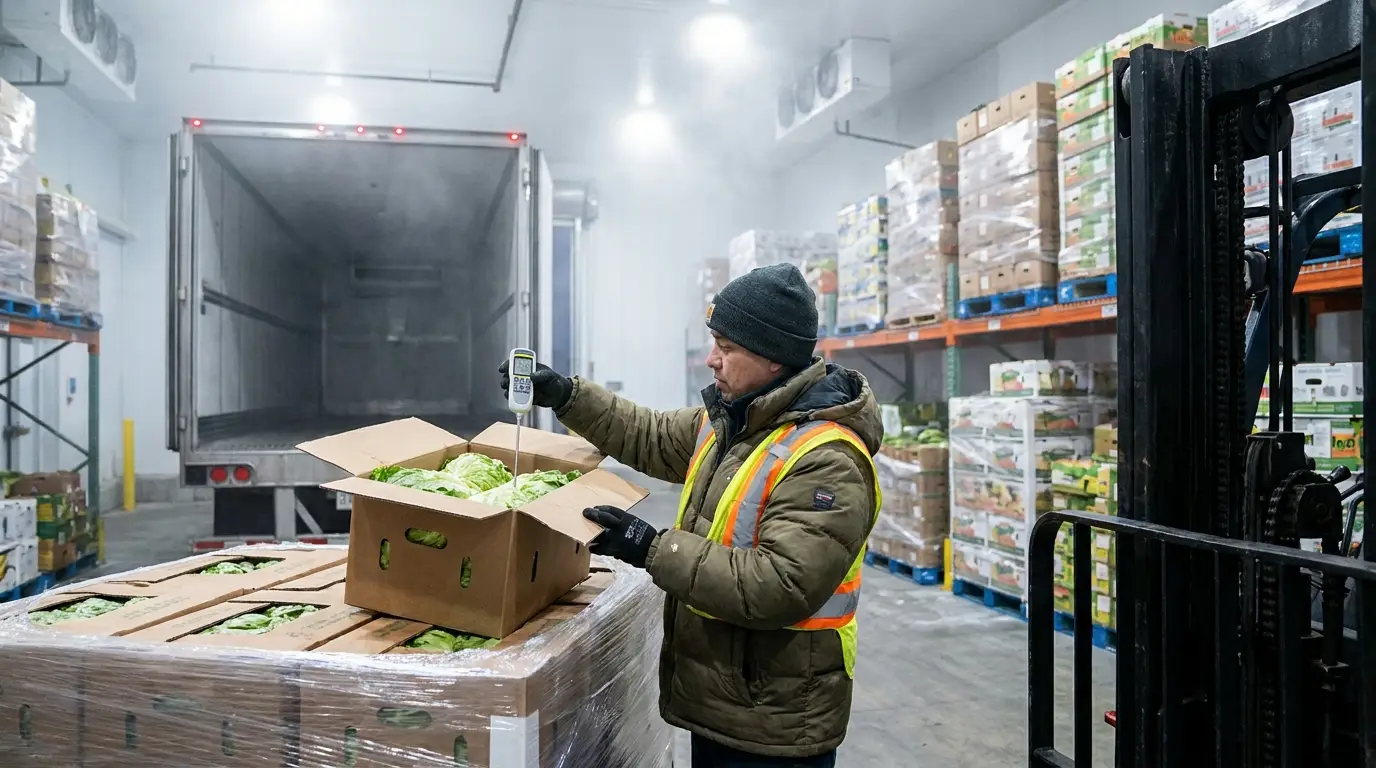
Your side is short and specific. Under 1.908(e)(1) you must make sure vehicles and equipment meet the shipper's specifications. Under 1.908(e)(3) you must pre cool each mechanically refrigerated cold storage compartment as the shipper specified before you offer the trailer. Under 1.908(e)(2) you must be able to demonstrate you held those conditions, and the rule names the acceptable proof, ambient temperature measurements taken at loading and unloading or time and temperature data taken during the shipment. Written procedures are required under (e)(6), and 1.906(c) requires equipment maintained to provide adequate temperature control.
Why an excursion becomes a total loss even when the food looks fine
Here is the mechanism that catches people. Under 1.908(a)(6), where there is an indication of a possible material failure of temperature control, the food shall not be sold or otherwise distributed until a qualified individual determines the deviation did not render it unsafe. At the other end, 1.908(d) tells the receiver to assess that the food was not subjected to significant temperature abuse, using temperature checks and sensory inspection.
Read those together and the receiver turning your trailer away is not being difficult. It is doing what a federal rule tells it to do. Product that would eat perfectly well is held in place until somebody qualified signs off, and the load sits while that runs. That is how a forty minute alarm at three in the morning becomes a claim on your motor truck cargo policy instead of a phone call.
The records that decide the claim
Retention is where small fleets lose, and 21 CFR 1.912 is simple because the number is twelve months almost everywhere. Written procedures run twelve months beyond when they are in use, training records twelve months beyond when the person named stops performing those duties, and shipper specifications and operating temperatures twelve months beyond termination of the agreement. Records have to be available promptly on request, offsite storage is allowed if you can retrieve them within twenty four hours, and the procedures under 1.908(e)(6)(i) stay onsite while in use.
Now read that list as an insurance file, because it is one. Refrigeration breakdown coverage comes with conditions attached, normally documented maintenance and a temperature record, and claims get denied when those cannot be produced. The rule already made you keep the exact documents an adjuster will ask for. As Trucking Info noted in an April 2019 piece by David Cullen, that process documentation is what lets a carrier support its position when claims or lawsuits come out of the carriage. One clean file answers the FDA, the receiver, and your underwriter at once. The trailer and the unit are a separate question, worth checking on physical damage.
Get a quote from someone who reads the cargo form
Two documents are worth pulling today, the shipper agreement that says who owns sanitary conditions and the cargo form that says whether refrigeration breakdown is actually covered. We read both before we quote. Get a truck insurance quote in under a minute through our quote form or on the reefer truck insurance page, or call or text 423-264-4255 with what you haul and your maximum load value.
Common questions
Does the FDA sanitary transportation rule apply to a one truck reefer operation?
It turns on revenue, not truck count. 21 CFR 1.904 defines a non covered business as one with less than $500,000 in average annual revenues, adjusted for inflation, over the prior three years. Clear that line and you are covered like anyone else.
What proof does the rule accept that I held temperature?
21 CFR 1.908(e)(2) names it. Ambient temperature measurements taken at loading and unloading, or time and temperature data taken during the shipment. Continuous recorder data is the cleanest version of the second option and it is the same record your cargo adjuster will want.
Do I have to train my drivers on food safety?
Only when a written contract with the shipper says the carrier is responsible, in whole or in part, for sanitary conditions during transportation. That is 21 CFR 1.910(a). Where it applies you train on hiring and as needed after, and you keep records showing the date of the training, the type of training, and who was trained.
Does standard cargo insurance pay when the reefer unit quits?
Usually not without refrigeration breakdown coverage added, and that coverage normally carries maintenance and temperature record conditions. Send us your DOT number and your maximum load value and we will read the form before you bind. Get a truck insurance quote by calling or texting 423-264-4255.
Ready for a better rate?
We shop A-rated carriers against each other to find your lowest rate, fast. Under a minute to start, and no obligation.
Prefer to talk it through? Call or text (423) 264-4255 and a licensed agent will walk you through your options.