What Happens To Your Truck Insurance After An At Fault Loss
The premium is the last thing that moves. Before that a reserve gets set, a federal record gets built, and a 24 month clock starts running that you can partly control.
The claim moves long before the premium does
Report an at fault loss and the first thing that happens is not a rate change. An adjuster opens a file and sets a reserve, the insurer's estimate of what the claim will cost once it settles. Nothing has been paid yet. The reserve is already on your record.
That matters, because the loss run your next underwriter reads shows open claims alongside closed ones, and an open claim carrying a large reserve reads worse than a closed one that paid the same amount. An open file can still develop. Closing files and correcting reserves before your renewal submission goes out is one of the few levers you control afterward.
Not every wreck is a crash on the federal side
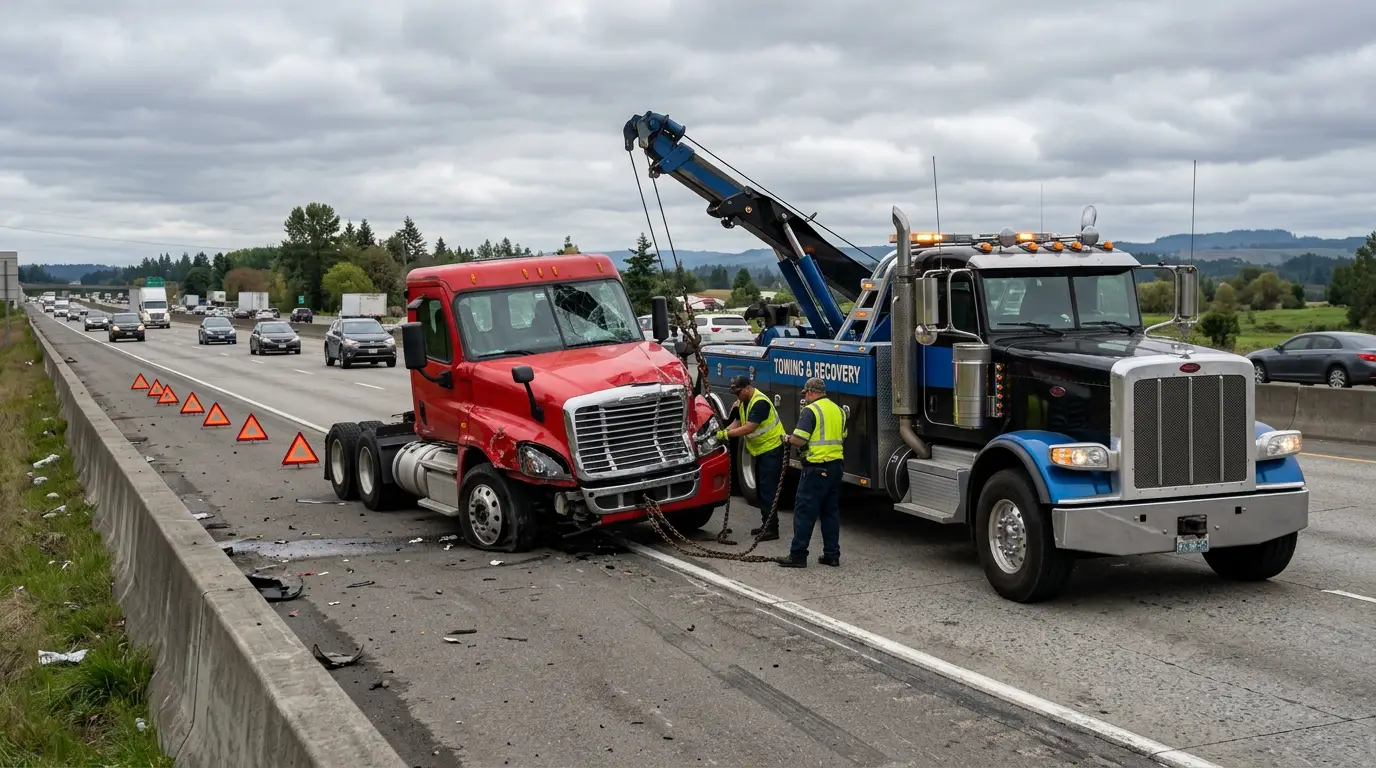
FMCSA has a specific definition and plenty of collisions fall outside it. Under 49 CFR 390.5 an accident means an occurrence involving a commercial motor vehicle on a highway that results in a fatality, in bodily injury to someone who immediately receives medical treatment away from the scene, or in a vehicle taking disabling damage that requires a tow from the scene. It excludes occurrences involving only boarding and alighting from a stationary vehicle, or only the loading or unloading of cargo.
Disabling damage is narrower than people assume. It means damage that stops the vehicle leaving the scene in its usual manner in daylight after simple repairs. A flat tire with no other damage is excluded even if you carry no spare, and so is damage to headlamps, taillights, turn signals, the horn, or the wipers.
If it does qualify, 49 CFR 390.15(b) requires an accident register kept three years after the date of each accident. It lists the date, the city or town and the state, the driver name, injuries, fatalities, and whether hazardous materials other than fuel were released, plus copies of every accident report a state, another government entity, or your insurer required.
The 24 month clock, and how it is weighted
Crashes do not sit on your FMCSA record forever. Per the June 2026 SMS Methodology, safety events older than 24 months are no longer used to assess a carrier, and everything inside that window is weighted twice over.
Severity comes first. A tow away with no injury or fatality carries a severity weight of 1, an injury or fatality carries 2, and a hazardous materials release adds another 1. Then time is applied. A crash inside six months of the measurement date gets a time weight of 3, one from six to twelve months gets 2, and anything older inside the window gets 1. The two multiply, so the same tow away counts three times as heavily in month five as in month eighteen. A loss hurts most exactly when you are shopping.
What the renewal actually looks like
At one to ten trucks, frequency reads louder than severity. Three small at fault claims in two years look like an operating pattern. One large claim in the same stretch can still read as a bad night. Underwriters price the pattern, because the pattern predicts next year.
Where the loss landed matters just as much. A physical damage claim on your own tractor is a contained number that closes when the repair invoice clears. An at fault commercial auto liability loss brings in someone else's injuries and attorney and can develop for years, so it moves a renewal further than the first reserve suggests. Expect some mix of premium, deductible, and terms, and remember the broad market moves what commercial truck insurance costs at the same time your record does.
The part you can still fix
If the crash was not your driver's fault, do not accept it by default. FMCSA's Crash Preventability Determination Program now reviews 21 eligible crash types after the December 2024 expansion, which added four types and dropped the distinction between direct and indirect strikes. Submit a Request for Data Review through DataQs with the police accident report, backed by dash camera video and photographs. FMCSA cannot review crashes older than five years, so this is work for the weeks after a wreck.
A crash found not preventable is still listed on the SMS website, marked as Reviewed and Not Preventable, but it is excluded from your measure and your percentile in the Crash Indicator BASIC. Chase it even though that percentile is not publicly displayed for property carriers, because insurers still see the underlying crash data. The same discipline that protects your CSA score protects the renewal.
What to do in the first week
Tell your agent immediately even if the repair looks like it stays under the deductible, because late notice causes more coverage arguments than the claim itself. Keep the driver statement, the report number, the photographs, and the video in one file. Then pull a current loss run and read it, because errors are common and easier to fix now than at renewal.
We work with owner operators and small fleets carrying losses on the record, not just the clean ones, and we know which markets will still look at you. Call or text 423-264-4255 or get a truck insurance quote in under a minute, and we will tell you honestly where your record puts you.
Common questions
How long does an at fault accident affect my truck insurance?
On the FMCSA side the window is defined. Safety events older than 24 months are no longer used in the Safety Measurement System, and within that window a crash under six months old is weighted three times as heavily as one over twelve months old. Insurers typically review three to five years of loss runs, so the claim stays visible to underwriters longer than it stays in the federal scoring window. Call or text 423-264-4255 and we will get a truck insurance quote that reflects where your record actually sits today.
Do I have to report a minor accident with no injuries?
Report it to your agent regardless. Whether it is federally reportable is a separate question answered by 49 CFR 390.5, which requires a fatality, an injury treated away from the scene, or disabling damage requiring a tow from the scene. A flat tire with no other damage, or damage to headlamps, taillights, turn signals, the horn, or the wipers, does not by itself qualify as disabling damage.
Can a crash be removed from my FMCSA record?
It is not removed, but it can be set aside. Through the Crash Preventability Determination Program you may submit a Request for Data Review through DataQs with the police accident report for any of the 21 eligible crash types. If FMCSA finds the crash not preventable it stays listed on the SMS website marked as Reviewed and Not Preventable, and it is excluded from your measure and percentile in the Crash Indicator BASIC. FMCSA cannot review crashes older than five years.
Should I pay a small claim myself instead of filing it?
Sometimes, and the honest answer depends on the numbers. If the repair is close to your deductible the claim buys you almost nothing and still lands on your loss runs where the next underwriter reads it. If there is any chance of a third party injury or a dispute over fault, file it, because late notice on a claim that grows is far more expensive than the rate effect you were avoiding.
Ready for a better rate?
We shop A-rated carriers against each other to find your lowest rate, fast. Under a minute to start, and no obligation.
Prefer to talk it through? Call or text (423) 264-4255 and a licensed agent will walk you through your options.