Vermont Keeps I-89 Traffic on Crossovers Near Royalton Until 2027
A two year bridge rehab near Exit 3 has trucks on crossovers, a 15 foot width cap, and a 14 foot ceiling on the VT 107 side.
Vermont Has Two More Years of Work Zone on I-89
The Agency of Transportation road construction reports running through September list the Royalton bridge rehabilitation near Exit 3 on Interstate 89 as active work, and the conditions it creates are not a weekend inconvenience. Crews are into the bridge deck, the abutments and the piers, and while that goes on VTrans has crossovers and lane diversions in place, a 15 foot width restriction posted, and the speed limit dropped to 55 mph. Vermont Business Magazine, which publishes the weekly AOT construction roundup, reports those conditions are expected to hold until fall 2027. If central Vermont is on your lane, that is two more winters through the same pinch point, and a good reason to look hard at how your commercial truck insurance in Vermont responds to a work zone loss.
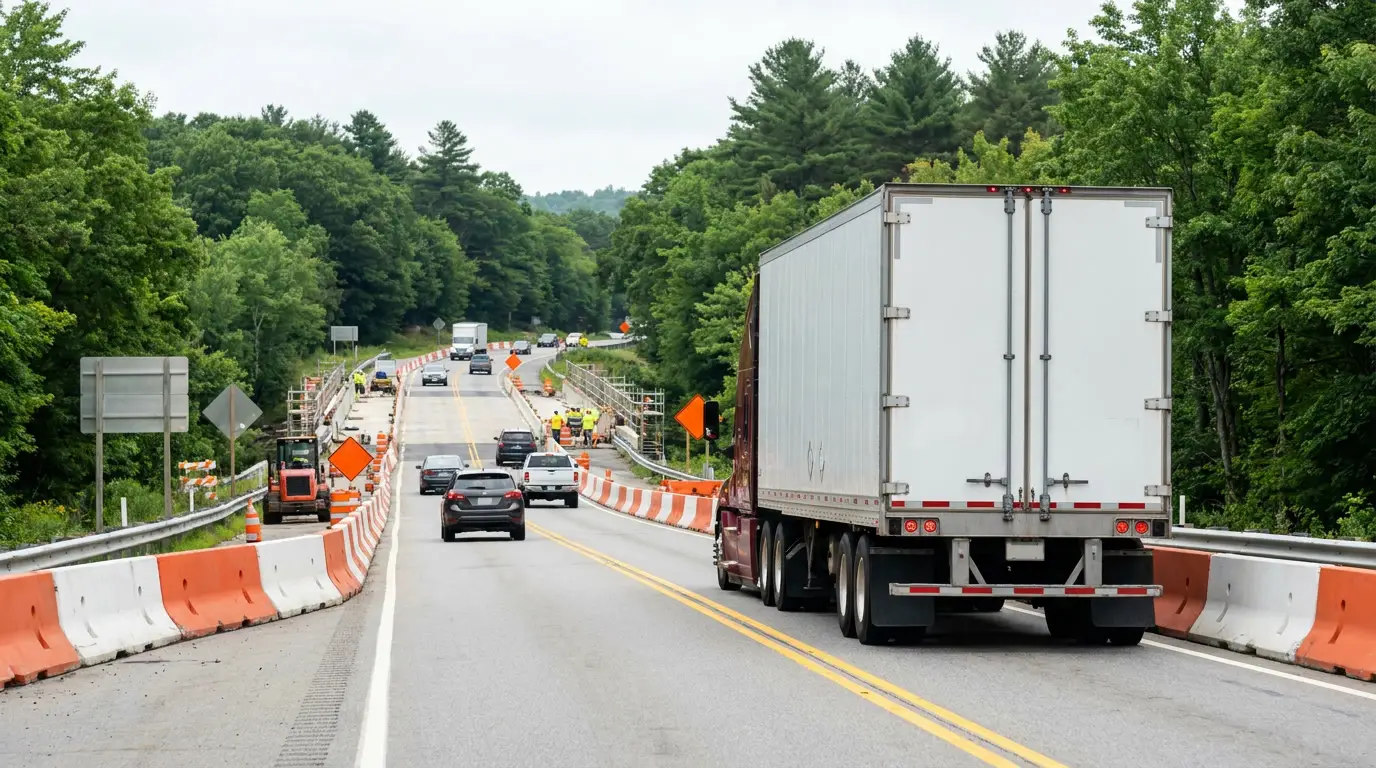
A Crossover Changes What the Claim Looks Like
A crossover takes traffic off one side of a divided highway and runs both directions on the other side. The median that normally separates you from oncoming traffic is gone, and for the length of the zone the only thing between the two directions is paint and a line of barrier. Closing speed stops being theory. A drift of two feet on a normal interstate is a shoulder. In a crossover it is a head on.
That geometry is why work zone crashes tend to produce severity out of proportion to their frequency, and severity is what drives a commercial auto liability file. Add narrow lanes, unfamiliar traffic patterns and a posted speed that plenty of passenger cars ignore, and a routine run through Royalton carries more exposure than the same stretch carried two years ago.
The 15 Foot Width Limit Is a Routing Problem, Not a Driving One
Ordinary freight is nowhere near that cap. Vermont sets legal width at eight and one half feet and legal height at 13 feet six inches under 23 V.S.A. 1431, so a standard van, reefer or flatbed load rolls through without a second thought. Permitted loads are the ones that have to pay attention. Anything moving on an oversize permit wider than the posted restriction needs a different route, and finding that out at the barrels is the expensive way.
Vermont runs oversize and overweight permits through VT Haul Pass, which issues permits online, covers emergency moves outside business hours, and supplies real time road and bridge restrictions for routing. The DMV also tells carriers to call before they haul, because Vermont towns set their own weight limits on local roads and those postings are not in any national routing app. A permitted load that ends up somewhere the permit does not cover is exactly the fact pattern that turns a claim into an argument.
The VT 107 Side of It Has a 14 Foot Ceiling
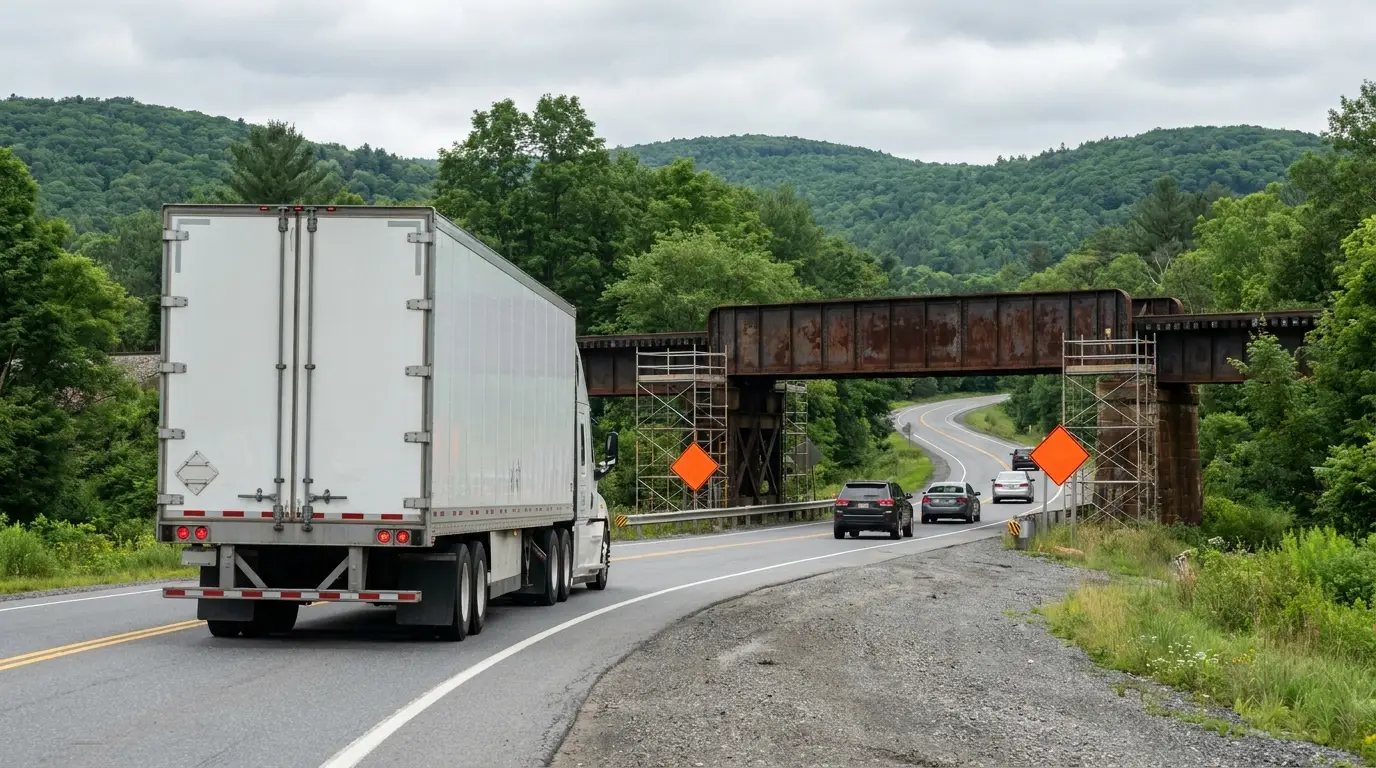
While crews sandblast and paint Bridge 26S, VTrans posts a 14 foot height restriction on VT 107 underneath and drops the speed limit there to 30 mph. Run that against the state legal height and a fully legal Vermont trailer at 13 feet six inches clears by six inches. Six inches is the whole margin, and it is the same six inches that disappears when a trailer rides high on a fresh set of air bags, when a load is not seated flat, or when a roof mounted unit adds to the profile.
A bridge strike is one of the few losses that hits three coverages at once. The trailer roof is a physical damage claim, the freight underneath is a motor truck cargo claim, and the structure itself is a liability claim with a state agency on the other side of it. None of that is theoretical on a posted bridge that is already under repair.
Vermont Is Watching These Zones
Enforcement follows the work. Vermont's Highway Patrol inside the DMV runs a Commercial Vehicle Enforcement Section, and the state's Commercial Vehicle Safety Plan filed with FMCSA describes the DMV working with VTrans on work zone areas that suit enforcement, alongside scheduled traffic patrols aimed at unsafe speed. A citation or an out of service order written in a work zone does not stay on the roadside. It lands in your CSA record, and your CSA record is one of the first things an underwriter pulls at renewal.
So the Royalton project reaches further than the few minutes it costs you. Two years of crossovers means more chances for a work zone incident, more chances for an inspection, and a renewal conversation shaped by both.
Know Your Numbers Before the Next Renewal
If central Vermont is a regular lane for you, it is worth knowing whether your limits and your deductibles still match the risk you are actually running. We quote owner operators and small fleets across the state, and our page on Vermont truck insurance covers the filings and coverages most carriers here need. Get a truck insurance quote in under a minute through our quote form, or call or text 423-264-4255 and talk it through with someone who knows the difference between a bridge strike and a rollover on a claim file.
Common questions
Does a work zone crash cost more than a normal one on my policy
Not automatically, but work zone crashes tend to be more severe, and severity is what drives liability cost. Crossovers like the one on I-89 in Vermont put opposing traffic on the same roadway, so a small lane error becomes a serious impact. Underwriters weigh the severity of your losses more heavily than the raw count.
My trailer is legal height so why does a 14 foot bridge matter
Vermont legal height is 13 feet six inches, so a legal trailer clears a posted 14 foot structure by six inches. That margin disappears fast with suspension height, an unseated load or a roof mounted unit. If you are not certain of your loaded height, measure it before you take a posted route.
Who checks oversize routing in Vermont
Vermont issues oversize and overweight permits through VT Haul Pass, which supplies real time road and bridge restrictions with the permit. Towns can also post their own weight limits on local roads, which is why the DMV tells carriers to call before they haul. A load routed outside its permit is a hard claim to defend.
How do I get a truck insurance quote for a Vermont operation
Fill out the quote form on our site or call or text 423-264-4255. We work with owner operators and small fleets running in and through Vermont, and most quotes need only your DOT number to get started.
Ready for a better rate?
We shop A-rated carriers against each other to find your lowest rate, fast. Under a minute to start, and no obligation.
Prefer to talk it through? Call or text (423) 264-4255 and a licensed agent will walk you through your options.