What A Washington Ferry Run Does To Your Truck Claims
The Triangle Route drops back to a two boat schedule in early October, and ferry dependent freight has to plan around it.
The Triangle Route Loses A Boat Again In October
Washington State Ferries put the Fauntleroy to Vashon to Southworth run back on three boats on Monday, September 15, after roughly a week down to two while the Sealth finished maintenance. The West Seattle Blog reported on September 13 that the full schedule would only hold a few weeks, because the Kittitas goes in for its own maintenance in early October and the route drops back to a two boat schedule with a third unscheduled vessel filling gaps. If you move freight to or from Vashon Island, that is your October.
WSDOT treats the ferry system as a marine highway inside the state highway network, and its 2026 fact sheet shows the Triangle Route alone moved 1,423,172 vehicles across 35,122 completed sailings in 2025, out of more than 9.4 million system wide. Plenty of that is freight, running on the same trucks and the same policies as your mainland work. Our page on commercial truck insurance in Washington covers the statewide basics. This post is about the part that only happens here.
Fleet Math Is Why This Keeps Repeating
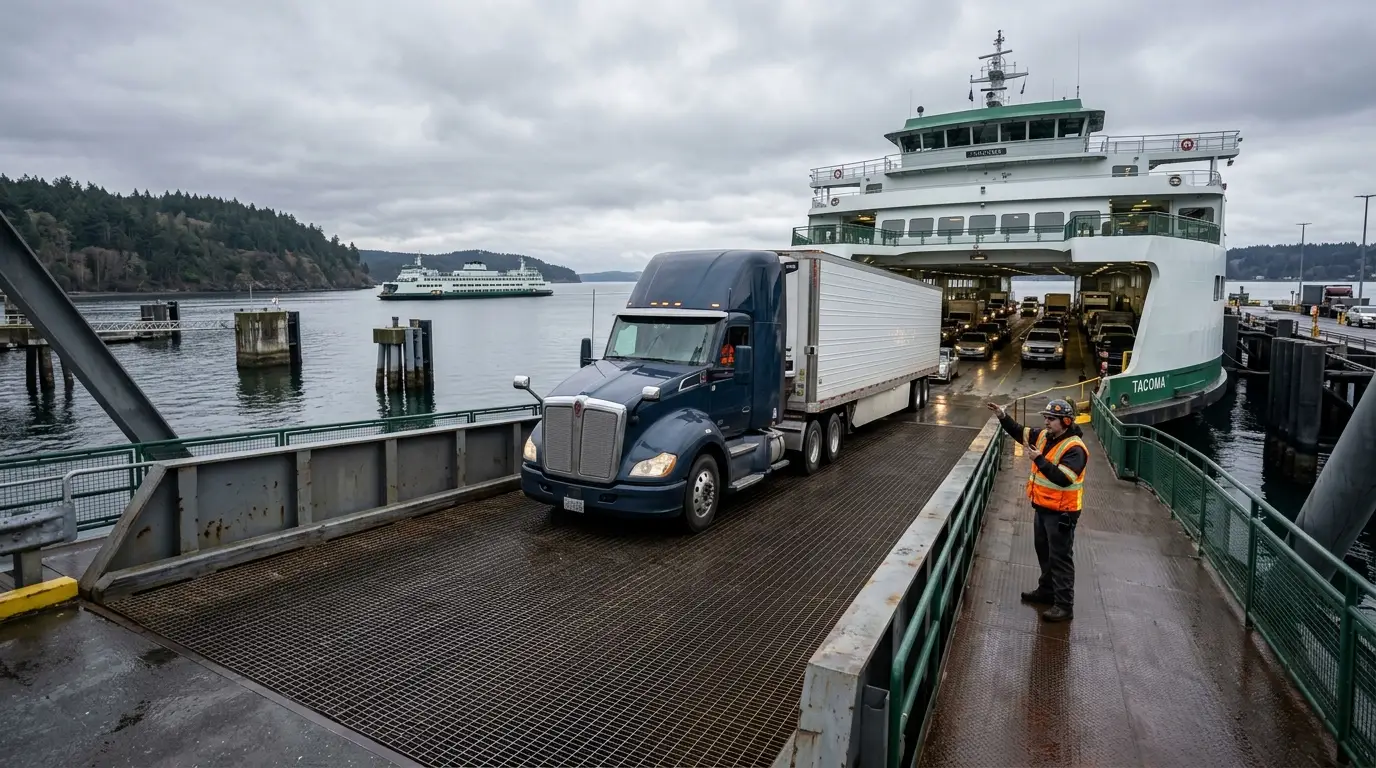
WSDOT is blunt about the cause in that same fact sheet. The state runs 21 auto passenger vessels, more than half of them over 40 years old, in service more than 20 hours a day, which leaves almost no window for maintenance. Only three or four boats can be out at once before schedules break, and the first new hybrid electric vessel is not expected until 2030. A route losing a boat is normal operations here, so treat it as a recurring cost of island work rather than a surprise.
Your Truck Has To Fit Before It Can Float
WSDOT wants an Oversized and Overweight Vehicle Travel Request before you show up if the rig runs over 80,000 pounds gross, wider than 8 feet 6 inches, taller than 13 feet 4 inches, or with less than 14 inches of ground clearance. Processing takes two business days, so a load you book Thursday for Friday is already behind. Overhead clearance runs from 13 feet 6 inches on the Tillikum up to 16 feet on other classes, and each route carries its own axle by axle load posting. Five axle vehicles are held to 29 tons on the Fauntleroy Vashon Southworth and Point Defiance Tahlequah runs, 27 tons out of Anacortes and 25 tons at Edmonds Kingston. Reservations exist on only two routes, Anacortes to the San Juans and Port Townsend to Coupeville.
Ramps, Decks And The Damage Nobody Reports
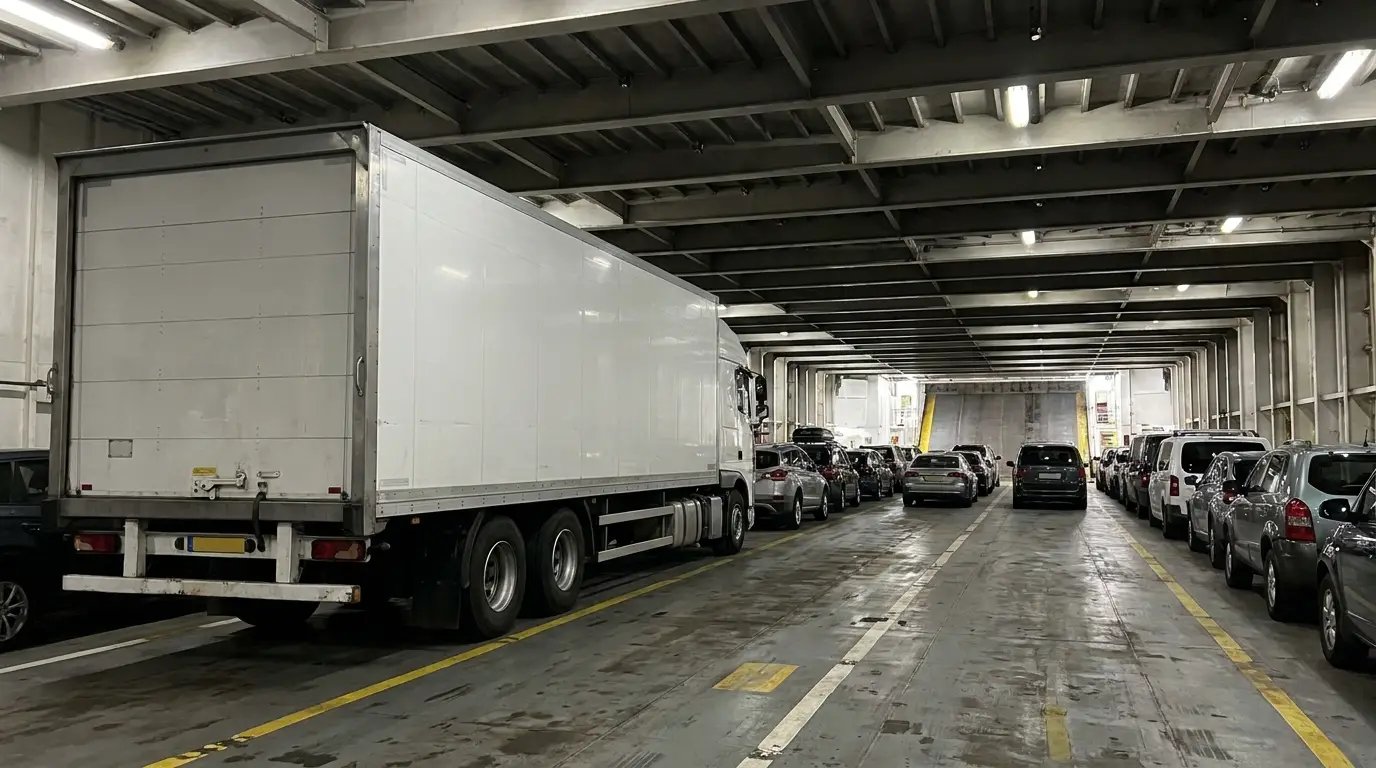
A vehicle deck is a low steel box with painted lanes and a crew waving you into a space tighter than any dock you back into all week, and WSDOT notes that extreme tides affect loading on the Vashon Island routes and at Port Townsend and Coupeville. Roofs, mirrors, fairings and landing gear take hits there, and because nothing was moving fast it rarely feels like a claim. It still is one. Physical damage coverage answers for your own unit whether the loss happened at 65 miles an hour or at walking speed on a deck, and the deductible does not change. Photograph it at the terminal that day, because late notice is what turns a small claim into an argument.
A Missed Sailing Is A Cargo Question
Most motor truck cargo policies respond to physical loss of or damage to the freight. Delay on its own is generally not a covered cause of loss, which matters when a two boat schedule turns a short island run into most of a day. If you pull temperature controlled freight to the islands, the claim you would have to make is about whether a covered peril caused the loss, not about whether the boat was late. Read your motor truck cargo limits and exclusions before you take that work, and price the schedule risk into the load.
Hazardous materials are stricter again. Under RCW 47.60.135 the state moves hazmat by charter rather than on regularly scheduled passenger sailings, priced at actual vessel operating costs plus a market rate profit margin, with the transporter paying for every leg needed to complete the charter. That is a pricing problem before it is an insurance problem, and it has to be settled before you quote an island fuel or chemical run.
What An Underwriter Reads Into Island Work
Radius and use drive your rate more than most owner operators expect, and island freight looks odd on an application because the miles are low while the clock hours are long. Two hours in a holding lane is two hours your 14 hour window keeps running and your odometer does not, and the temptation at the far end of that day is to push. Describe the operation accurately, ferry legs included. Your commercial auto liability still follows the truck onto terminal property and into the traffic feeding it.
Ferry dependent freight deserves a policy written for it, not one copied off a long haul application. We work with owner operators and small fleets across Washington and can look at your radius, your cargo limits and your deductibles together. Get a truck insurance quote in under a minute, or call or text 423-264-4255 and walk through it with a person. For the statewide picture, start with our Washington truck insurance page.
Common questions
Does truck insurance cover damage that happens on a ferry deck?
Physical damage coverage is about your own unit and it is not limited to losses that happen while you are driving on a road. Low speed contact with a bulkhead, a transfer ramp or another vehicle on a Washington ferry deck is still a physical damage claim and your normal deductible applies. Photograph it and report it at the terminal the same day, since late notice is the most common reason a small claim turns into a hard one.
Do I need a permit to take a semi on a Washington State Ferry?
WSDOT requires an Oversized and Overweight Vehicle Travel Request if the vehicle runs over 80,000 pounds gross, wider than 8 feet 6 inches, taller than 13 feet 4 inches, or with less than 14 inches of ground clearance. It takes two business days to process and each route carries its own axle by axle load posting on top of that, so check both before you accept the load.
Will cargo insurance pay if a ferry delay spoils my load?
Usually not by itself. Motor truck cargo coverage is built around physical loss of or damage to the freight, so a delay alone is a difficult claim. If you haul reefer or time sensitive freight to Vashon, Whidbey or the San Juans, check your limits and exclusions first. Call or text 423-264-4255 and we will read your current policy with you before you commit to the lane.
Can I haul hazmat on a Washington ferry?
Not on a regularly scheduled passenger sailing. RCW 47.60.135 moves hazardous materials by charter, priced at actual vessel operating costs plus a market rate profit margin, and the transporter pays for all legs needed to complete the charter. Settle that cost before you quote the run, then get a truck insurance quote so the coverage matches the work you are actually taking.
Ready for a better rate?
We shop A-rated carriers against each other to find your lowest rate, fast. Under a minute to start, and no obligation.
Prefer to talk it through? Call or text (423) 264-4255 and a licensed agent will walk you through your options.