Two Truckers Sued Their Dashcam Maker Over What It Records
Two drivers sued Motive on July 24 over what its AI cameras record. The case will take years. The lesson for a small fleet is available today, and it is about who is holding the footage in your next claim.
Two drivers sued their dashcam company on July 24
Two truck drivers filed a proposed class action against Motive Technologies in the US District Court for the Northern District of California on July 24, and Land Line laid out the details on August 14. The plaintiffs, Adam Dean and Christian Erickson, allege that Motive's AI Dashcam Plus functions as an automated license plate reader, logging plate numbers, vehicle make and model and body type, state of registration, the date and time of each capture, and where the camera was when it happened.
California has regulated that kind of collection since 2016 under Civil Code sections 1798.90.5 through 1798.90.55, which require an operator to post a usage and privacy policy conspicuously on its website. The complaint alleges Motive never published one. It also alleges the inward facing camera captured biometric identifiers from drivers without consent. The filing puts the scale in one line worth repeating, that unlike a person standing at an intersection, these cameras never blink and never sleep. The drivers are asking for $2,500 per class member, punitive damages, and an order stopping the collection. Roughly 1.3 million drivers run on the Motive platform, according to reporting from The Auto Wire.
None of this has been decided. These are allegations, and Motive has not been found liable of anything. The reason it matters to a small fleet has little to do with who eventually wins.
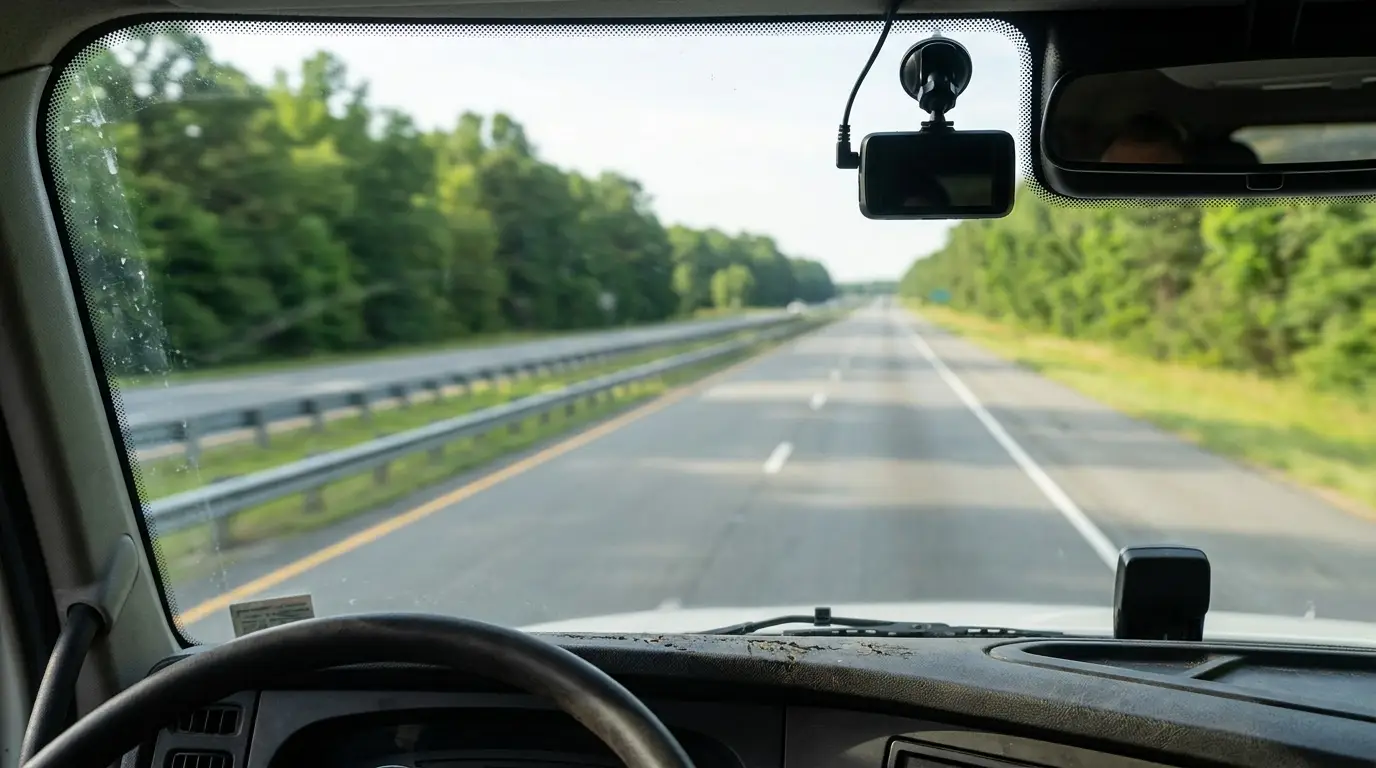
Your camera is evidence before it is a discount
Most owner operators put a camera on the glass for one of two reasons, a premium credit or proof they were not at fault. Both are legitimate. The credit side just got thinner. FreightWaves reported on July 9 that Progressive ended new enrollments in its Motive dashcam program effective July 1, with existing customers keeping the benefit through their policy term and a replacement telematics program still in development. That reporting does not tie the decision to the lawsuit, and the dates run the other way, but the practical result is the same for anyone shopping right now. The discount you were counting on may not be there when you call.
Run the camera anyway, just for the right reason. Footage is the cheapest credibility a small carrier can buy in a claim, and in the rear end and lane change disputes that fill most commercial auto liability files, a clean clip ends the argument in a week instead of a year. Understand the trade though. Video does not take your side, it records what happened. A camera that clears you four times will bury you on the fifth, and once the file exists the other side can reach it in discovery.
The recording lives on somebody else's server
This is the part the lawsuit makes impossible to ignore. The footage, the location trail and the behavior scoring sit with your telematics vendor, not in your office. That is a third party holding what may be the most important document in your next claim file, and your policy has no authority over it at all.
Two things follow. The first is retention. Vendors overwrite clips on a schedule that is often shorter than the time it takes a demand letter to arrive, so after a crash send a written preservation request to the vendor the same day you call your agent. The second is control. A plaintiff's attorney can subpoena the vendor directly, which means you may find out what was produced only after it was produced. Neither is expensive to solve, but both have to be handled before the crash. Our guide on what happens after an at fault accident walks the rest of that timeline.
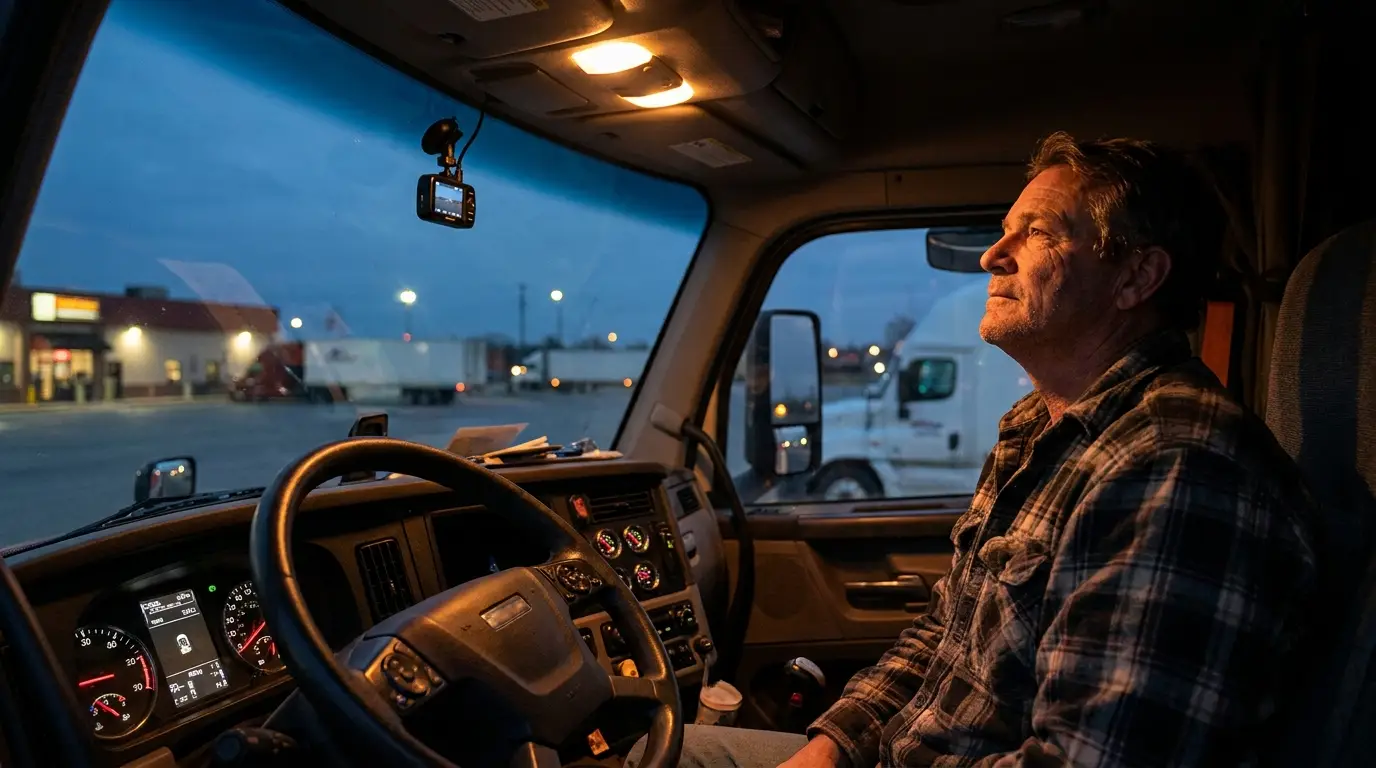
A privacy claim is not a truck insurance claim
Here is the coverage gap almost nobody prices. A commercial auto policy answers bodily injury and property damage arising out of the operation of a vehicle. A statutory privacy claim is neither of those. Nothing crashed, nobody was hurt, no property was damaged. A general liability policy is where most people assume it lands, and standard forms are commonly written to exclude exactly this category of statutory violation unless a specific endorsement says otherwise.
The vendor is not the only available defendant either. Land Line reported in December 2025 that a class action against HMD Trucking of Chicago Ridge, Illinois, brought over driver facing cameras that used facial geometry, ended in a settlement after a federal judge refused to dismiss the case. The motor carrier was the defendant there, not the camera company. Illinois biometric law carries $1,000 to $5,000 per violation. Multiply that by a driver roster and the arithmetic stops looking like a nuisance suit.
What to do about it this month
Four things, and none of them cost money. Ask your vendor in writing how long footage is retained and what it does with plate data. If you run inward facing cameras, get written consent from every driver and keep it in the qualification file, because consent is cheap and the statutory exposure is not. Ask your agent whether anything on your current policy responds to a privacy statute claim, and treat a plain no as a useful answer. And stop treating the camera as a discount line on the renewal. It is a document machine, and the documents live somewhere you do not control.
Your coverage should be priced against how you actually run, not against a checklist. Get a truck insurance quote in under a minute and we will walk your liability, physical damage and cargo limits with you, including where a telematics vendor sits in the middle of your next claim. Start your quote here or call or text 423-264-4255.
Common questions
Does my truck insurance cover a lawsuit about dashcam data?
Usually not without help. A commercial auto policy responds to bodily injury and property damage arising out of operating a vehicle, and a statutory privacy claim is neither. General liability forms commonly exclude that category of statutory violation unless an endorsement is added. Ask your agent in writing and get the answer in writing. We are happy to read your current policy with you at 423-264-4255.
Should I still run a dashcam if the footage can be used against me?
Yes. In most disputed crashes the video is the fastest way a small carrier proves what happened, and that shortens the claim and protects the renewal. Just run it knowing the recording is neutral. It does not defend you, it documents you, and you should behave on camera exactly as you would want a jury to see.
Who actually owns my dashcam footage?
Your vendor contract decides that, and most owner operators have never read the clause. The clips, the location history and the driver scoring generally sit on the vendor's servers under the vendor's retention schedule. After any crash, send a written preservation request to the vendor the same day so nothing is overwritten while you are still notifying your insurer.
Did Progressive stop giving dashcam discounts?
FreightWaves reported on July 9 that Progressive ended new enrollments in its Motive dashcam program effective July 1, with existing customers keeping the benefit through their policy term while a replacement telematics program is developed. If a camera credit was part of your budget, price it out before you renew. Get a truck insurance quote from us and we will tell you which markets still pay for telematics.
Ready for a better rate?
We shop A-rated carriers against each other to find your lowest rate, fast. Under a minute to start, and no obligation.
Prefer to talk it through? Call or text (423) 264-4255 and a licensed agent will walk you through your options.