Out Of Service Downtime Sits Outside Your Truck Insurance
A wreck at least hands you a claim to file. An order parks the same truck with nothing broken and nothing to trigger, and the bills keep running either way.
The truck is parked and nothing is broken
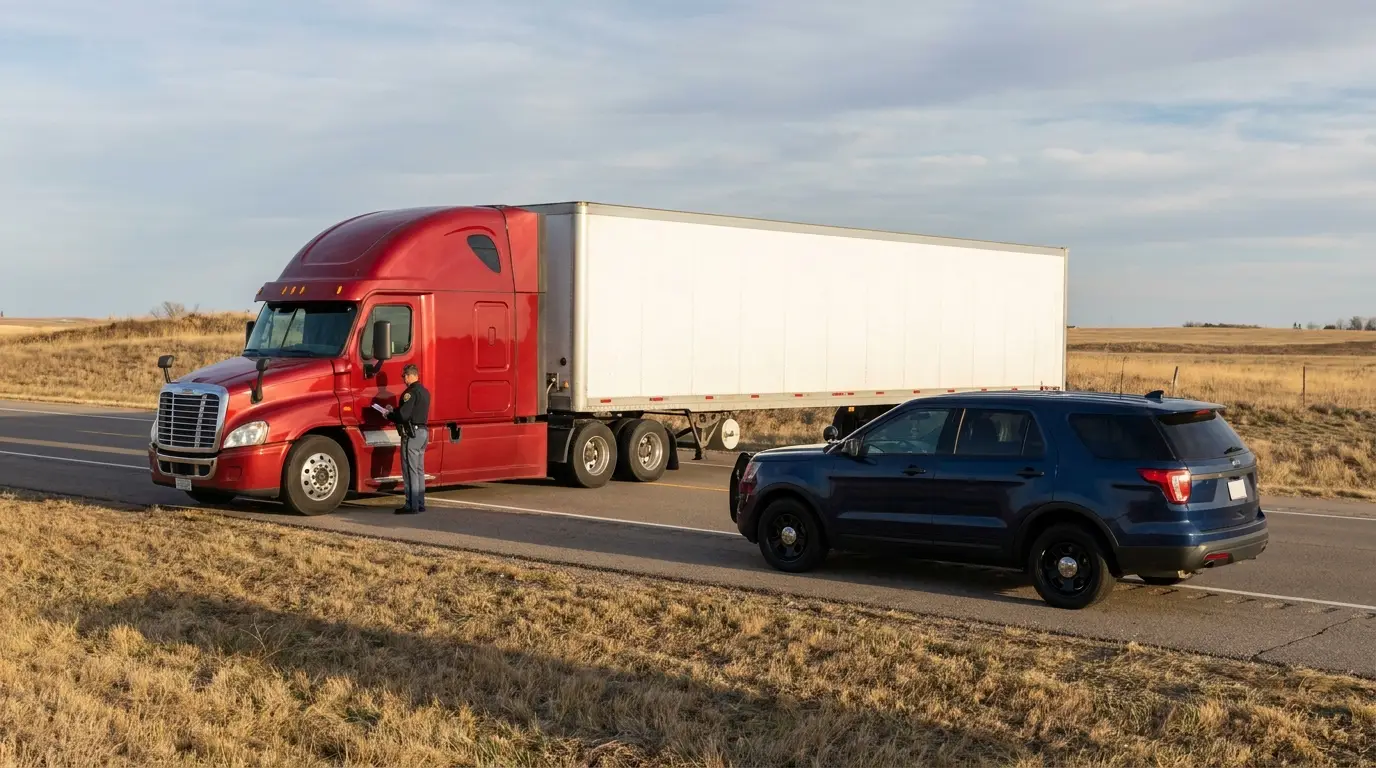
Most downtime conversations start with a wreck. The estimate takes a week, the parts take two, and the argument is over who pays for the days between. The version that catches small fleets flat is different. The truck is parked by an order and nothing is wrong with it.
Commercial physical damage coverage responds to direct physical loss to the vehicle, and a downtime endorsement is written to follow that covered loss. We walked through that mechanic in our piece on the gap between repair coverage and downtime cost. When the truck sits because an inspector said it sits, there is no physical loss, so neither one has anything to attach to.
This is not rare. Over three days in May 2026, inspectors across North America ran 54,575 roadside inspections and placed 10,350 vehicles and 3,184 drivers out of service, according to Commercial Vehicle Safety Alliance figures reported by Land Line. That is close to one truck in five inside a 72 hour window.
The clocks that start when the driver is the one pulled
A vehicle defect at least comes with a repair you can pay somebody to finish. A driver order does not.
Under 49 CFR 392.5(c), a driver found in violation of the alcohol prohibition is placed out of service immediately for a period of 24 hours, and that clock commences when the order is issued rather than when the shift would have ended. The same rule gives the driver 24 hours to report it to the carrier, 30 days to report it to the licensing state, and 10 days to petition for review.
Hours of service works differently. Under 49 CFR 395.13(b), a driver can be ordered out for driving past the maximum periods, or for failing to have a record of duty status current on the day of the examination and the prior seven consecutive days. That driver cannot go back behind the wheel until the required consecutive hours off duty are served, and 395.13(c)(2) gives the carrier 15 days to return the certification of action taken to FMCSA.
In both cases the truck is roadworthy the whole time. So is the freight sitting in it.
A crash starts a second clock you do not control
If the crash meets the federal test, 49 CFR 382.303 stacks a testing schedule on top. A fatality triggers testing for the driver performing safety sensitive functions. Bodily injury treated away from the scene, or disabling damage requiring a tow away, triggers testing when the driver receives a citation for a moving traffic violation, within 8 hours for alcohol and within 32 hours for controlled substances.
The administering deadlines are tight. Under 382.303(d)(1), if the alcohol test has not happened within 2 hours the employer files a record saying why, and after 8 hours the employer stops trying. For controlled substances, 382.303(d)(2) ends the attempt at 32 hours. And 382.303(e) says the driver has to remain readily available, or the employer may deem it a refusal.
A refusal or a positive result moves the driver under 49 CFR 382.501, which bars them from safety sensitive functions until the return to duty process in subpart F is finished. No number of days appears in that section. The seat stays empty as long as it takes.

When the order lands on the company instead of the truck
The largest version has nothing to do with one unit. If FMCSA proposes an unsatisfactory safety rating, 49 CFR 385.13(a)(2) bars most carriers from operating a commercial motor vehicle in commerce beginning on the 61st day after that notice, and 385.13(a)(1) moves that to the 46th day for placarded hazmat and passenger carriers. FMCSA may allow up to 60 additional days for a good faith effort. If the rating becomes final, 385.13(d)(1) turns it into an out of service order and 385.13(e) revokes the operating authority.
There is a faster version. Under 49 CFR 386.72(b), an imminent hazard finding can order a vehicle or a driver out of service, or order an employer to cease all or part of its operations, effective immediately, with review no later than 10 days after the order issues. Trucks already rolling may run to their immediate destination, which the rule defines as the next scheduled stop where the cargo can be safely secured.
None of that produces a claim. Every day of it costs what a day in the body shop costs.
What to do with a gap you cannot buy away
No endorsement on the market pays you for being ordered off the road. Liability coverage answers for what you owe somebody else. Cargo coverage answers for the freight. Physical damage coverage answers for the truck itself. An order sits outside all three by design.
So it gets managed instead of insured. Hold enough cash to carry a payment cycle with no revenue behind it. Keep logs current for the full prior seven days, not just the last shift. And read the trigger wording on any downtime endorsement you already pay for, so you know which days it buys and which days are yours.
Every quote we write gets read out loud, downtime wording included. Get a truck insurance quote in under a minute and we will tell you plainly where your coverage stops. Call or text 423-264-4255 to talk it through with someone who has read these forms.
Common questions
Does physical damage coverage pay anything while my truck is out of service
Not on its own. A physical damage policy responds to direct physical loss to the vehicle, and a downtime or loss of use endorsement is written to follow a covered physical damage loss. An out of service order is neither, so a roadworthy truck parked by an order produces no covered days. If the same event also wrecked the truck, the physical damage side responds to the wreck.
How long does an alcohol out of service order keep a driver parked
49 CFR 392.5(c) sets it at 24 hours, and the period commences when the out of service order is issued. The driver has to report the order to the employer within 24 hours and to the licensing state within 30 days, and may petition for review within 10 days of issuance.
Can one roadside inspection shut down my whole operation
A roadside order applies to that driver or that vehicle. Shutting down a company takes a different path, either an unsatisfactory safety rating under 49 CFR 385.13 with its 61 day and 46 day clocks, or an imminent hazard order under 49 CFR 386.72 that takes effect immediately and gets reviewed within 10 days.
What should a small fleet budget for these days
Treat it as a cash reserve question rather than a coverage question, because no endorsement covers it. Price out what a full payment cycle costs you with zero revenue coming in and hold that. If you want a second opinion on what your current policy does and does not cover, get a truck insurance quote from us or call or text 423-264-4255.
Ready for a better rate?
We shop A-rated carriers against each other to find your lowest rate, fast. Under a minute to start, and no obligation.
Prefer to talk it through? Call or text (423) 264-4255 and a licensed agent will walk you through your options.