What A Sealed Dry Van Load Does Not Excuse
Federal law lets you skip the walk around on a sealed load. It never lets you skip the standard the load has to meet.
The rule that lets you skip the inspection is narrower than it sounds
Dry van work runs on trust. The dock loads the trailer, somebody drops a seal through the latch, and you sign for a count you never saw. Federal law does account for that, just not as broadly as most drivers believe.
Start with 49 CFR 392.9(a). It binds both sides of the truck at once, saying a driver may not operate a commercial motor vehicle and a motor carrier may not require or permit a driver to operate one unless the cargo is properly distributed and adequately secured under the securement rules in 49 CFR 393.100 through 393.136, the doors and fastening devices are secured, and the load does not obscure the driver's view or block an exit from the cab.
Paragraph (b) is the hands-on part. The driver confirms all of that before driving, inspects the cargo and the securement devices within the first 50 miles and makes any adjustment needed, then reexamines the load whenever duty status changes or after 3 hours or 150 miles, whichever comes first.
Then comes 392.9(b)(4), the sealed load exception. The rules in paragraph (b) do not apply to the driver of a sealed commercial motor vehicle who has been ordered not to open it, or to a vehicle loaded in a way that makes inspecting the cargo impracticable. Read where that exception sits. It is written into paragraph (b), and paragraph (a) has no seal exception at all. The seal buys you out of the walk around. It never buys you out of the standard the load has to meet.
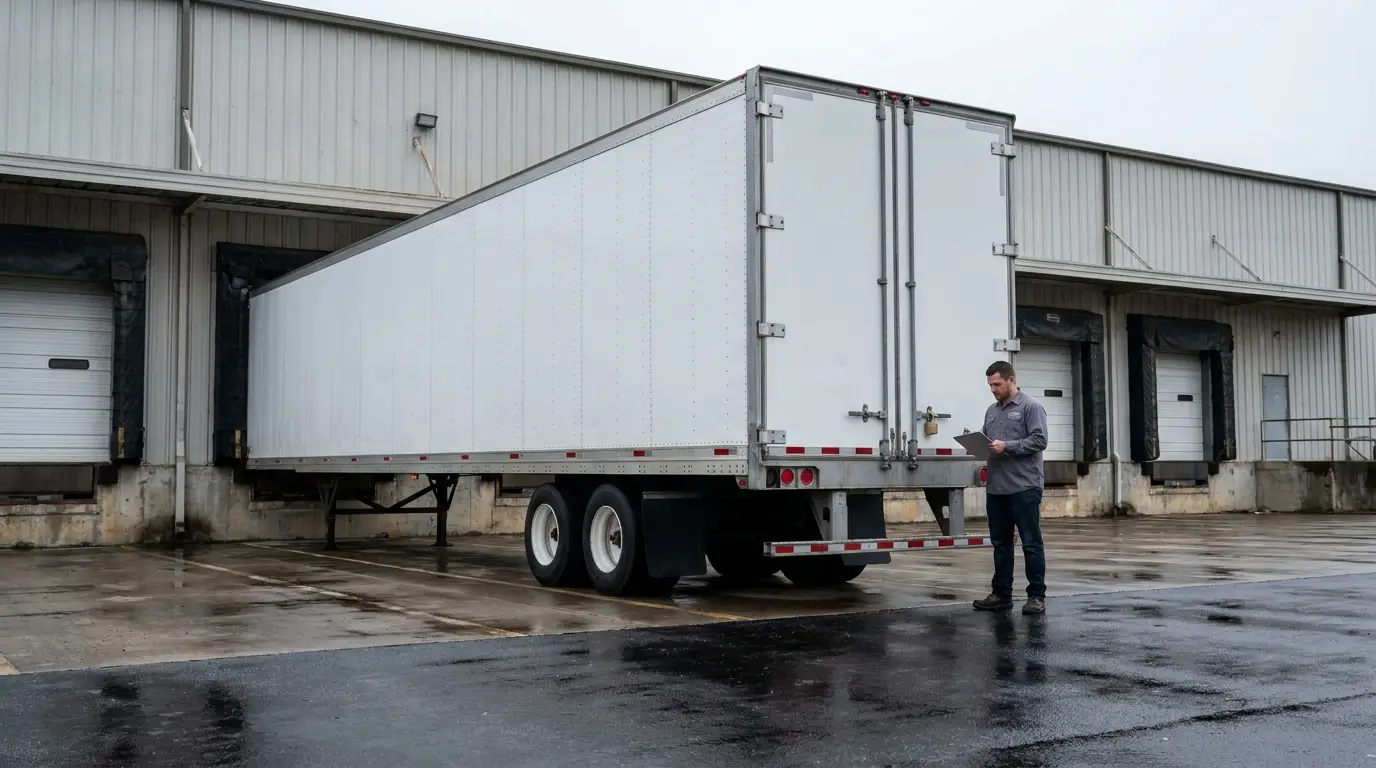
A padlock you hold the key to is not a seal
FMCSA has answered this one directly in its published guidance on 392.9. Asked whether a cargo compartment closed with a padlock counts as sealed when the driver holds the key, the agency said no. The driver has ready access using the key, so the paragraph (b) examinations still apply in full.
Plenty of dry van operations run a company lock on the doors and treat that as a sealed load. Under the guidance it is not one, and an inspector reading it the same way puts the violation in your file rather than the shipper's. Our dry van truck insurance page covers what the policy behind that has to do.
What the carrier is supposed to do instead
FMCSA also addressed how a motor carrier meets its loading responsibility when the shipper loads and seals the trailer. Its guidance gives three examples. Arrange for supervision of the loading, obtain a notation on the freight bill that the lading was properly loaded, or obtain approval to break the seal so the load can be inspected.
The agency has been clear elsewhere that it has no authority to enforce safe loading against a shipper unless hazardous materials are involved. That leaves the carrier and the driver holding it. Of those three options, the freight bill notation costs nothing and takes one sentence, and almost nobody asks for it.
Weight is the part a seal never touches
49 CFR 392.2 says every commercial motor vehicle must be operated in accordance with the laws of the jurisdiction it is running in, and that where an FMCSA regulation sets a higher standard of care, the FMCSA rule controls. Nothing in there cares who loaded the trailer.
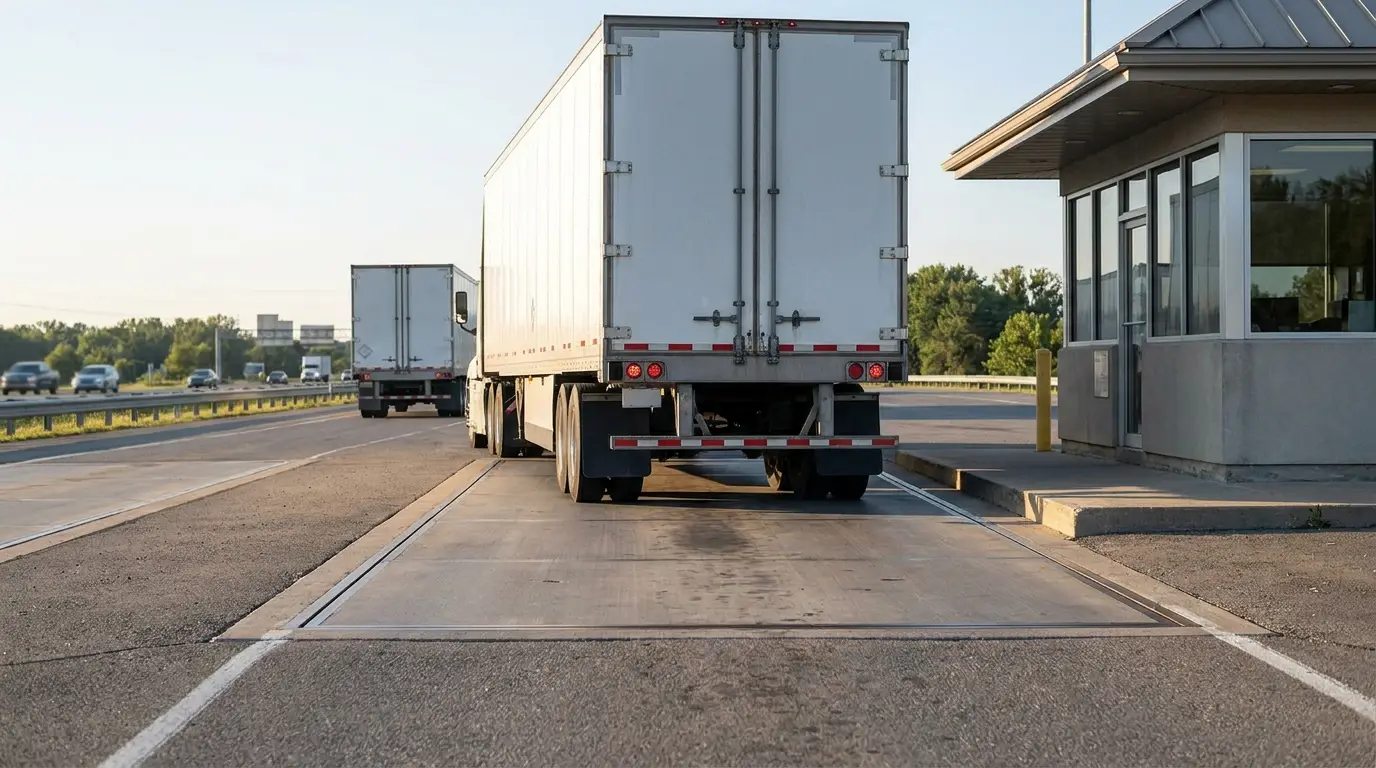
The Federal Highway Administration puts the interstate maximums at 20,000 pounds on a single axle, 34,000 pounds on a tandem, and 80,000 pounds gross. A sealed trailer takes your usual fix off the table, because you cannot restack freight you are not allowed to open. Sliding the tandems is the whole toolkit, and the only way to know whether you need it is to scale the unit before you commit to the highway.
Shipper load and count decides the cargo claim, not the seal
When freight goes missing or shows up wrong, the argument moves to the bill of lading. Under 49 U.S.C. 80113(a) a carrier that issues a bill is liable for damages caused by nonreceipt of any part of the goods, or by goods that do not match the description on the bill, to an owner or holder who gave value in good faith relying on that description.
Subsection (b) is the relief valve. The carrier is not liable under (a) where the bill is qualified by wording such as contents or condition of contents of packages unknown, said to contain, or shipper's weight, load, and count, and the goods were loaded by the shipper. That notation is real protection and it is narrow. It speaks to what was in the trailer and how it was described. It says nothing about how the load rode or how it was distributed across your axles, and those questions land back on 392.9(a) and on you.
That is the same seam where motor truck cargo claims tend to break down, and we covered the rest of it in our piece on cargo exclusions that surprise people at claim time.
Get the coverage lined up with how you actually run
A sealed load is normal dry van work, not an edge case, and the policy behind it should be priced by somebody who understands that a shipper builds most of your loads. Get a truck insurance quote in under a minute and we will look at your lanes, your commodities, and your dry van coverage together. Call or text 423-264-4255.
Common questions
Does a sealed trailer mean I do not have to inspect the load?
It means less than most drivers think. The exception at 49 CFR 392.9(b)(4) applies to the paragraph (b) examinations only, which are the check before driving, the inspection within the first 50 miles, and the reexamination every 3 hours or 150 miles. Paragraph (a), which requires the cargo to be properly distributed and adequately secured, has no seal exception written into it.
Is a padlocked trailer a sealed trailer?
Not according to FMCSA guidance on 392.9. Asked whether a cargo compartment secured with a padlock counts as sealed when the driver holds the key, the agency answered no, because the driver has ready access and must still perform the paragraph (b) examinations.
Can I be cited for an overweight axle on a load I never saw?
Yes. 49 CFR 392.2 requires every commercial motor vehicle to be operated in accordance with the laws of the jurisdiction it is in, and weight enforcement does not ask who loaded the trailer. FHWA puts the interstate maximums at 20,000 pounds on a single axle, 34,000 on a tandem, and 80,000 gross, and on a sealed load sliding the tandems is your only real adjustment.
Does shipper's weight, load, and count protect me on a cargo claim?
Partly. Under 49 U.S.C. 80113(b) that wording, along with phrases like said to contain, relieves the carrier of the nonreceipt and misdescription liability in subsection (a) where the shipper loaded the goods. It does not answer for how the load rode or how it was secured. If you want to know whether your own form lines up with the freight you haul, get a truck insurance quote or call or text 423-264-4255.
Ready for a better rate?
We shop A-rated carriers against each other to find your lowest rate, fast. Under a minute to start, and no obligation.
Prefer to talk it through? Call or text (423) 264-4255 and a licensed agent will walk you through your options.